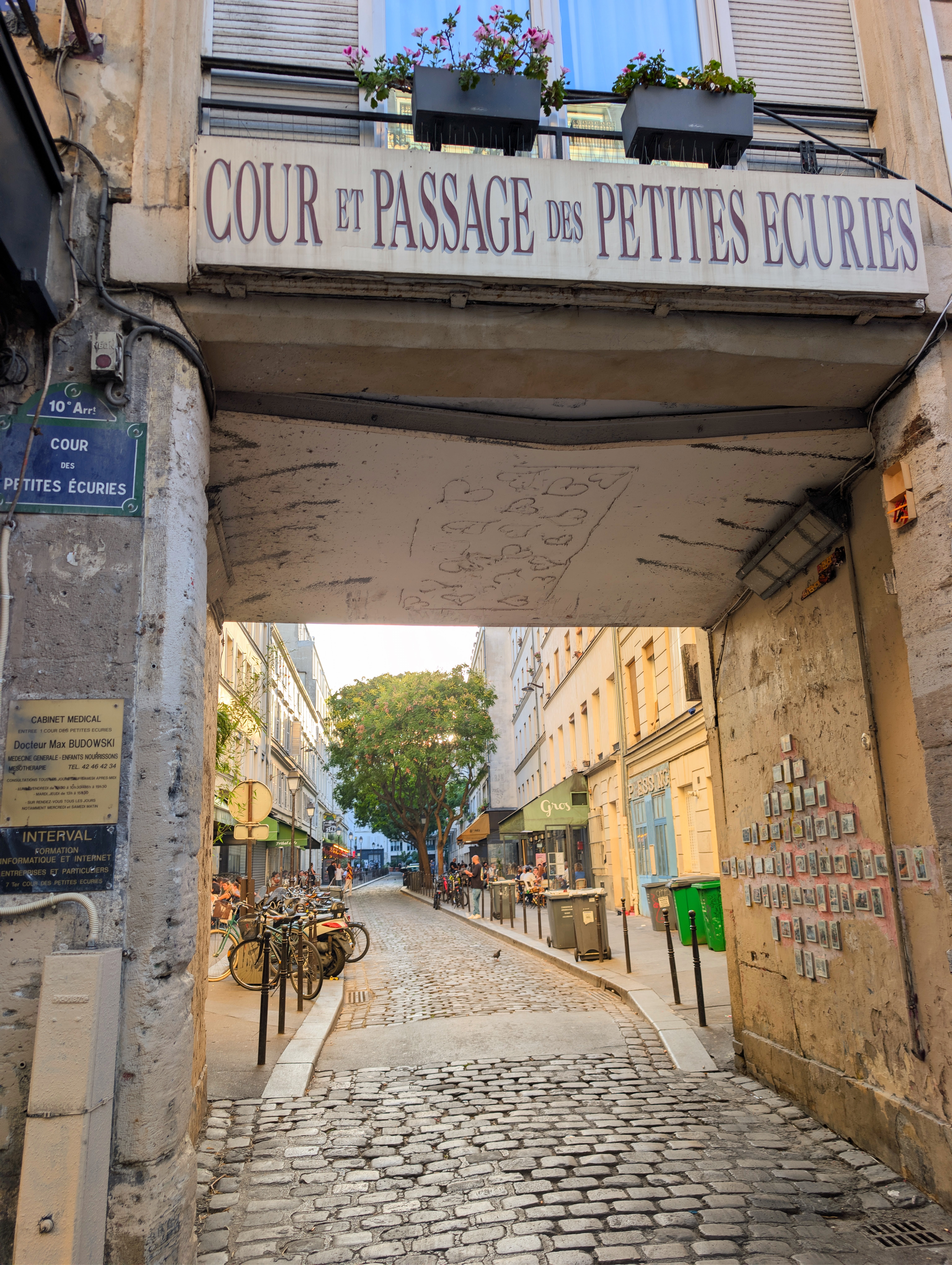
After ten weeks of staying in an Airbnb in Paris, we finally moved into our own apartment. Our apartment - located on Cour des Petites Écuries - is in the 10th arrondissement of Paris.
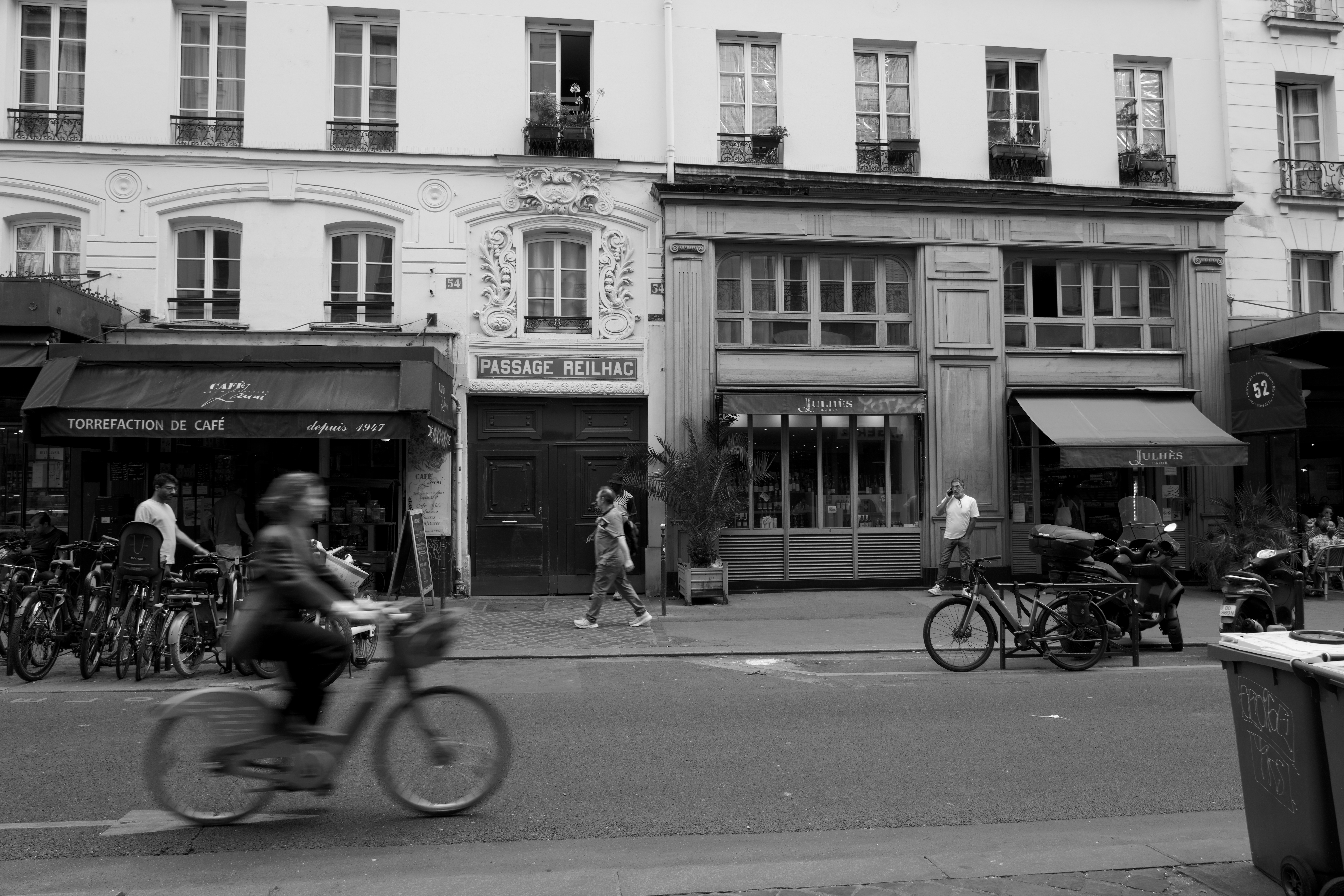
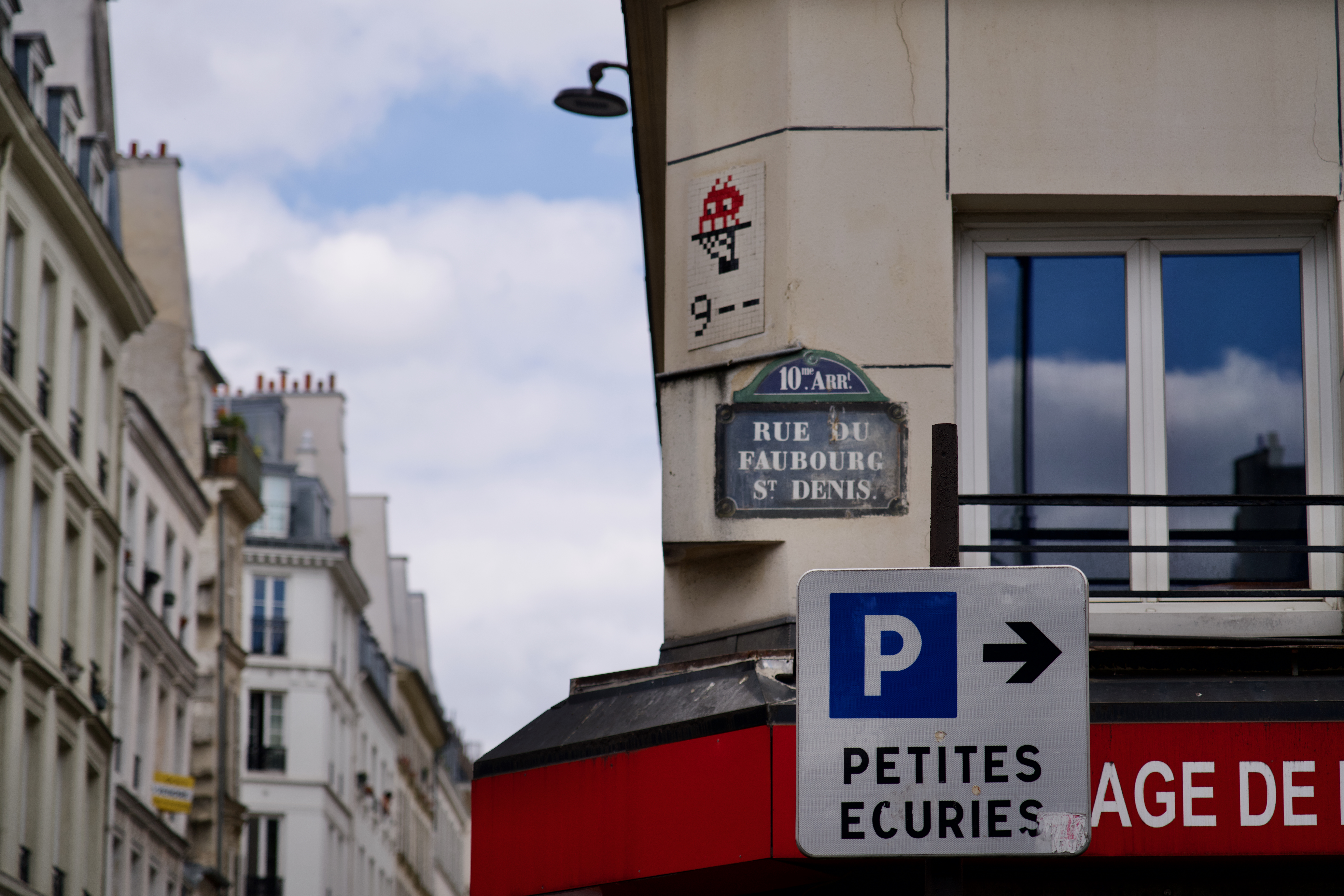
The name of our little street, which translates to ‘courtyard of the little stables’, derives from the fact that the passage is adjacent to the Rue des Petites Écuries, which was close to the site of the royal French stables before the French Revolution. Our street is immediately adjacent to the fascinating Rue du Faubourg Saint-Denis, which is identified as one of Paris’ rue emblamatique (notable street).
It wasn’t an area that we were thinking about living in when I was wandering all over Paris to look at apartments, but when this apartment came up, it was just so much better in comparison to everything else that I had looked at that I decided I had to take a look.
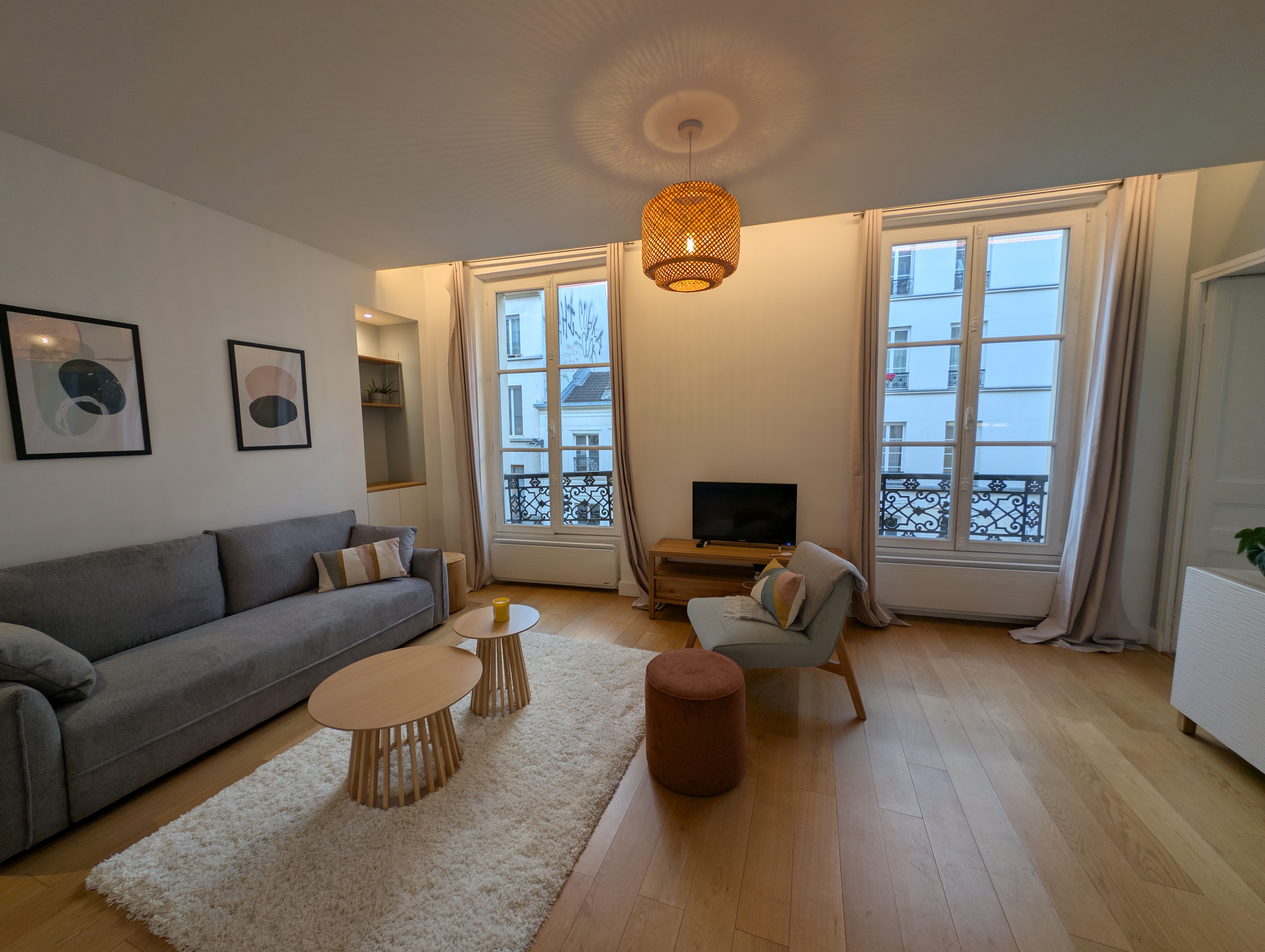
The living room in our apartment (which was already furnished)
As soon as I arrived on the street, I felt instantly drawn to the place. The first thing you notice (apart from the imposing arch, which I’ll get to in a minute) is the hustle. It’s a busy street - packed from end to end with shops and restaurants and bars - and there’s always people moving about. Not tourists, but locals.
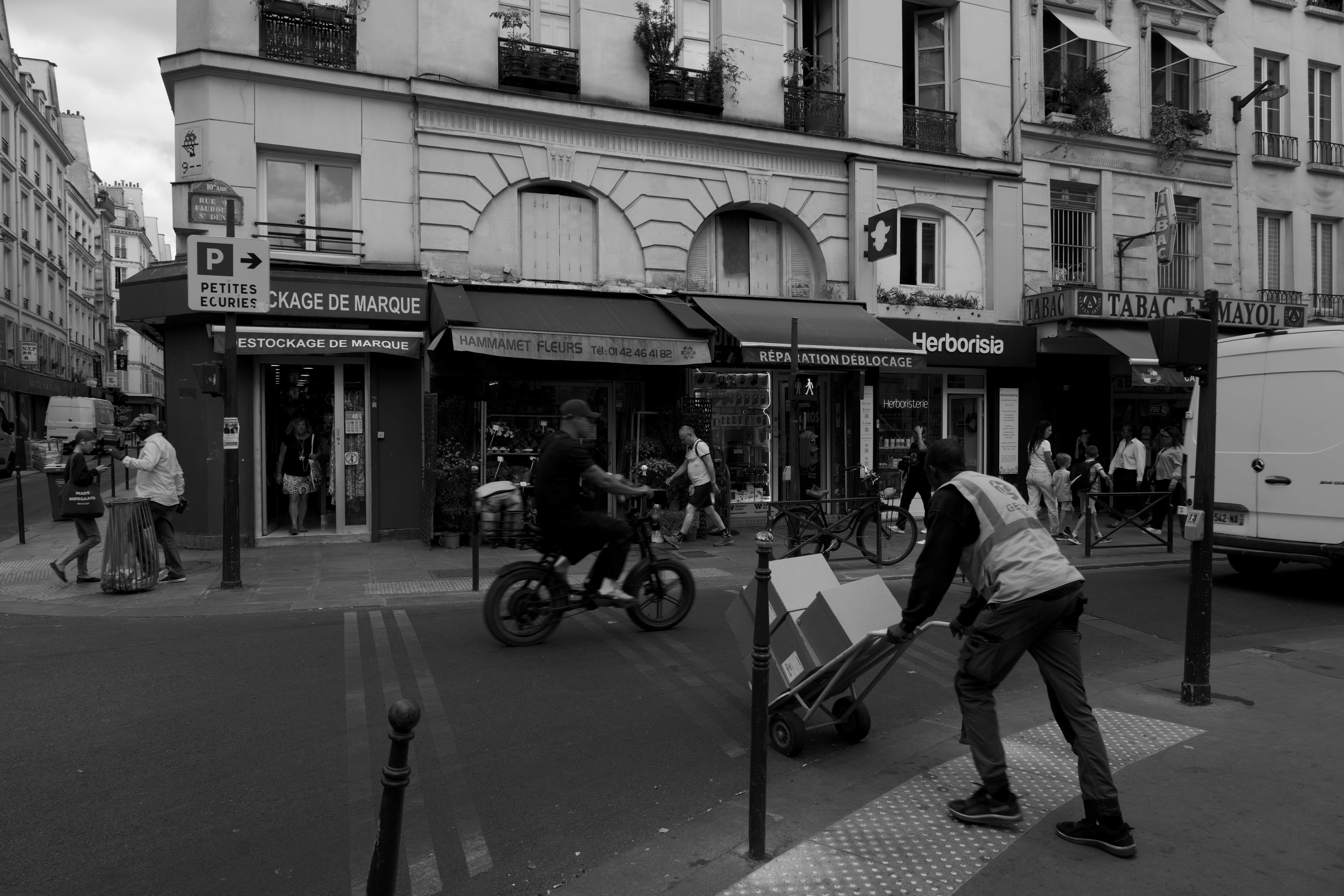
Rue du Faubourg Saint-Denis, midday Wednesday
We’ve never lived in a trendy neighbourhood, but this place is decidedly cool.
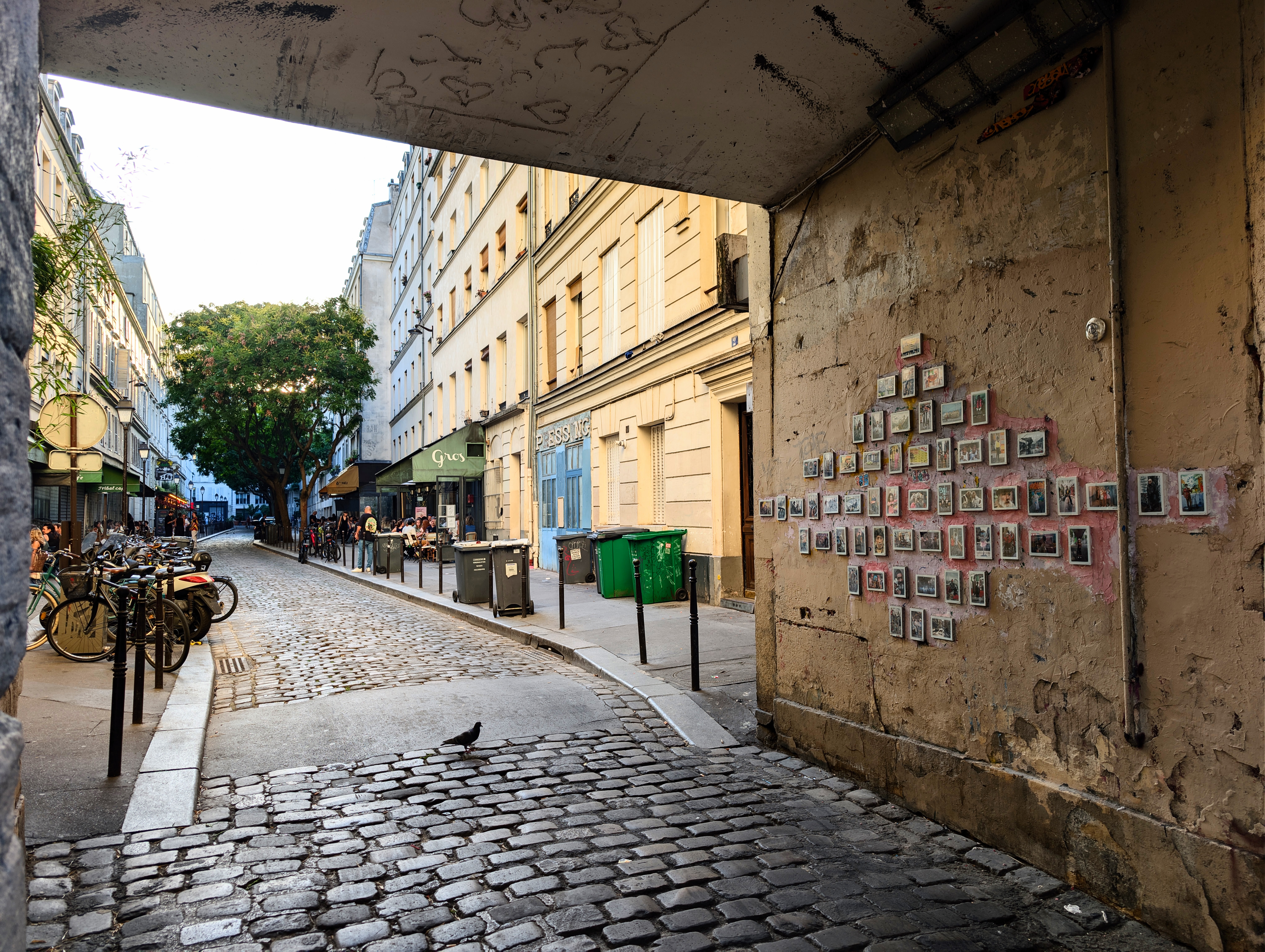
Even the entrance to Cour des Petites Écuries is cool
It’s dynamic and diverse, removed from the tourist throngs of Paris, and strongly influenced by immigrant cultures. The diversity is reflected in the people who walk the streets and the restaurants serving everything from Mexican, Kurdish, and Indian cuisine to West African, Syrian and French cuisine.
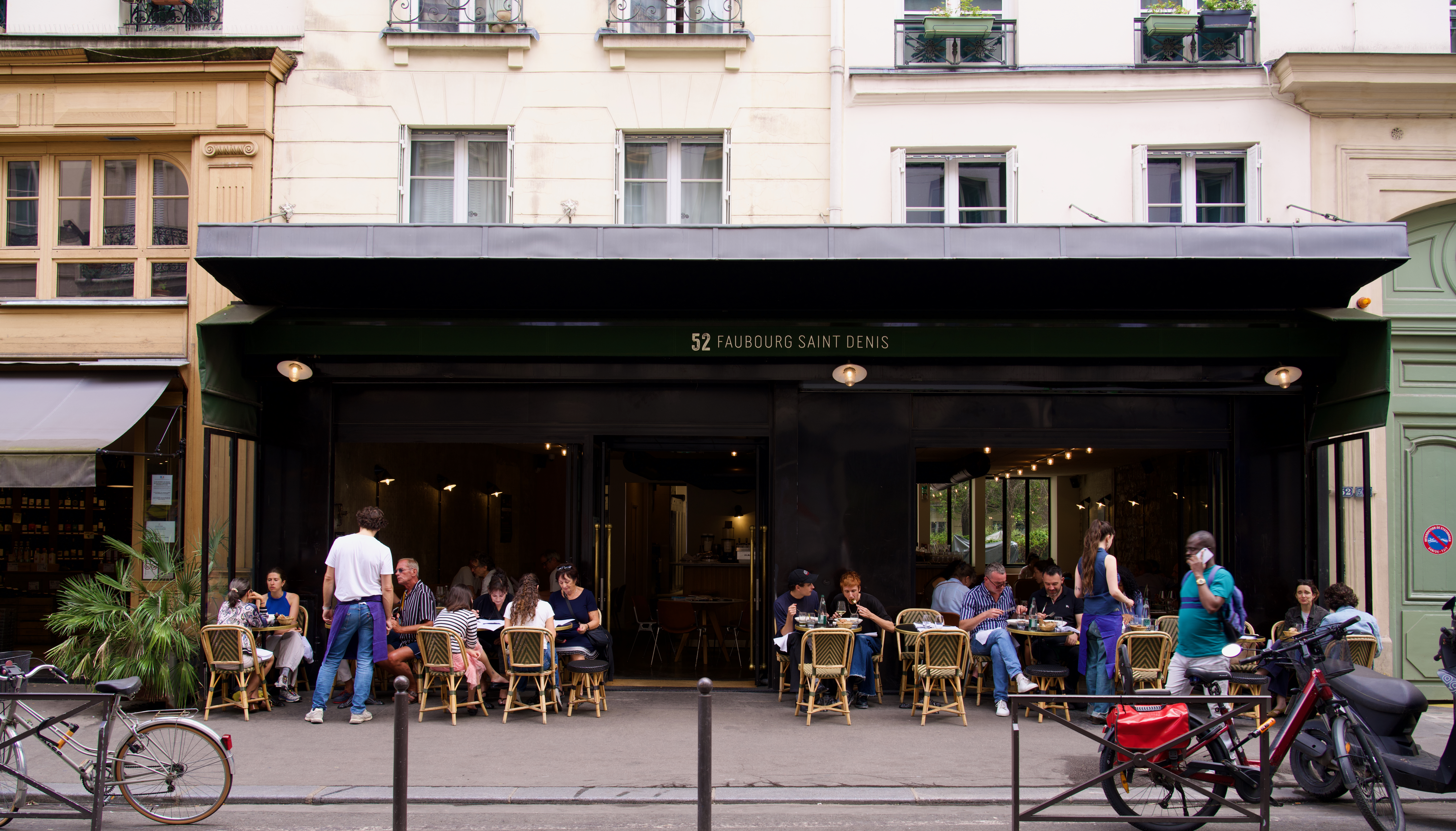
All along Rue du Faubourg Saint-Denis there is an astonishing array of cafés, bars, restaurants, grocers, boulangeries, florists, and all sorts of bric-a-brac stores selling everything you could possibly need. We could live in Paris for years and never need to leave this street.
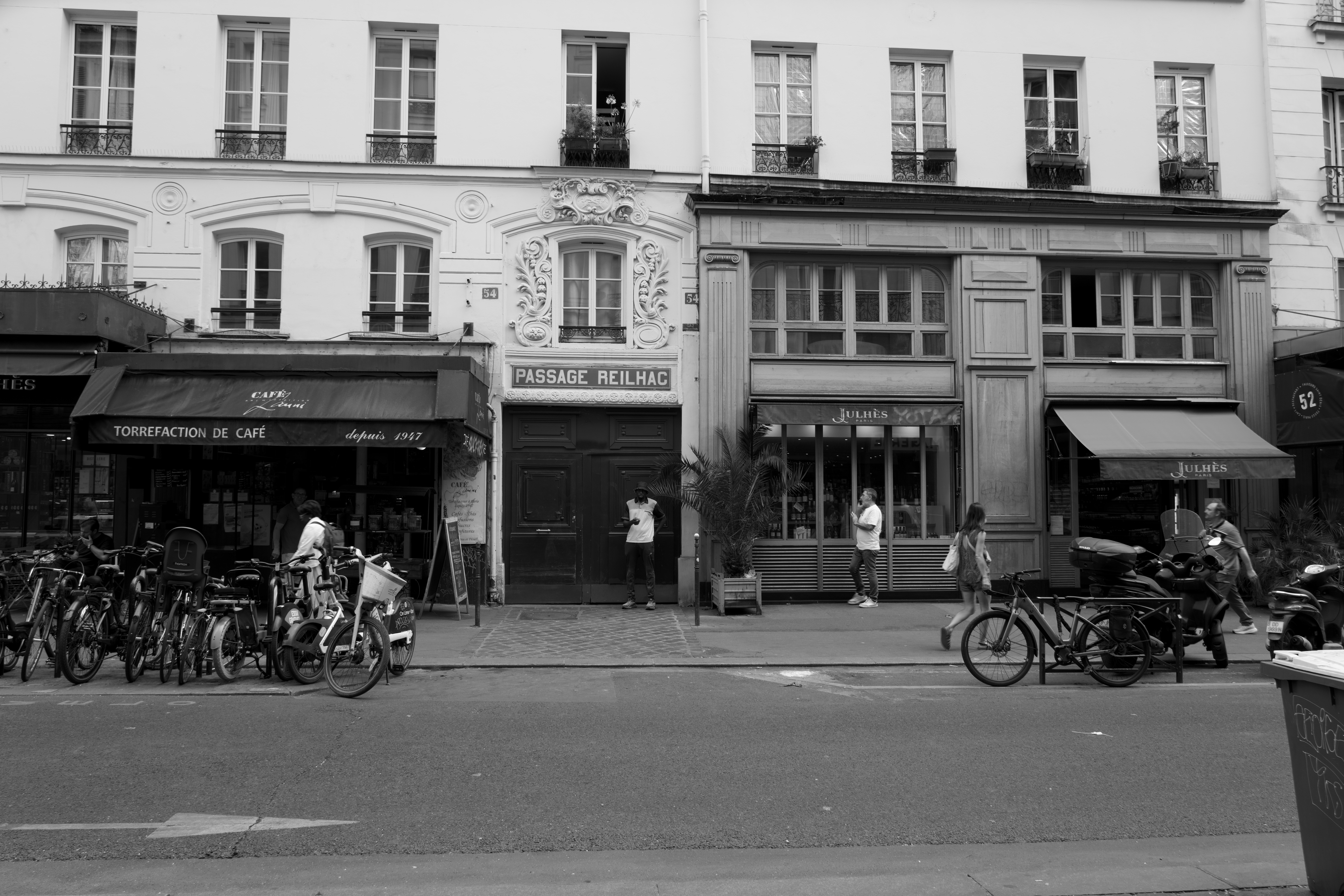
But to paint a more vivid picture, within 100m of our front door, you can find: two boutique bottle shops, a falafel place, two Kurdish places (one for take-away and one for dine-in), a bao restaurant, a hipster coffee shop (which sells a 200g bag of beans for €24) and a traditional coffee roaster (where we buy our 250g bag for €6), PNY and Dumbo burger joints, three classic French bistros, as well as a venerable Art Deco bouillon (with its original architecture and glasswork from 1906), a Corsican wine bar, a top 50 cocktail bar, an American-style diner, an Italian pizza restaurant and a bunch of other small, barely notable establishments that we may never set foot in.
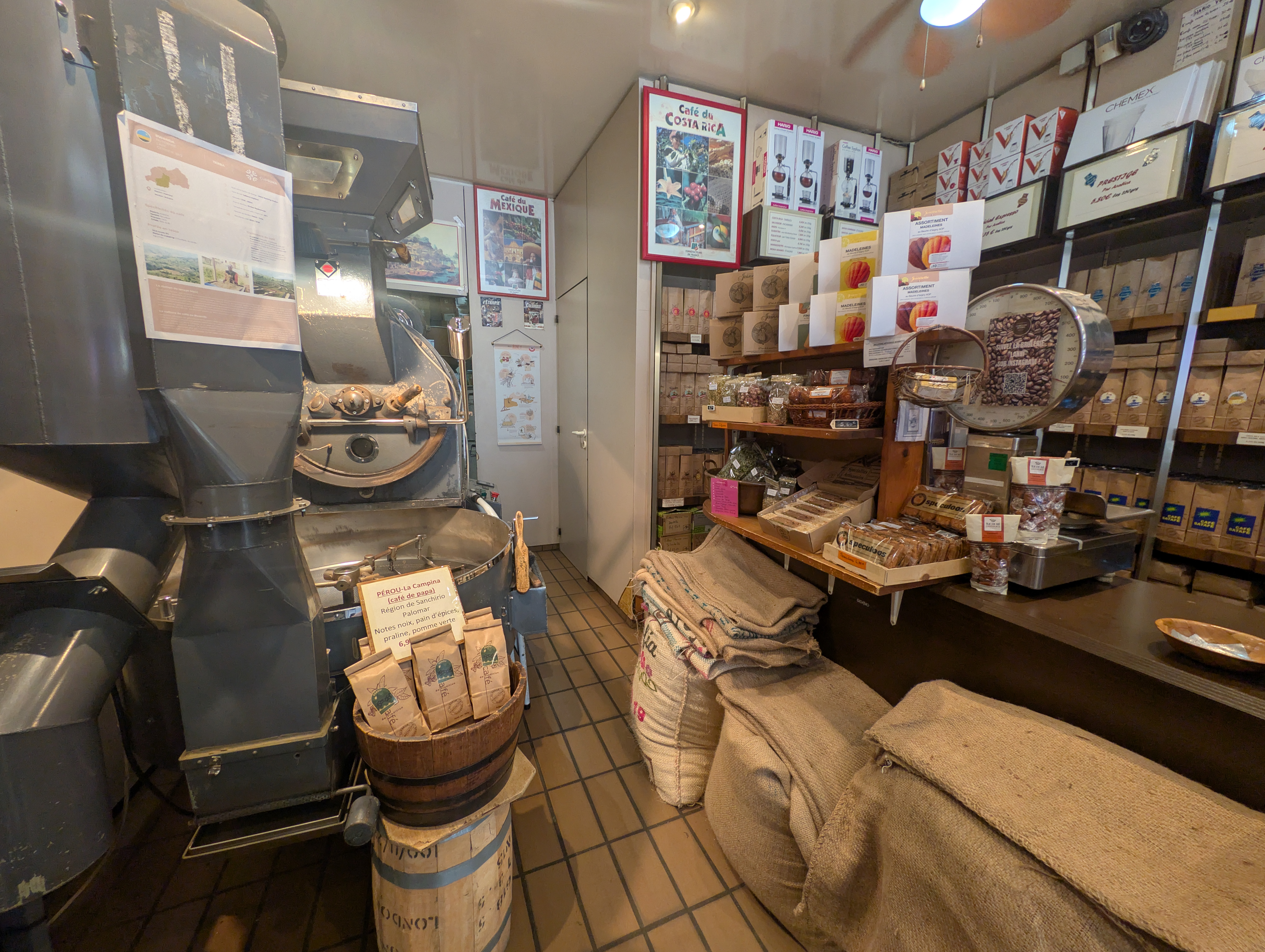
Inside the coffee roaster where we buy our coffee
And of course, there are the essentials - a florist, a boulangerie, a fromagerie (because in France a whole shop can be dedicated to selling only cheese), a fruit and vegetable grocer stocked with impeccable produce, a pharmacy and two supermarkets.
Our cheese shop, next door to my favourite wine bar
And then within a few hundred metres in any direction, there’s an unending number of bistros, bakeries, restaurants, bars, cafés and shopping boutiques. Along the perpendicular street of Rue du Château d’Eau, there is one of my favourite bakeries in Paris and our go-to French brasserie - La Petite Louise - where I am always guaranteed a crème brûlée.
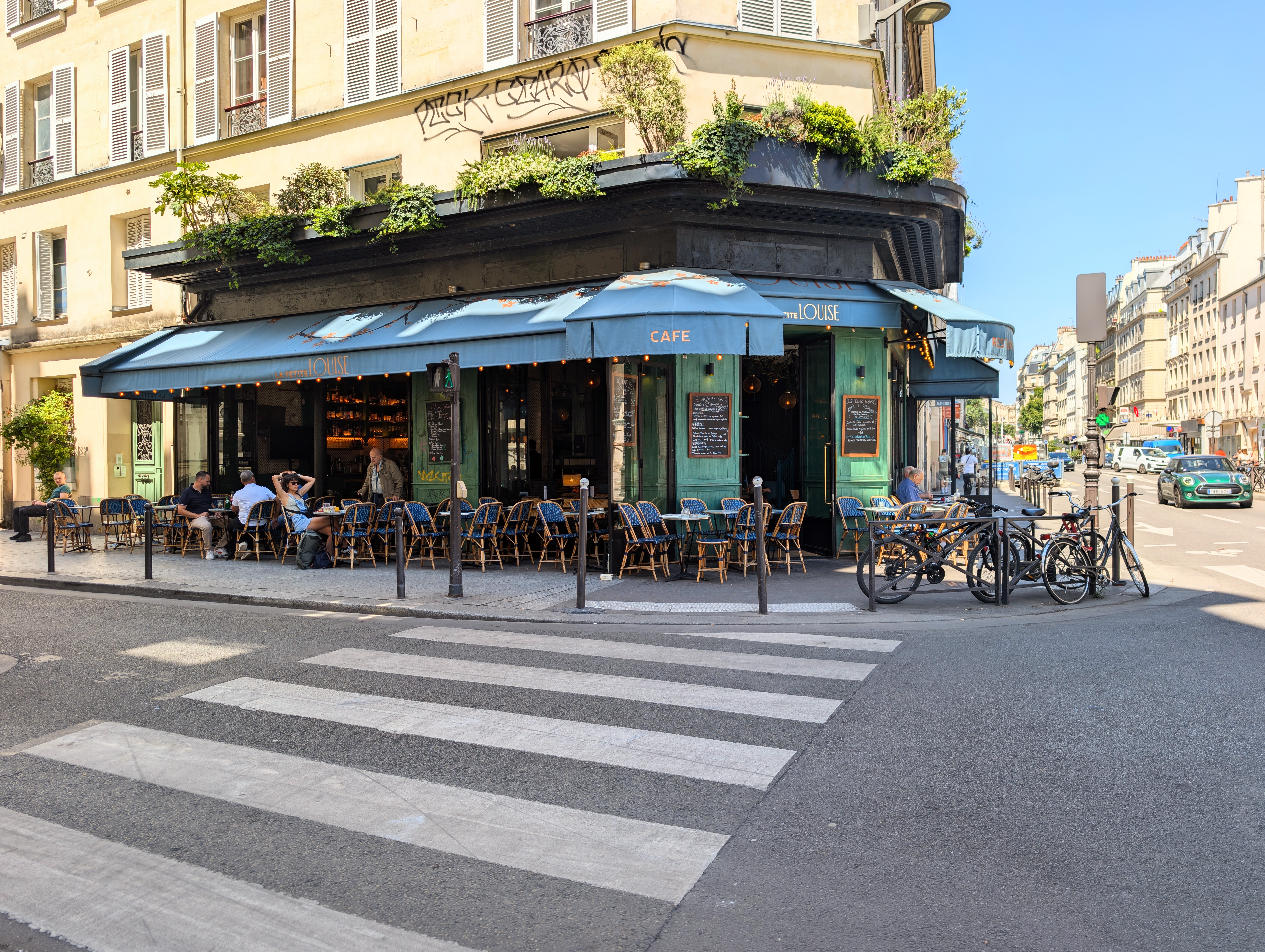
La Petite Louise
It’s such a lively area that even on a Monday night, the streets are bustling and the terrasses are full of people dining and drinking well into the night, summer or winter, rain or shine. I can’t think of a single place in Sydney that compares.
And while the hustle and bustle of modern Paris is apparent, there is also evidence of this great city’s historical past. Back in the 1600s, this area was not part of the city of Paris at all, but sat outside the city’s walls.
Porte Saint-Denis is an imposing arch that is immediately visible, and omnipresent, for anyone wandering Rue du Faubourg Saint-Denis.
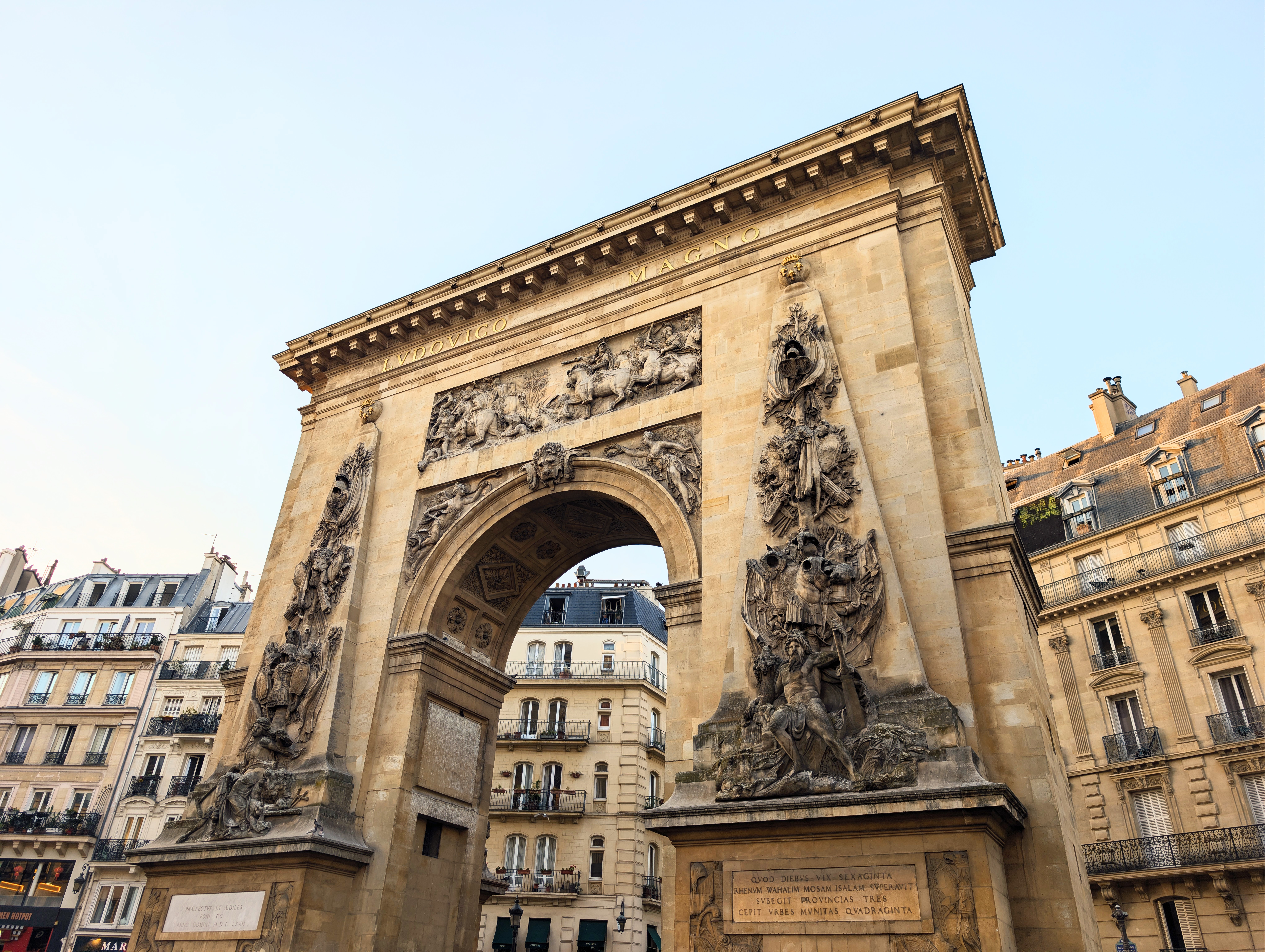
The Porte Saint-Denis at the entrance to Rue du Faubourg Saint-Denis
Porte Saint-Denis is the oldest of the four triumphal arches still standing in Paris today. It was built in 1672, well before the more famous Arc de Triomphe de L’Etoile, which was not built until 1836. The arches in Paris were originally gates to the city, marking the entrance to the boundaries of what was then the city. These arches were commissioned by Louis XIV to mark the victories obtained by Napoleon during the Great Napoleonic War.
Although the appearance of Parisian triumphal arches dates back to the Napoleonic era, they are a legacy originating from Roman civilization. At that time, a triumphal arch was erected to celebrate a Roman victory at war. This celebration allowed the army to be purified after war, as it was believed that after battling the enemy, soldiers had to pass through a magical gate—a triumphal arch—upon entering their city to cleanse themselves. This Roman tradition endured through the centuries as a symbol of triumph, as well as a way to commemorate an important event or honour a notable figure.
Today, however, there is no wall around Paris (unless you count the périphique), and the Porte Saint-Denis is not a gate to the city, but a historical structure more or less in the middle of the city.
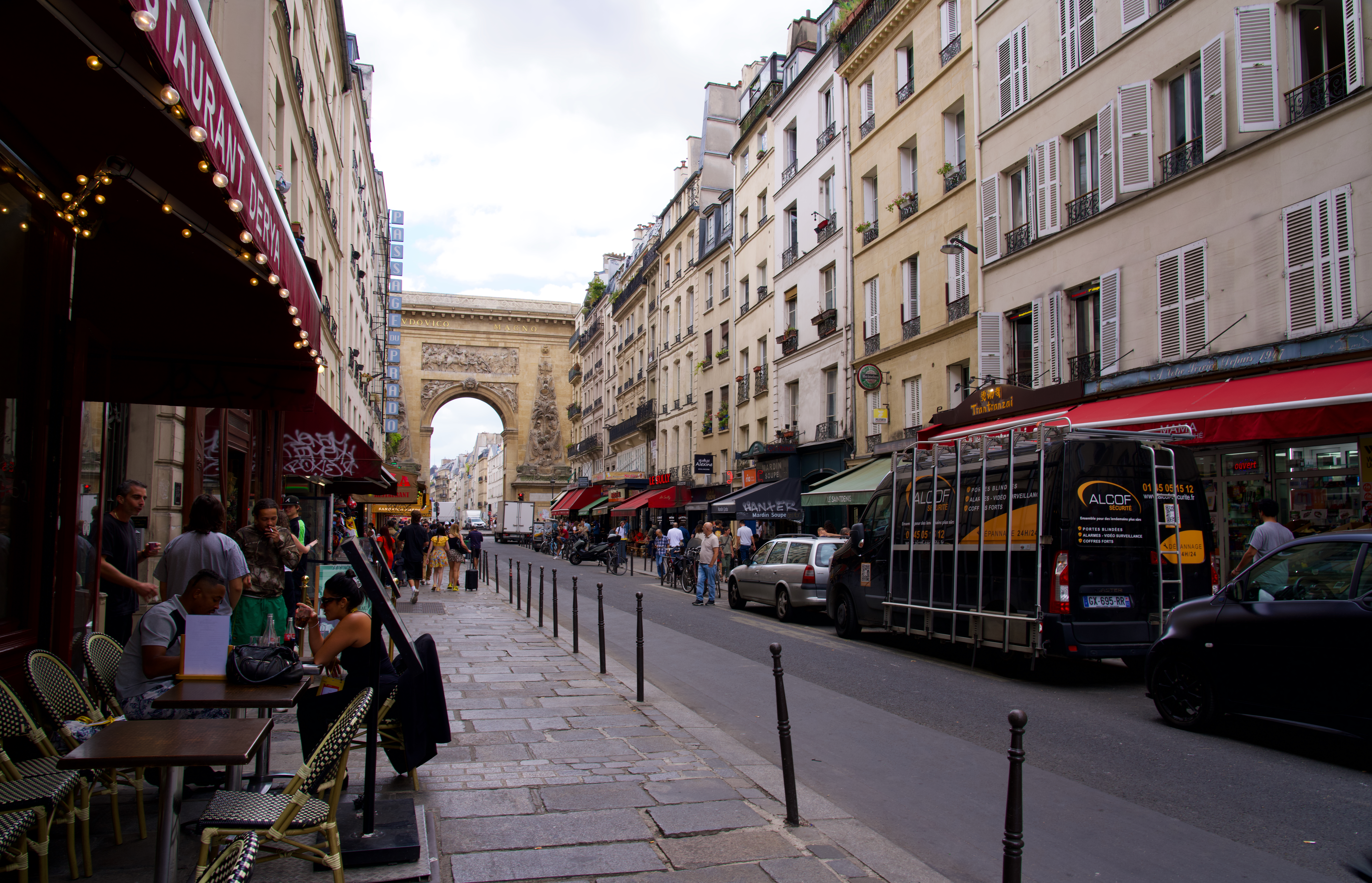
On Rue du Faubourg Saint-Denis, looking back at the arch
To live in Paris, one must live in one of the twenty arrondissements within the périphique (the ever-congested ring-road which defines Paris proper today), which all have a postcode of 75000. And so, with a postcode of 75010 (10 for the 10th arrondissement) we’re officially living in Paris. However, we are not, and nor will we ever be, Parisian. That title can only belong to someone who was born here… and I am okay with that, because let’s face it, they have a bad reputation. But that’s a topic for another day!
Just beyond the other end of Rue du Faubourg Saint-Denis, you can find two of Paris’ principal train stations - Gare du Nord and Gare de L’Est (which can take you almost anywhere in Europe), as well as one of Paris’ best produce markets; marché couvert Saint-Quentin. So our place is very conveniently located. We walk almost everywhere on foot, and occasionally take the metro when the walk is too far. We’re staunchly refusing to adopt the bicycle way of life.
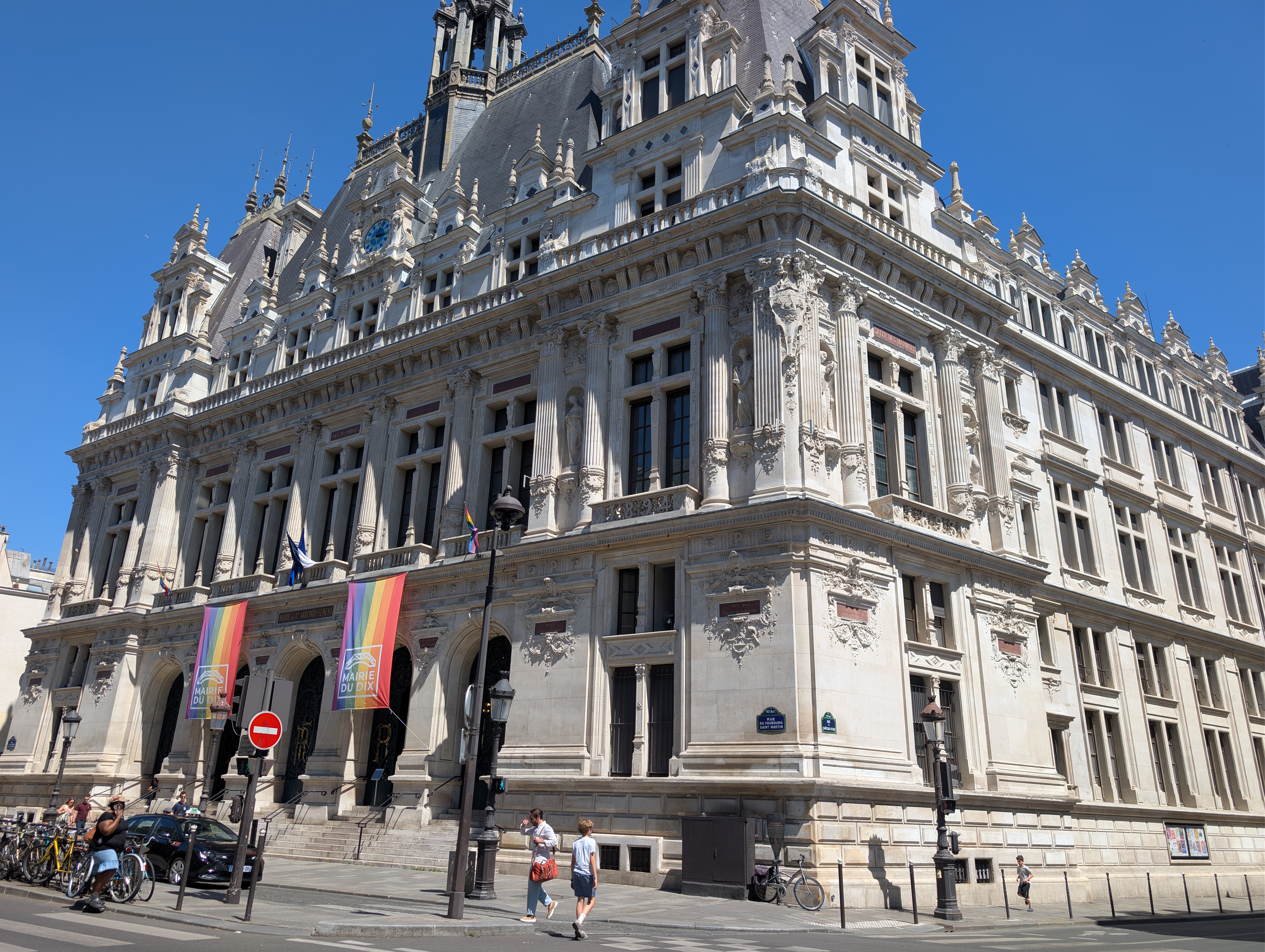
The office of the Mayor of the 10th arrondissement
One of my favourite places in our neighbourhood is the little wine bar just below our apartment called Terra Corsa. Its Corsican (Corsica is an island in the Mediterranean and is one of the regions of France) and they serve simple food and Corsican wine. Every now and then I go for lunch to have a quiche and salad and a glass of wine. They know me now and I got recommendations from the owner for our summer trip to Corsica.
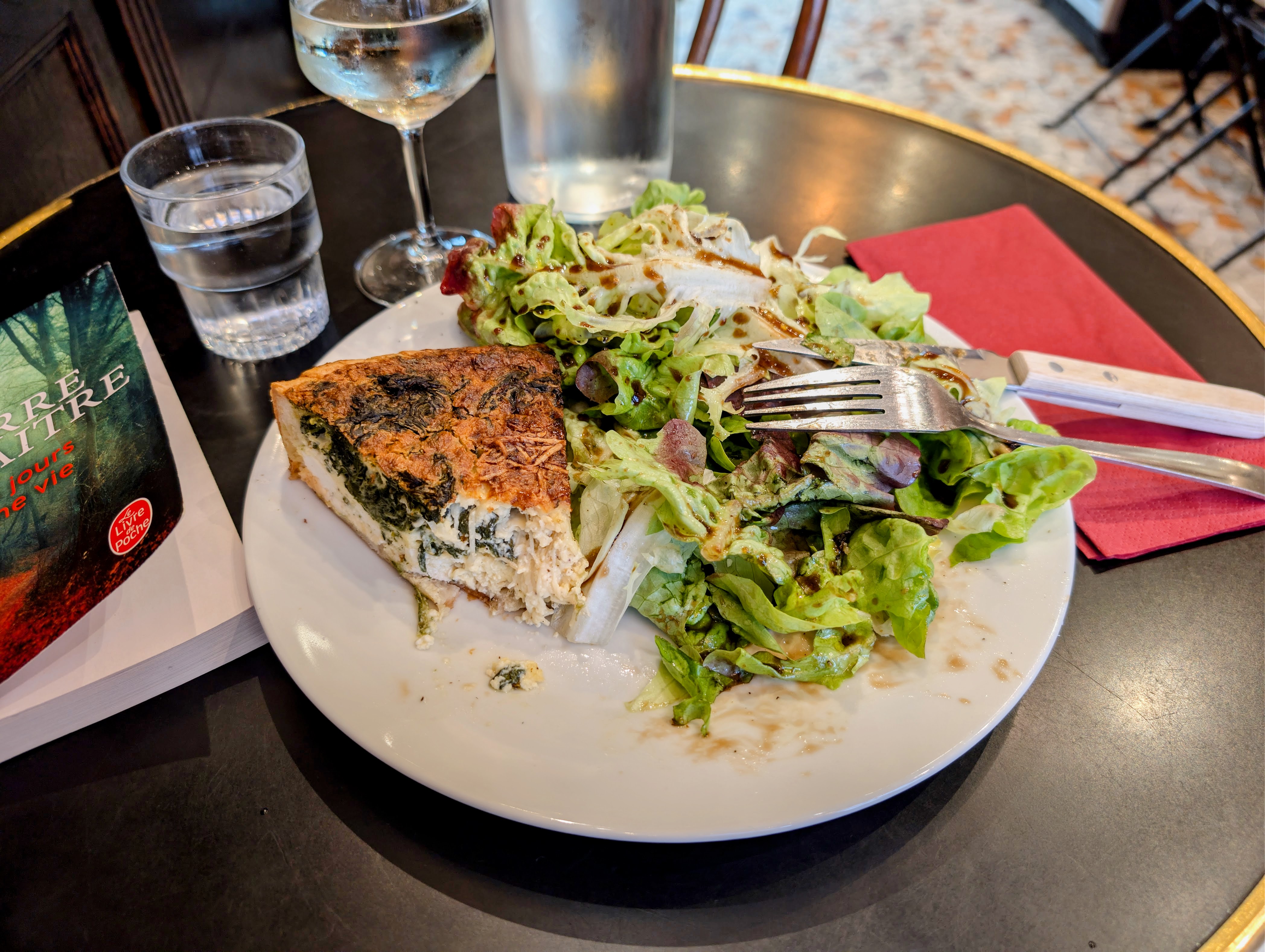
Solo lunching at Terra Corsa
Our local cocktail bar is Le Syndicat. They serve only French spirits and we’re regulars. They know us now and we rarely leave without free drinks.
The unassuming entrance to Le Syndicat
We discovered Urfa Durum the first week we moved in and we barely go a week without eating there or grabbing a take-away sandwich. It’s a Kurdish place serving plates and kebabs comprised of freshly-made, oven-baked flat bread and meat cooked-to-order over hot, smoky coals. It’s a simple, no-fuss meal prepared with exceptional produce to a high standard, and without a smile. That’s eating locally in Paris.
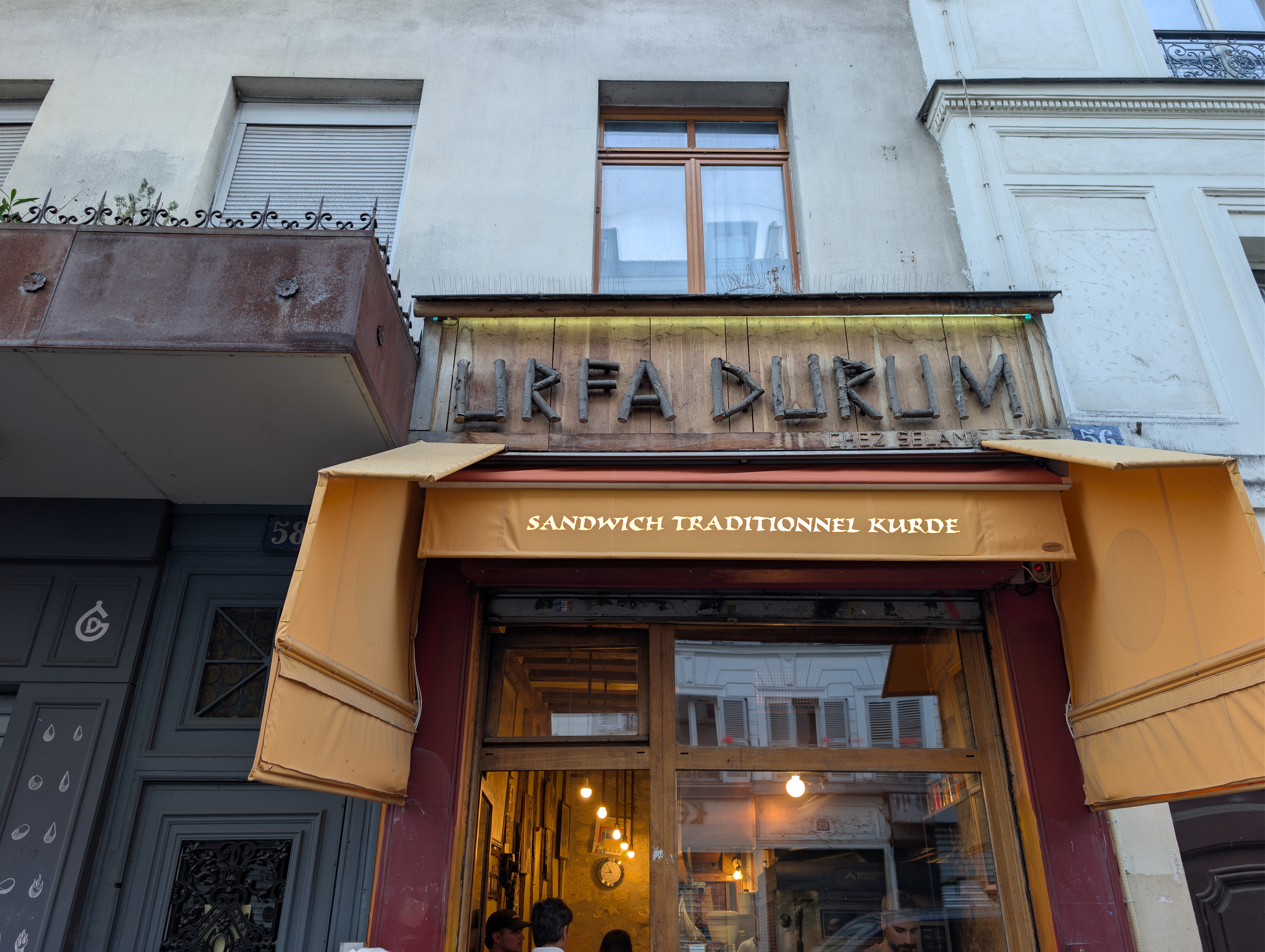
The shop window for the take-away Urfa Durum
Our neighbourhood has its downsides. Its rough around the edges. It’s grungy and dirty. The noise never stops. Even with double glazed windows, we use ear plugs or white noise at night to sleep.
But it’s authentic. It’s buzzing and it’s endlessly fascinating.
And for now, it’s home.