While we’re living in Paris, we’ve set a goal to visit every region of mainland France, plus Corsica, before we move home.
The regions of France comprise the 12 regions within “the hexagon” (mainland France), the Mediterranean island of Corsica, and the additional overseas territories (Guadeloupe, Martinique, Reunion Island, Guiana).
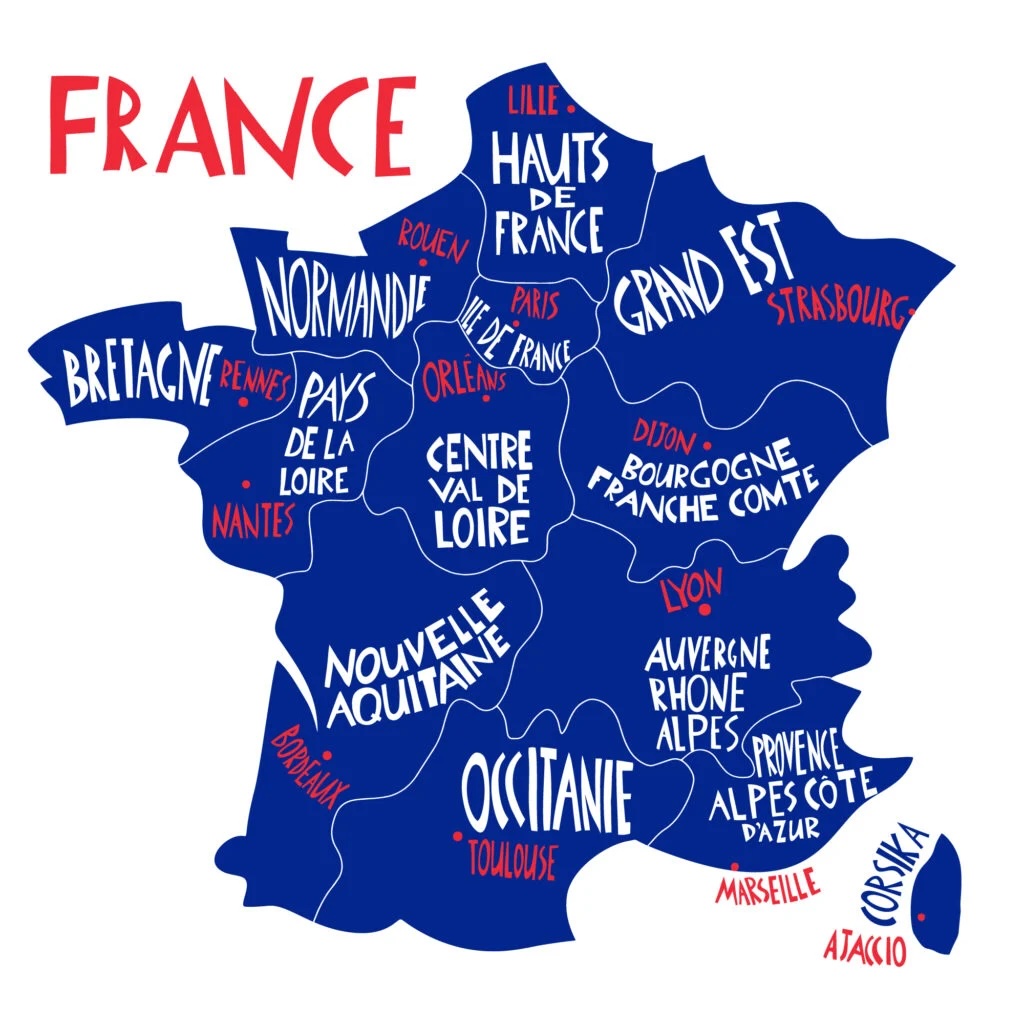
The regions of France
I found a website describing each region with little slogans. I’m not sure if they’re better or worse than the numberplate slogans that the Australian states and territories adopted back in the day.
The 13 regions in European France (and their tag lines) are:
- Nouvelle-Aquitaine: where vines meet the ocean.
- The Grand Est: at the heart of Europe.
- Auvergne-Rhône-Alpes: the mountains in all their glory.
- Normandy: the good life.
- Hauts-de-France: land of the North.
- Burgundy Franche-Comté: the art of living.
- Ile-de-France: a capital region.
- Centre-Val-de-Loire: the run of the river.
- Pays-de-la-Loire: the open air.
- Brittany: land of mystery.
- Occitanie: life in the sun.
- Provence-Alpes-Côte-d’Azur: concentrated Mediterranean.
- Corsica: a preserved jewel.
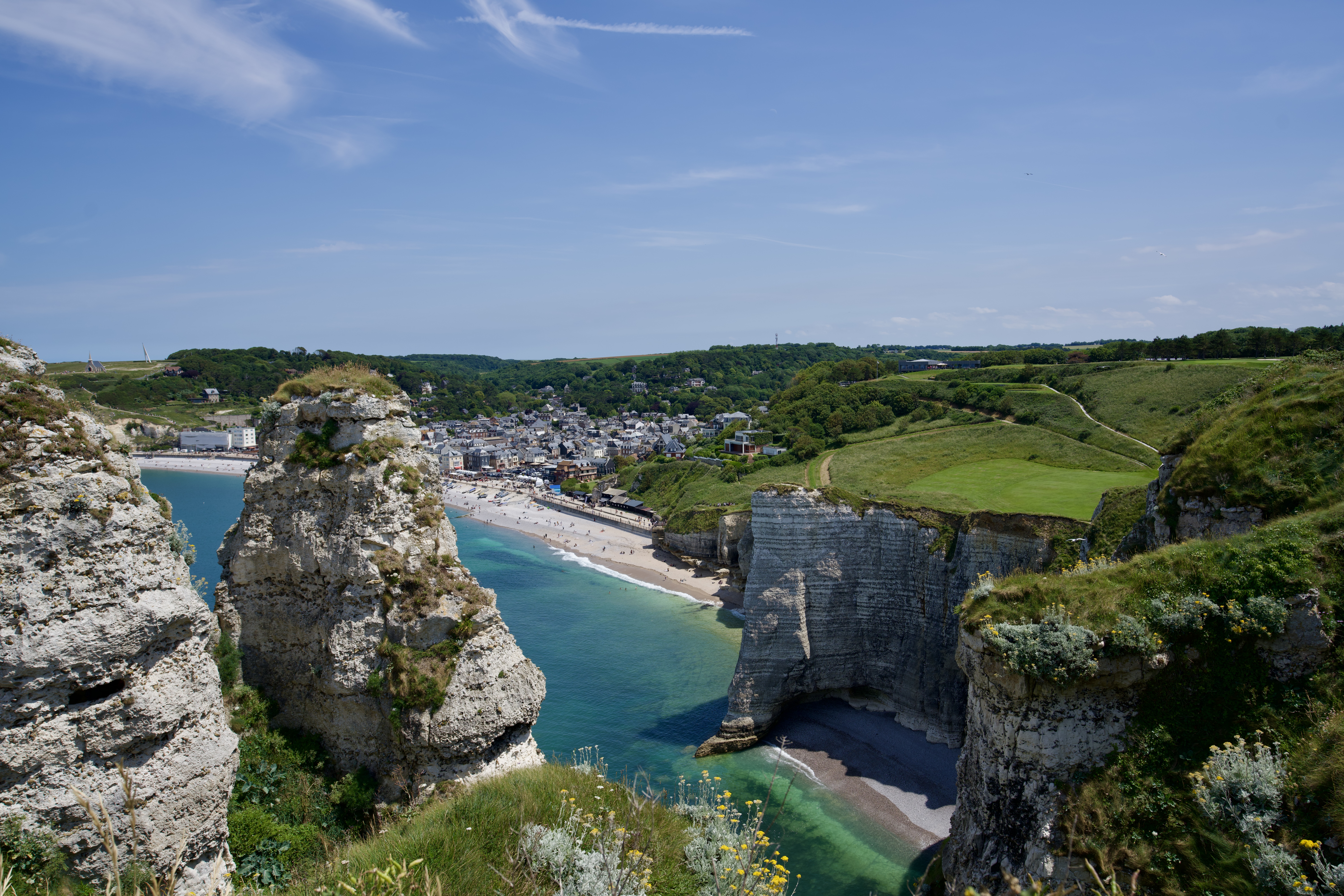
The coast of Normandy
The topic of this blog is Normandy.
Normandy is known for many things. Its got lost of Cs: cows, cliffs, Camembert, cider and Calvados.
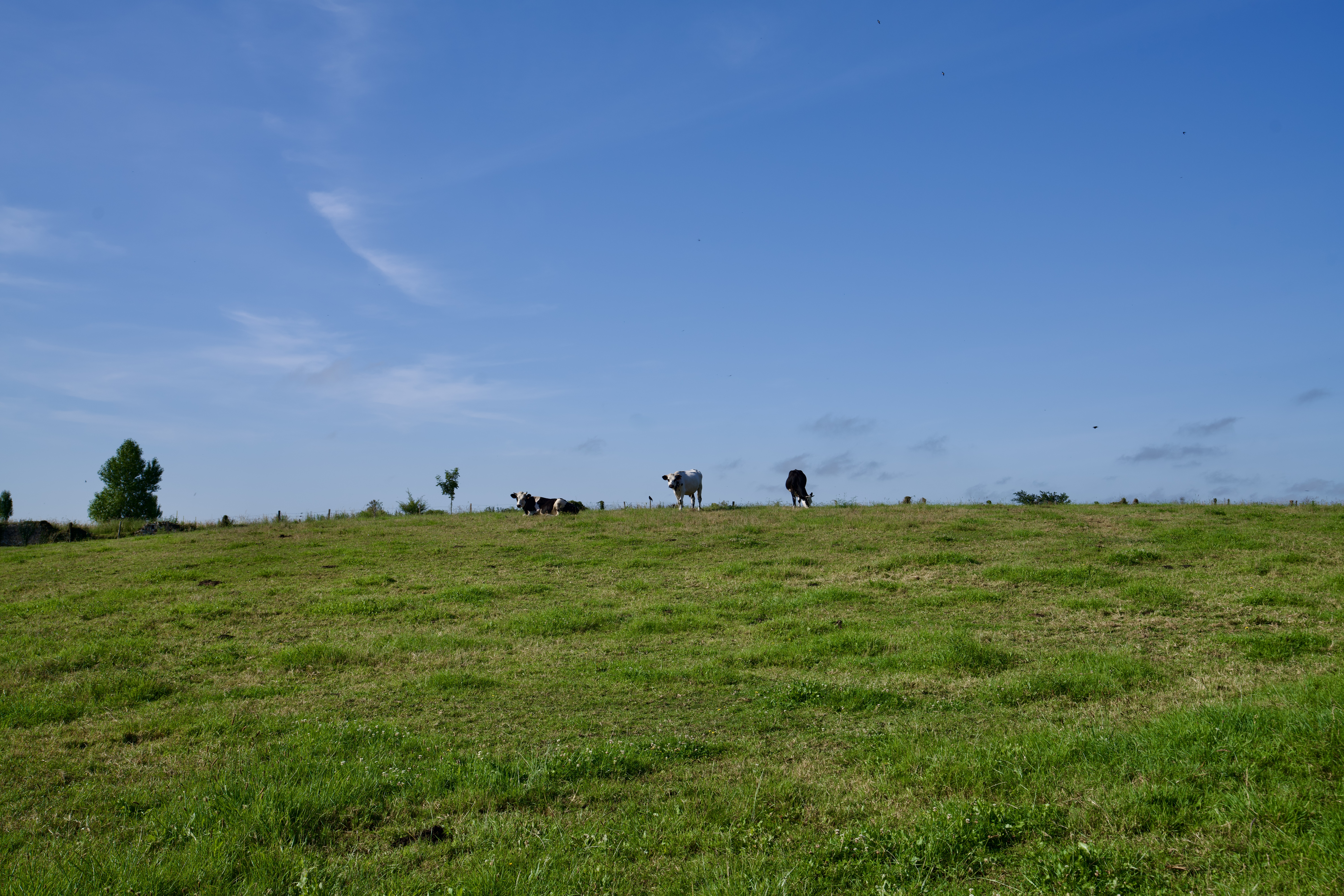
Cows in Normandy
Its got Mont St Michel. It is steeped in WWII history, particularly with the landing sites of D-Day.
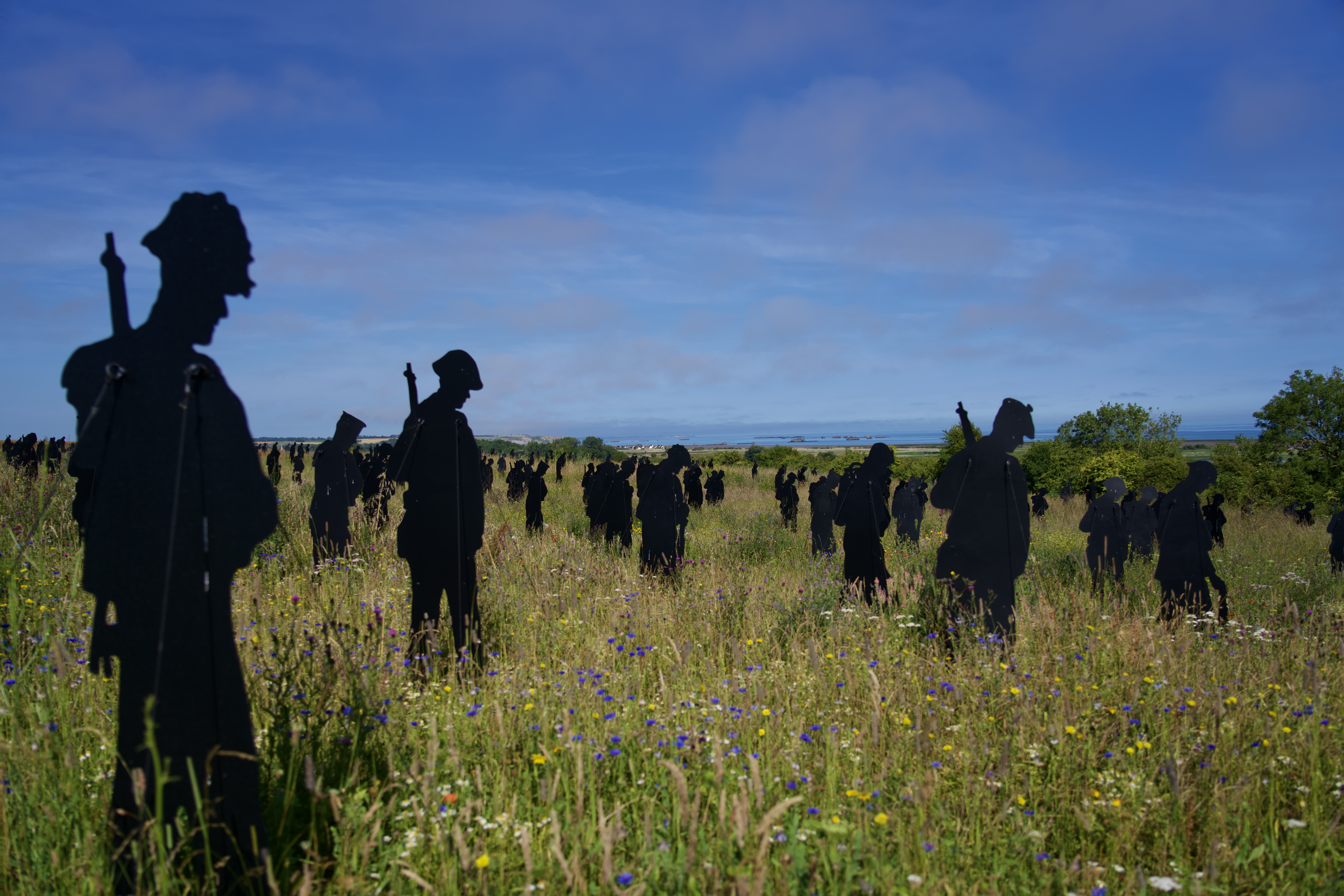
Artwork at one of the WWII memorials in Normandy
Punctuating its dramatic and violent coastline are sandy beaches and striking, white chalk cliffs that plunge into the ocean. Also, like in many parts of France, there are a number of picturesque towns dotted with historic half-timbered buildings with thatched roofs. And if that wasn’t enough, there are rolling green hills and picture perfect gardens that inspired a generation of Impressionists.
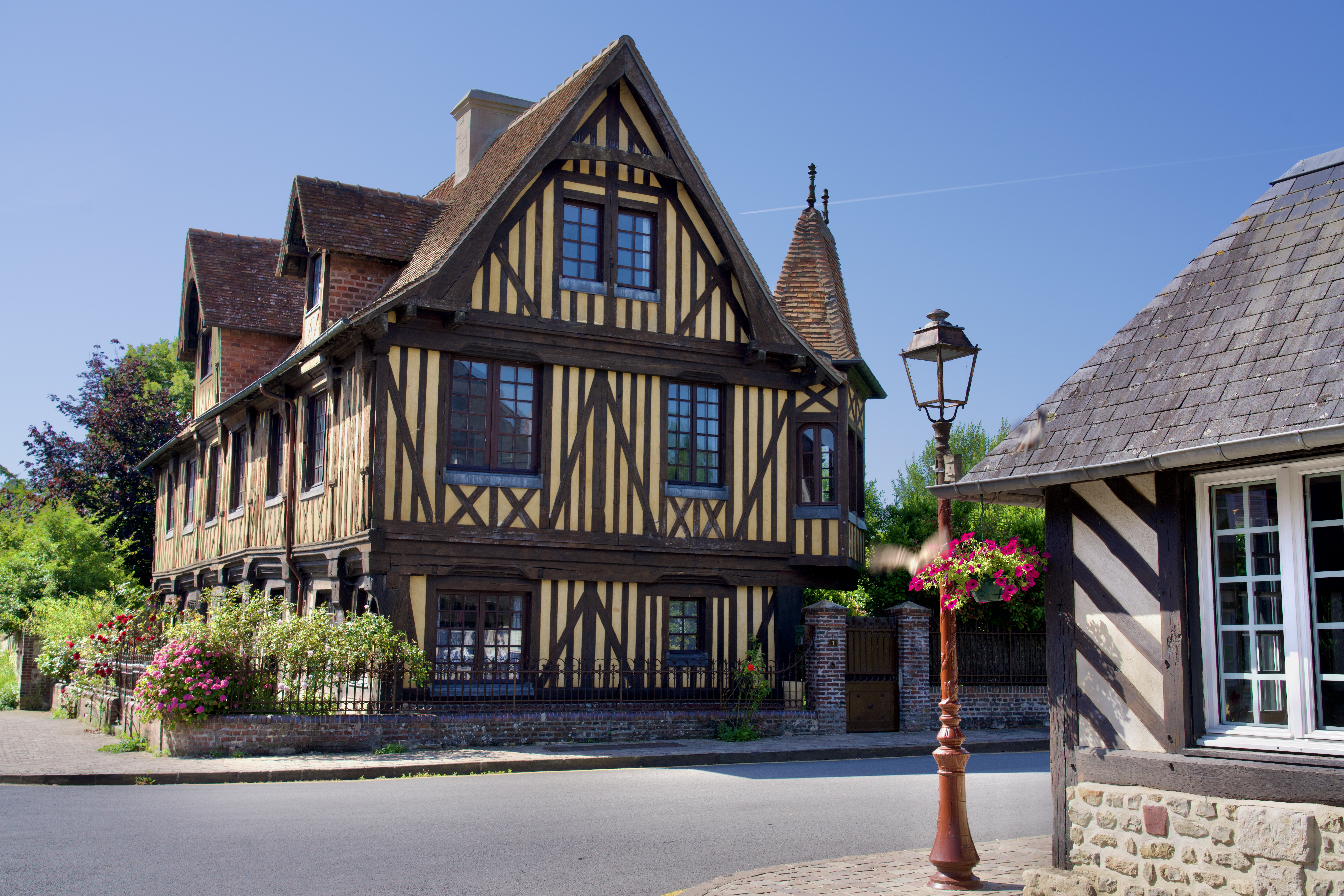
Quaint buildings in Normandy
Max joined us from Australia and we spent four days exploring Normandy. There is a lot to see and we barely scratched the surface. For example, we didn’t even go to Mont St Michel, which is France’s second most visited attraction, after the Eiffel Tower. It’s incredibly crowded and it wasn’t the focus of our trip (which was cider, calvados, chalk cliffs and WWII history). Dylan and I plan to go back to Mont St Michel, in the off season, and stay nearby so we can get up early to visit without the crowds.
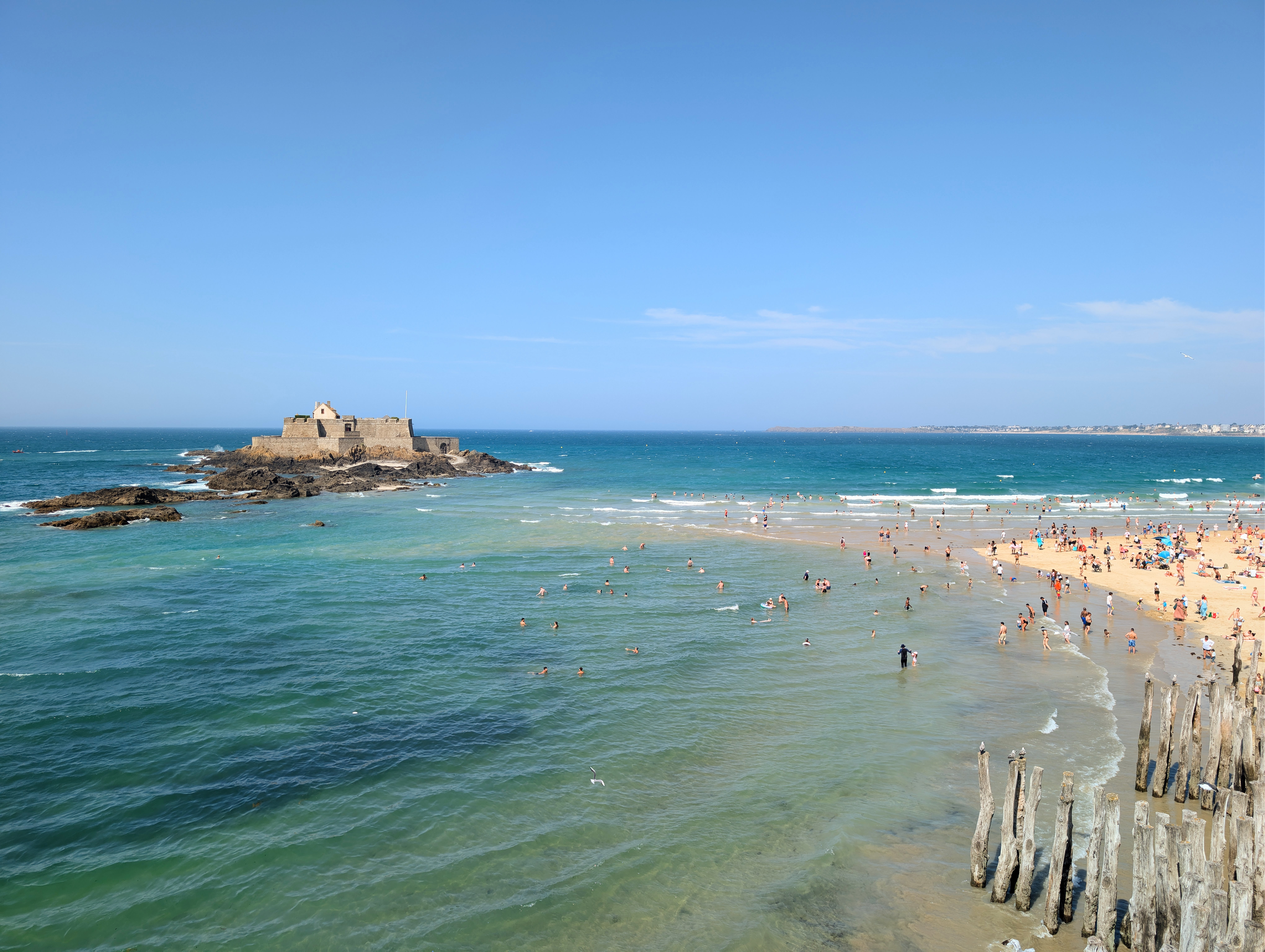
In the end, our trip extended to five days because we decided to avoid the 40+ temperatures plaguing Paris for as long as possible. We hopped over the regional border to Brittany to visit the pretty coastal town of St Malo for one night. But we’ve got another visit already planned to St Malo, and so even though it was a highlight of our Normandy trip, it deserves a post of its own.
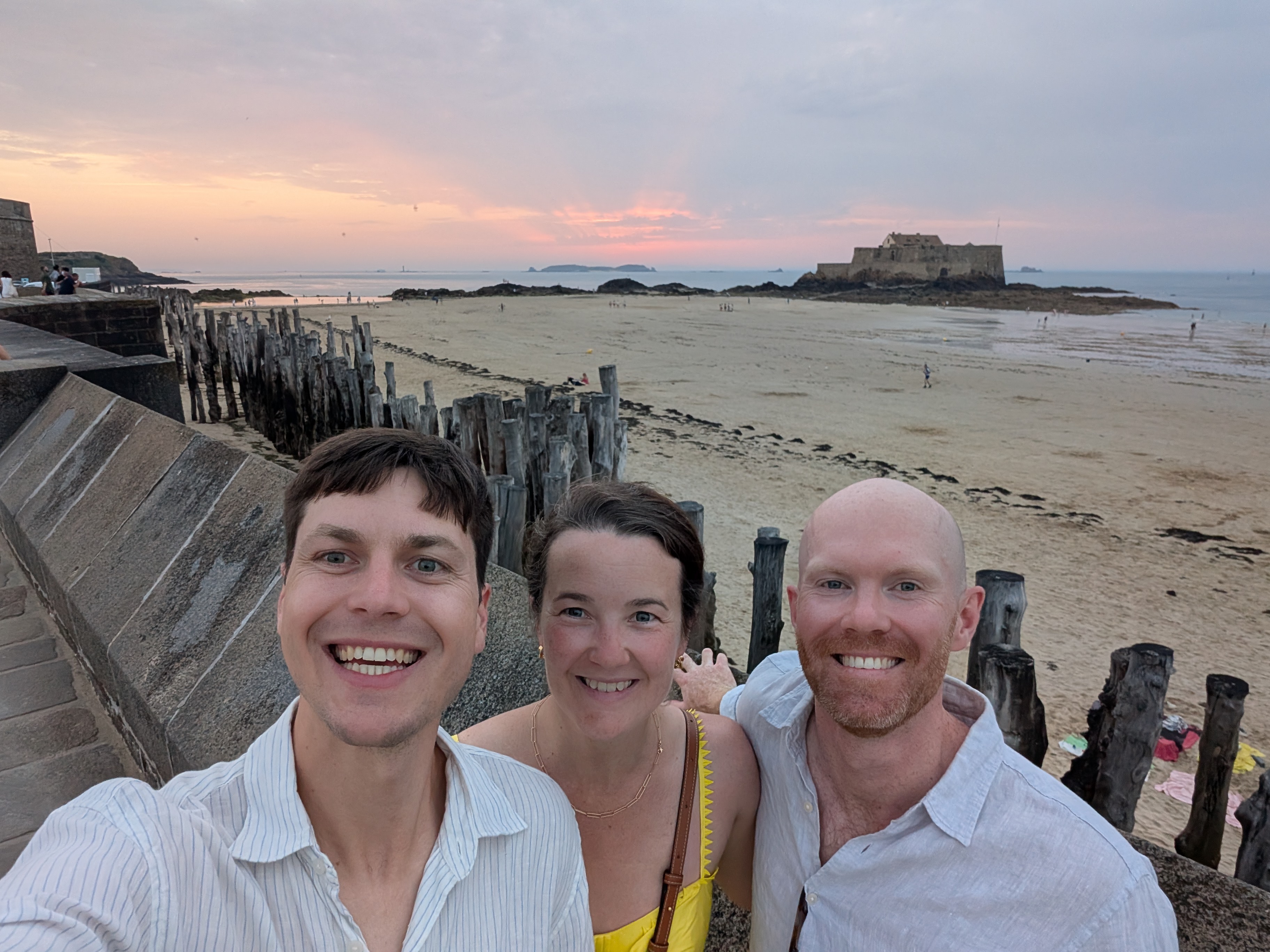
Standing on the ramparts in St Malo at sunset
On the first day of our adventure, we made our way from Orly airport, where we hired a car, to the small coastal town of Honfleur. But before we reached our destination, we needed lunch. It was already late, we were on the motorway, and the options were slim.
I did a quick search and ten minutes later, we pulled up at a restaurant called Hippopotamus, which to my surprise and mild horror, I discovered was a large steakhouse restaurant chain in France. Dylan and Max teased me mercilessly for the choice, but then it turned out to be actually quite good. I had a quality steak frites with pepper sauce for €20 that was better than most I’ve had in Paris. And the service was friendly, which is definitely a step up from Paris.
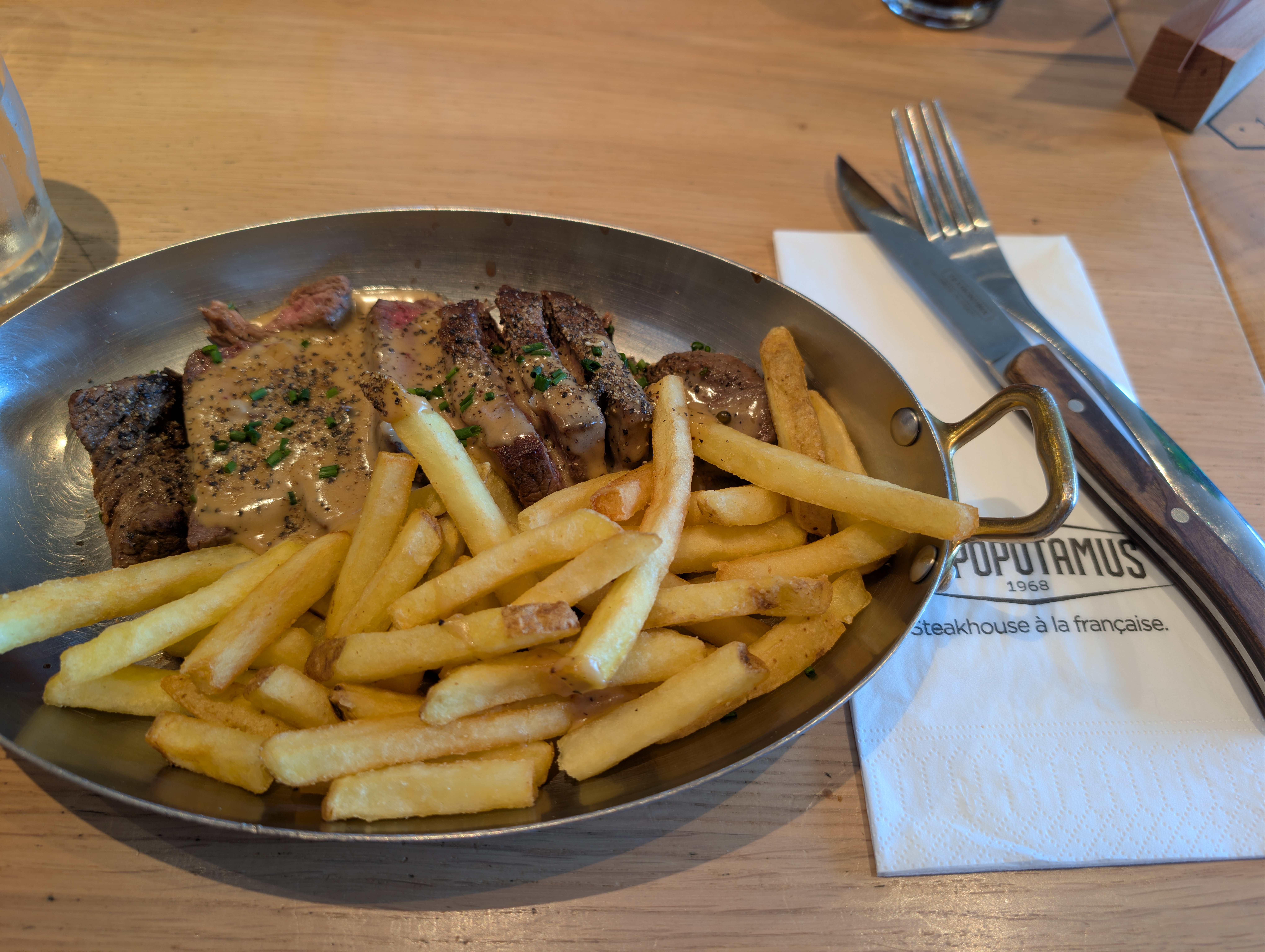
Lunch at the Hippopotamus
We arrived late afternoon in Honfleur to stay one night at the beautiful La Ferme Saint Siméon Hôtel & Spa.
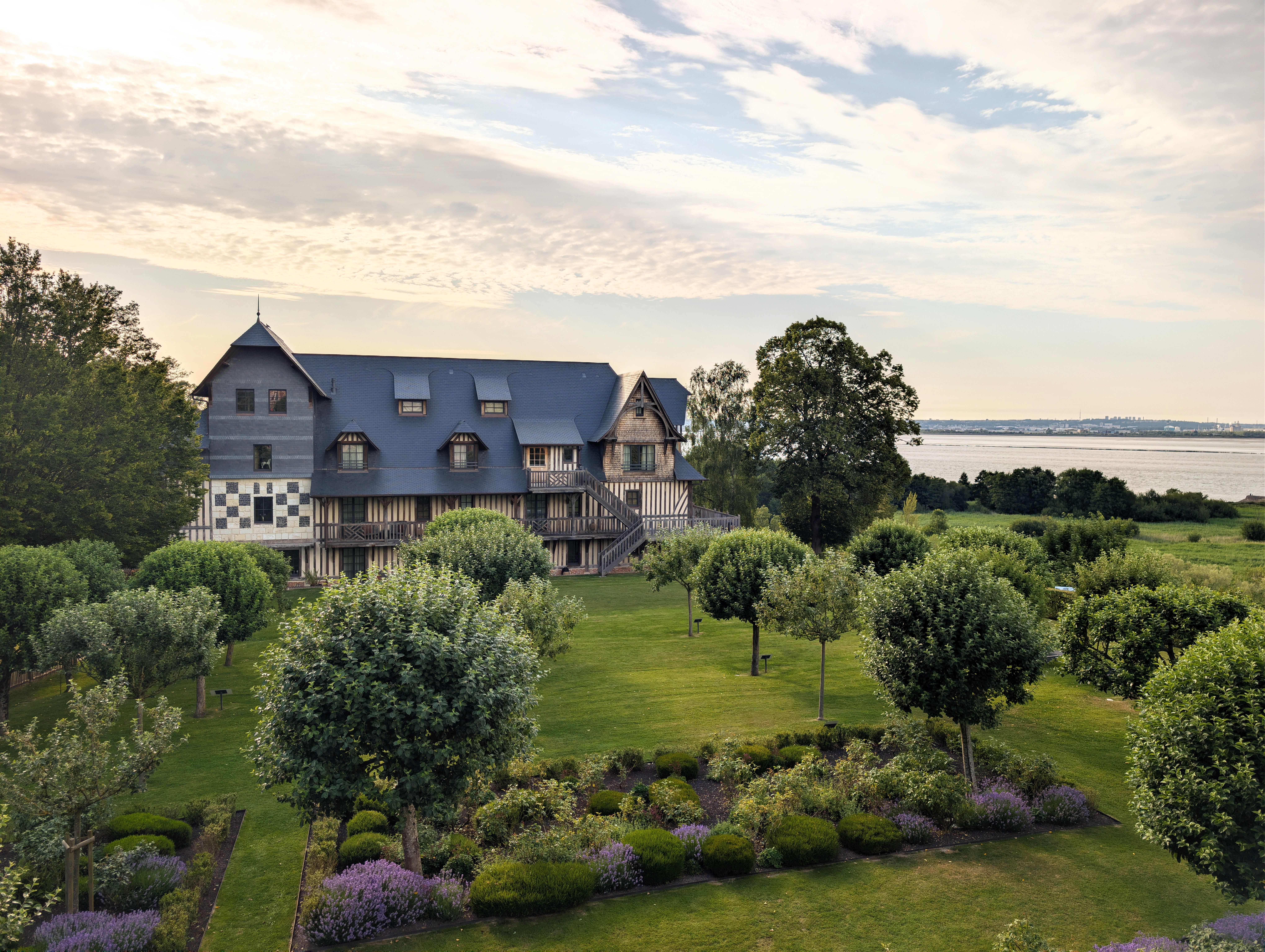
The view from our room at La Ferme Saint Siméon Hôtel & Spa
Upon arrival, we enjoyed a welcome drink of cider in the sun on the terrace, overlooking the ocean. It was the beginning of the heatwave in France, where temperatures were reaching 40℃ in Paris, but it was 10℃ cooler on the coast and so we were very grateful for our timing to be out of Paris. After checking in, we spent 90 minutes enjoying the hot tub and sauna, which was set among the fruit trees, herb garden and flowers in the old potager.
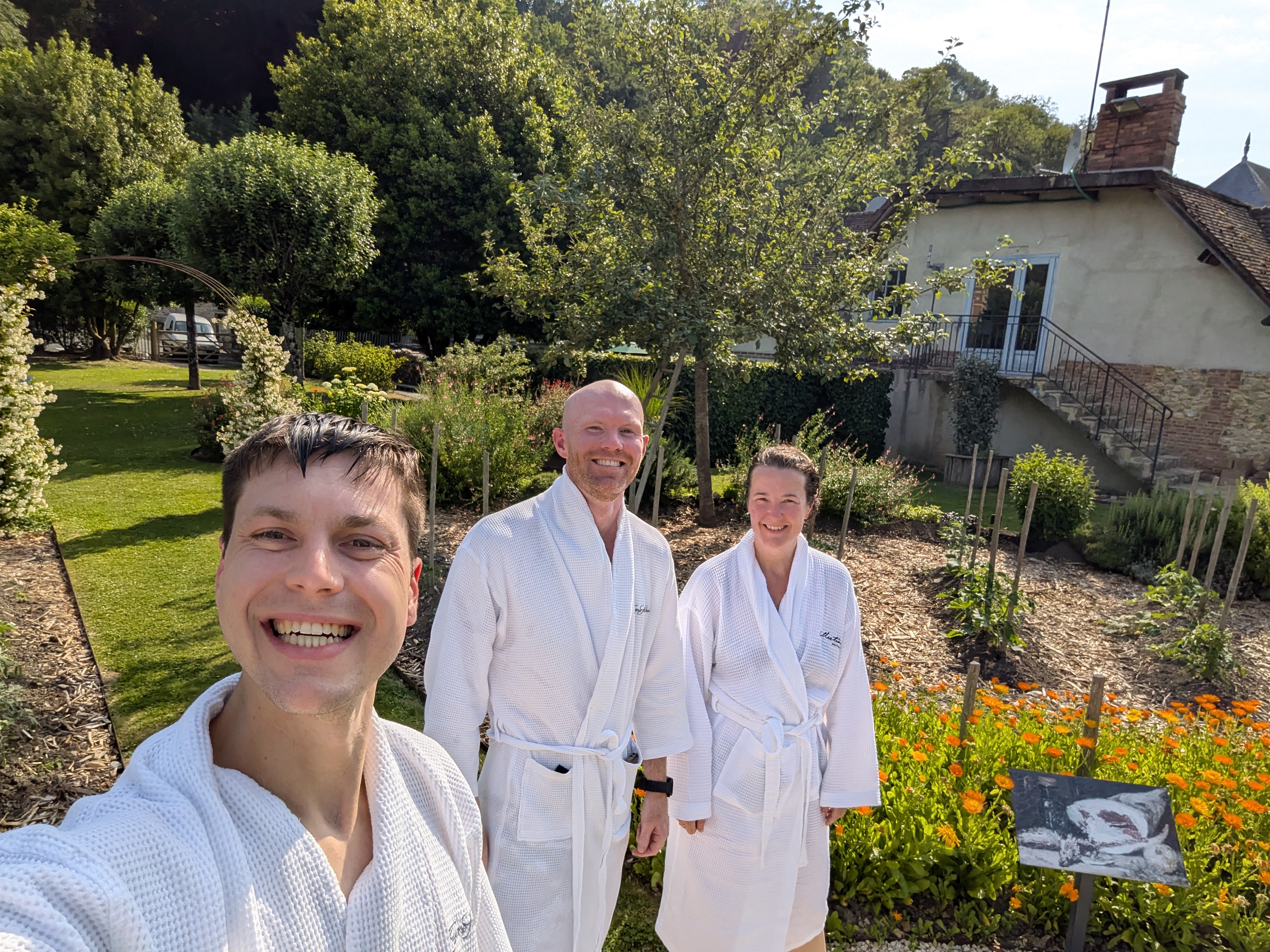
Post-spa in the potager
We then wandered around the pretty little town of Honfleur before returning to the hotel for our multi-course dinner in their on-site gastronomic restaurant.
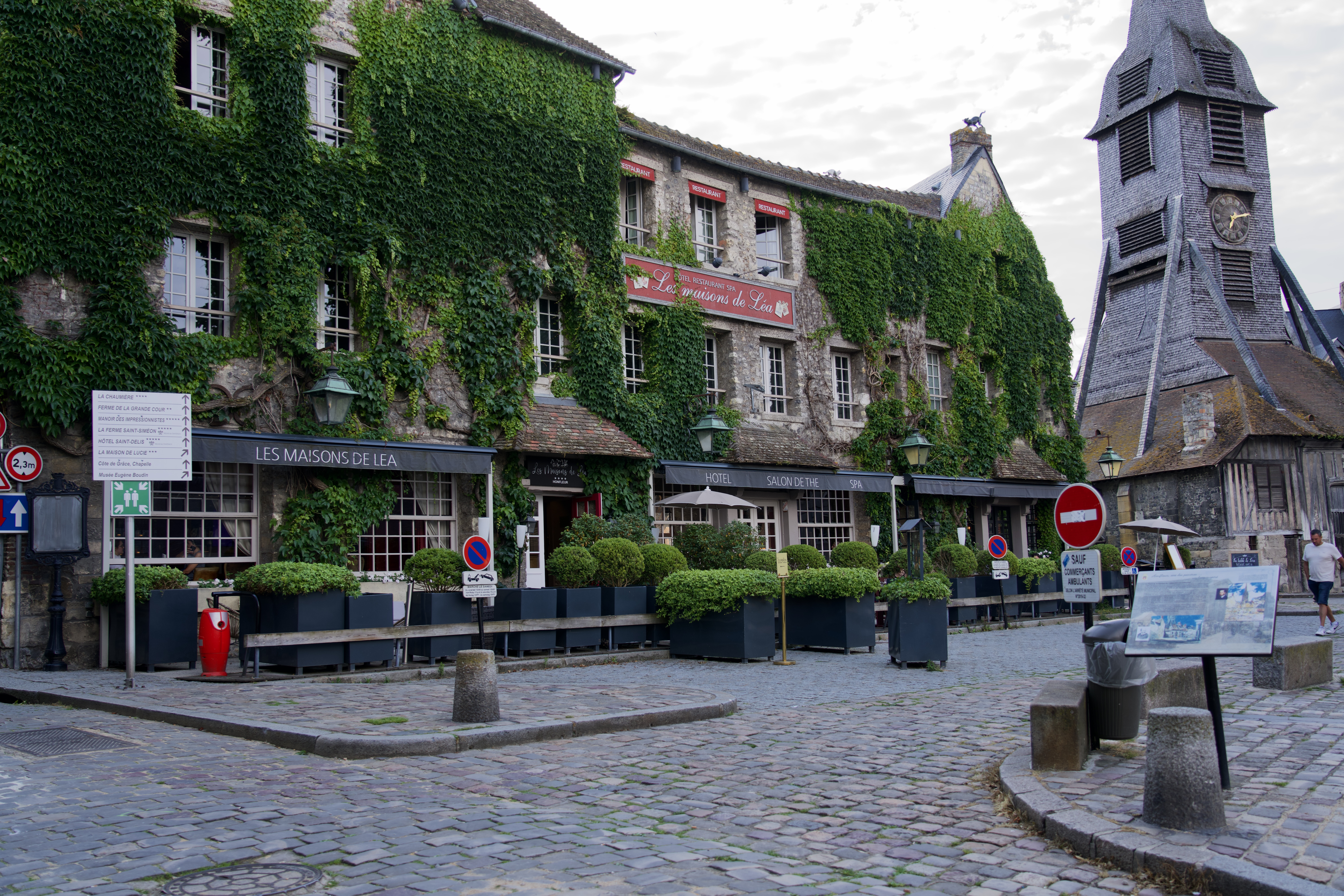
Honfleur
The next day, our first stop was the calvados distillery of Christian Drouin. We had a guided tour of the distillery and tasted many different calvados directly from the barrels.
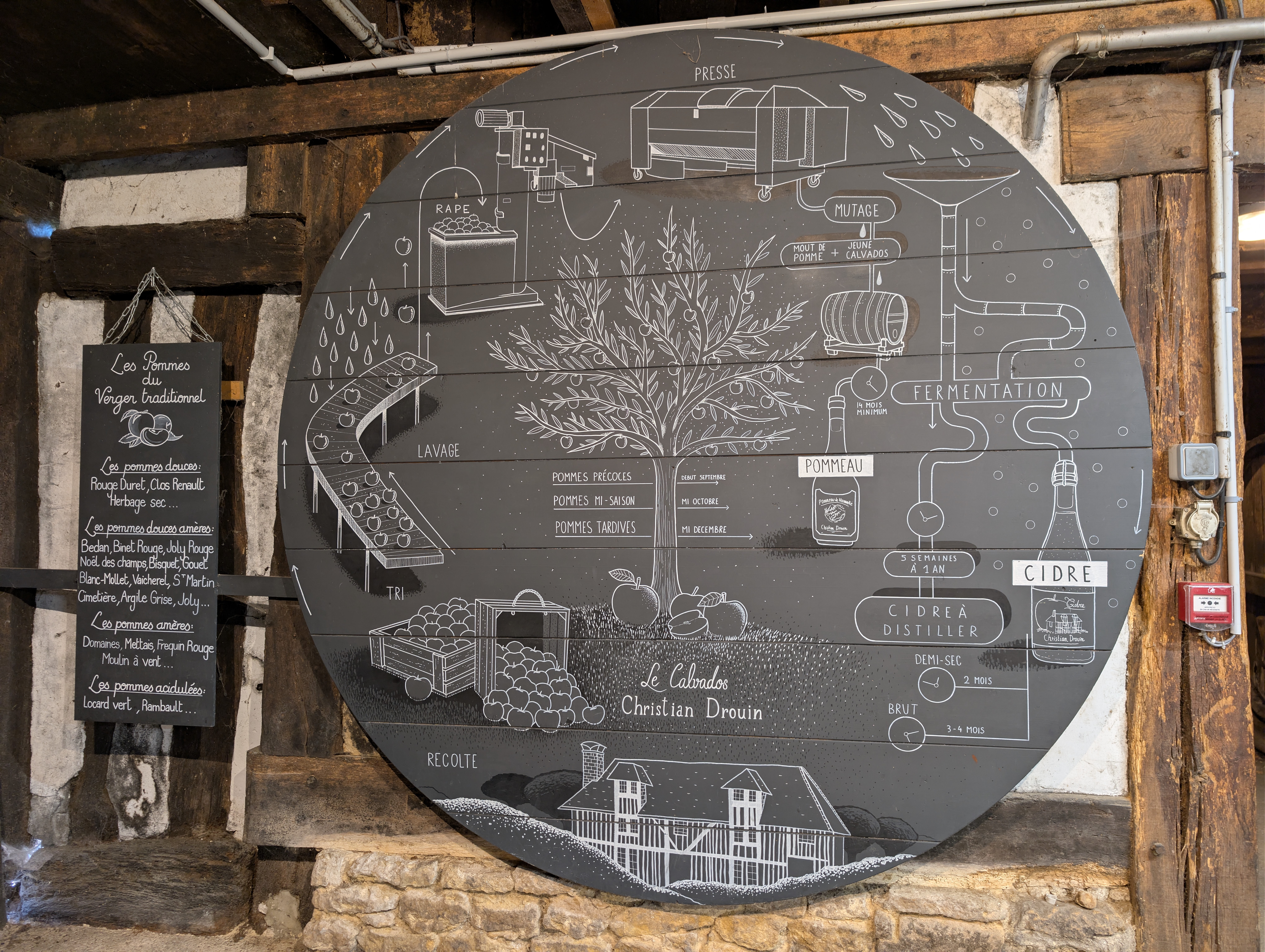
The calvados process at the Christian Drouin distillery
Afterwards, we were meant to be heading south towards our next accommodation, but instead we drove north to see the cliffs of Étretat, which were well worth the detour. After driving around and around the busy town trying to find a park, we finally found one on the outskirts. We walked into the centre of town to find lunch. Dylan was set on having fish and chips, since we were at the sea, but, surprisingly, fish and chips are hard to come by in France, even on the coast. But we found a place, ordered some for take away, and ate down on the pebbly beach, risking our chips as we fought off the frighteningly enormous seagulls found in these parts.
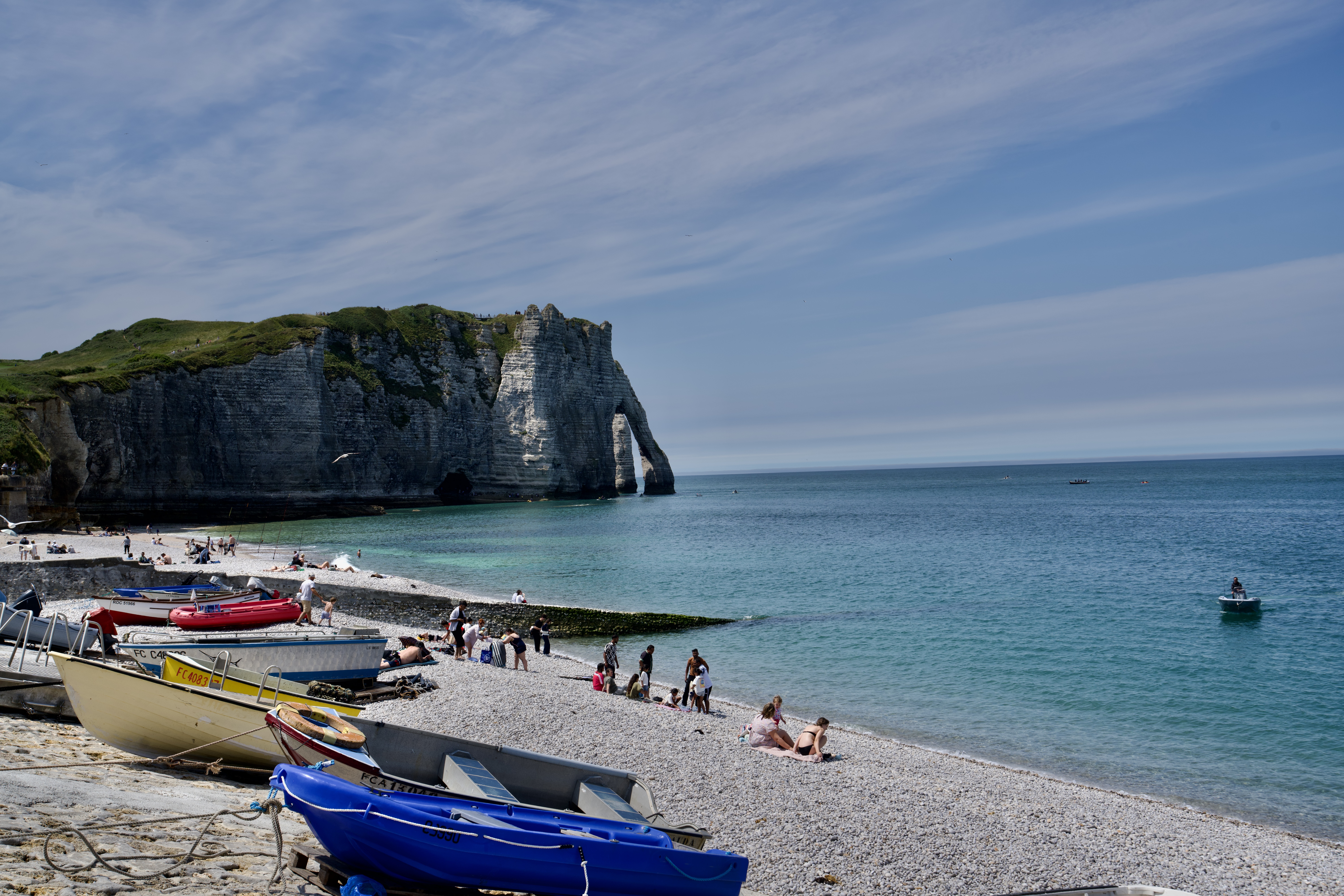
The pebbly beach at Éterat
After lunch we hiked up to the top of the clifftop for the views, which on that sunny day, were truly spectacular. There was barely a cloud in the sky and the bright light illuminated the already-dazzling white cliffs and pierced the ocean depths, turning it a brilliant shade of turquoise. We took some photos, for which Max risked his life, and then made our way back down to the beach.
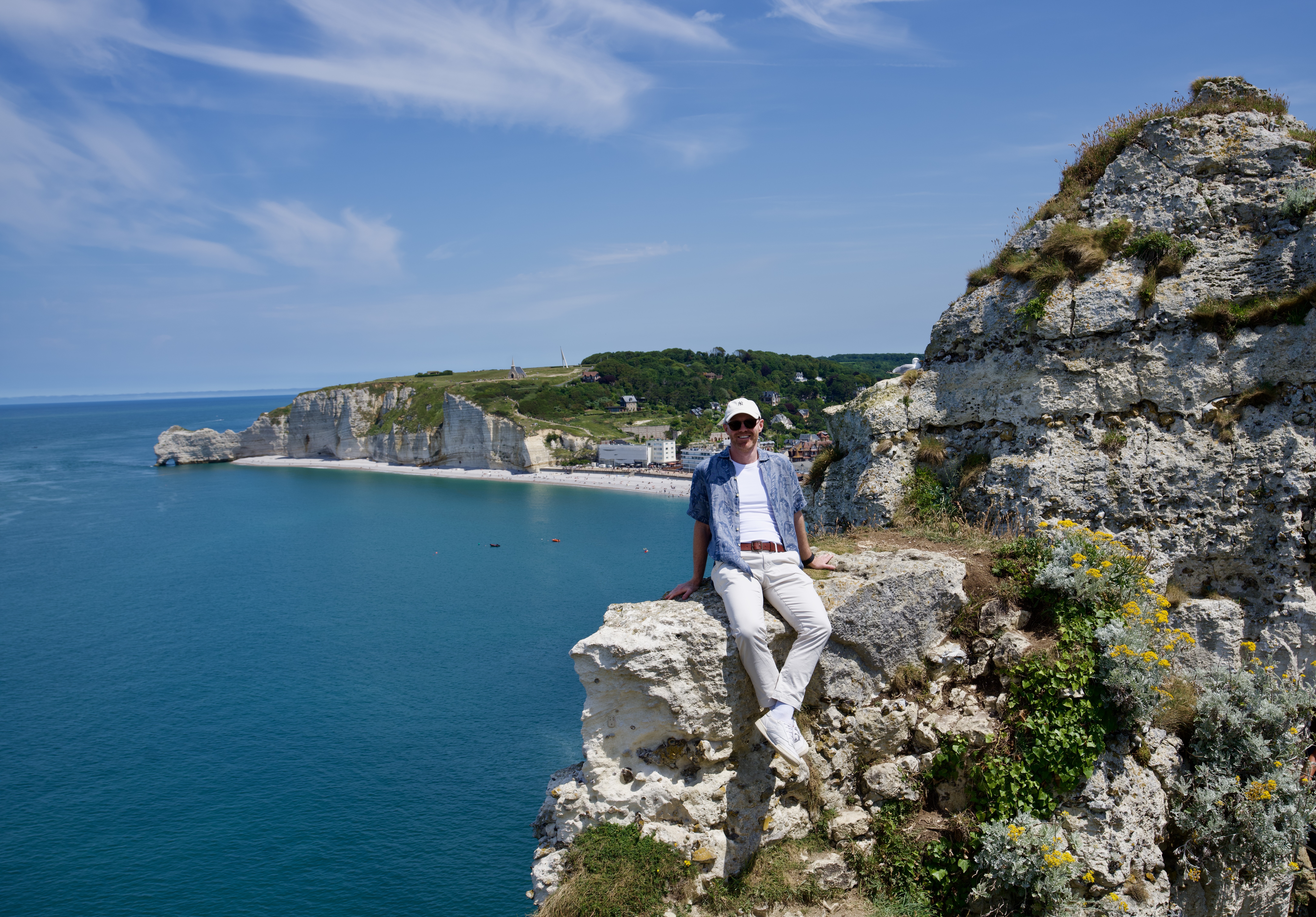
Max, being a poser
It was a perfect summer’s day.
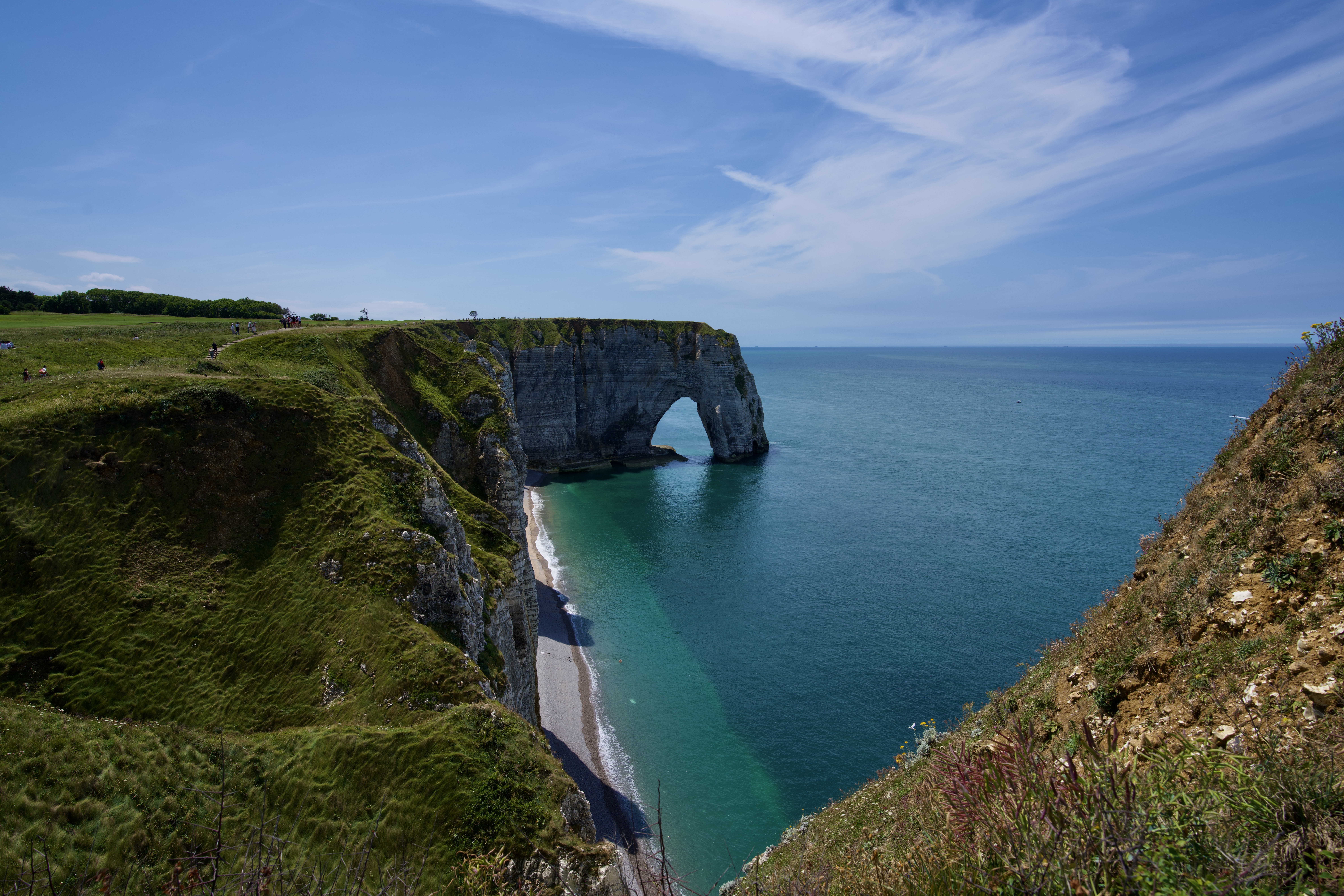
The cliffs at Éterat
We continued our journey south towards our second accommodation stay at Ferme de la Rançonnière. From here, we spent the next two days exploring the surrounding area.
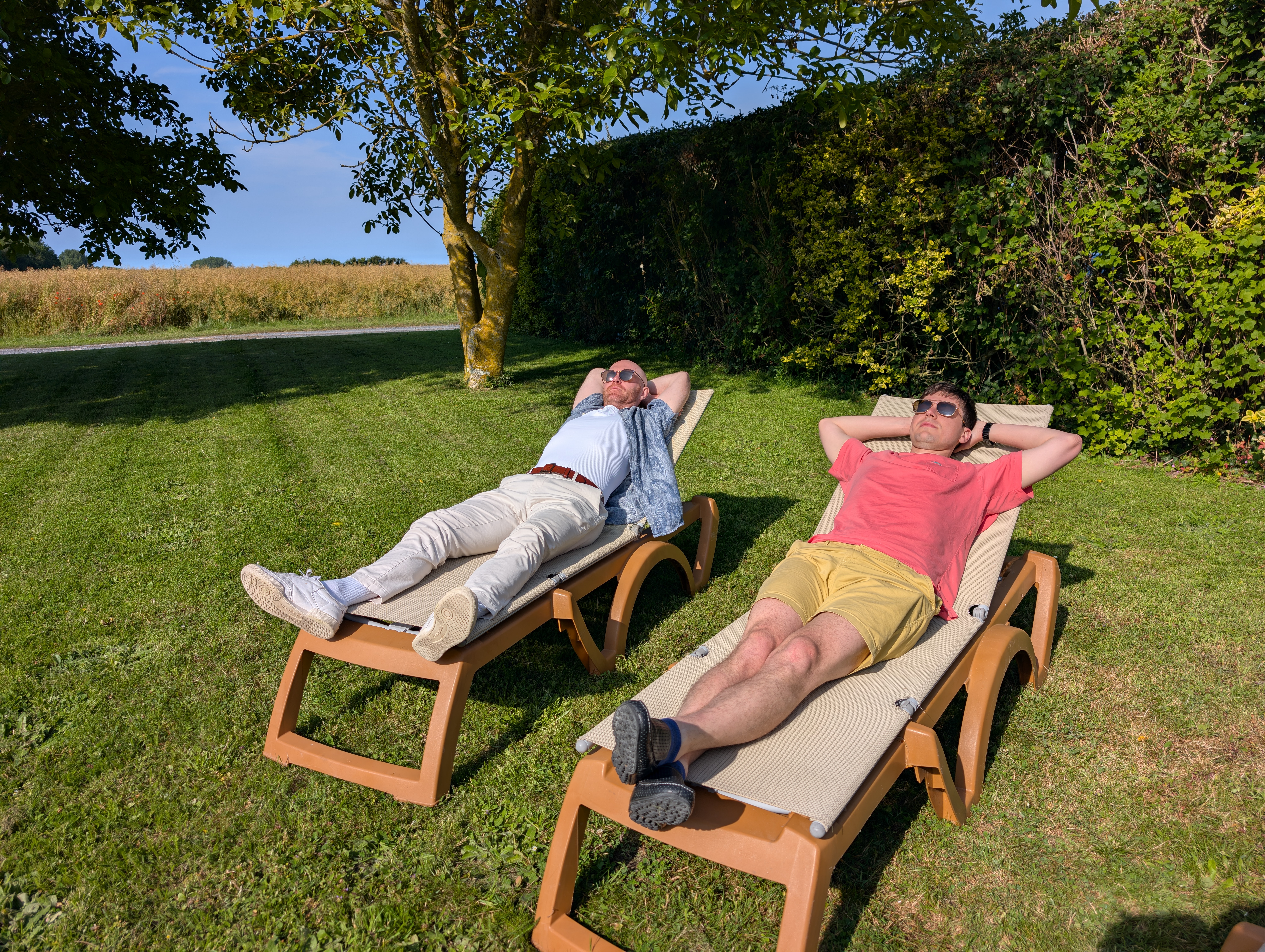
Dylan and Max chilling in the gardens at Ferme de la Rançonnière
We went to Bayeux. The cathedral is spectacular, but the museum housing the famous Bayeux tapestry is unfortunately closed for a couple of years for extended renovations. We also stopped in at a few cideries to taste cider and calvados. Our favourite was Domaine De La Percée, whose owner was a lovely, chatty man. We bought some cider and calvados and hit the road to take in some WWII history.
We indulged Max’s love of war history by visiting a number of historical sites, memorials and museums, including a number of the D-Day landing beaches, the British Normandy Memorial, as well as sites of well-preserved bunkers and batteries.
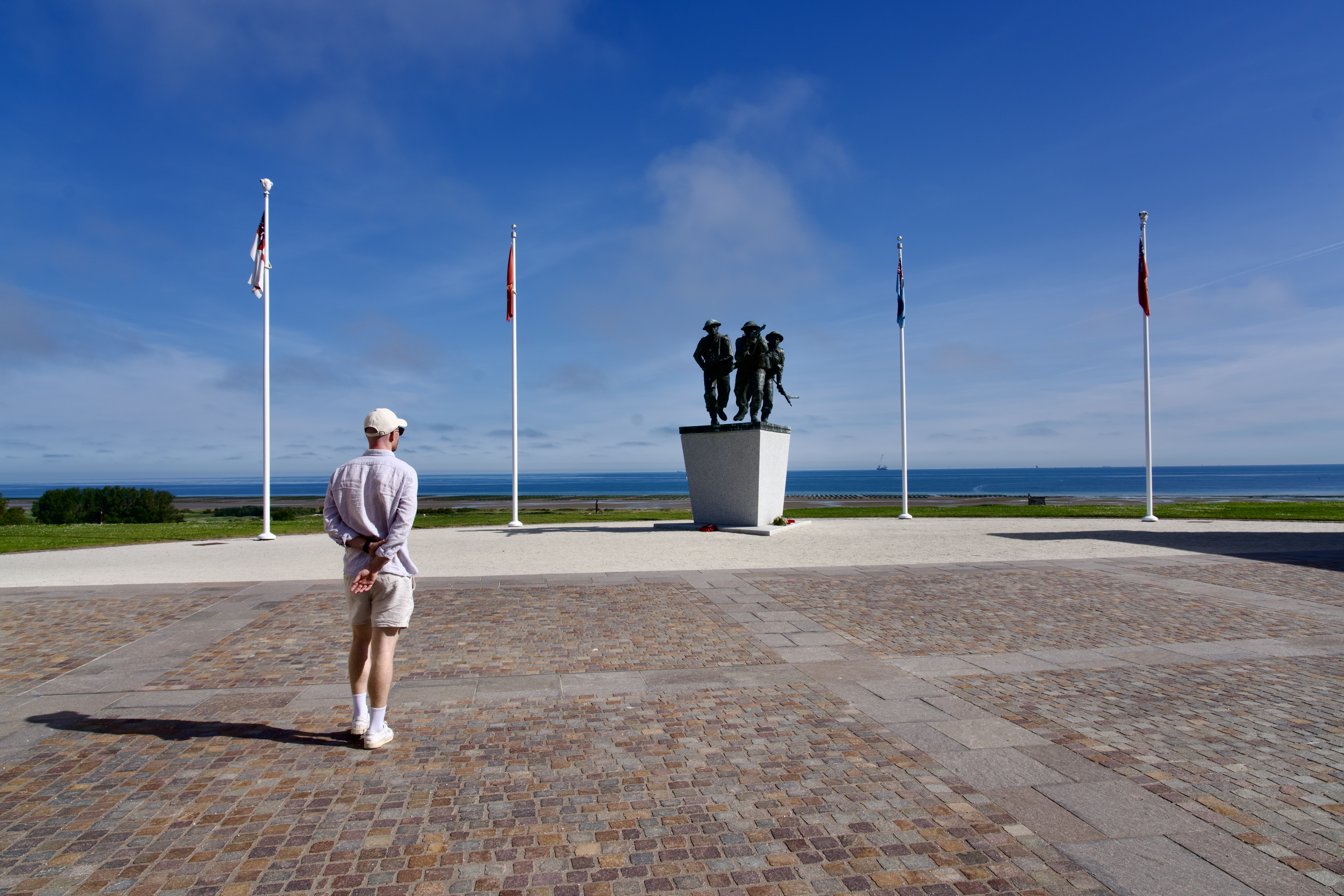
The British Normandy Memorial
It is incredible to see this historical evidence still sitting in working wheat fields, the gun canons still in place, as if they were just barely vacated.
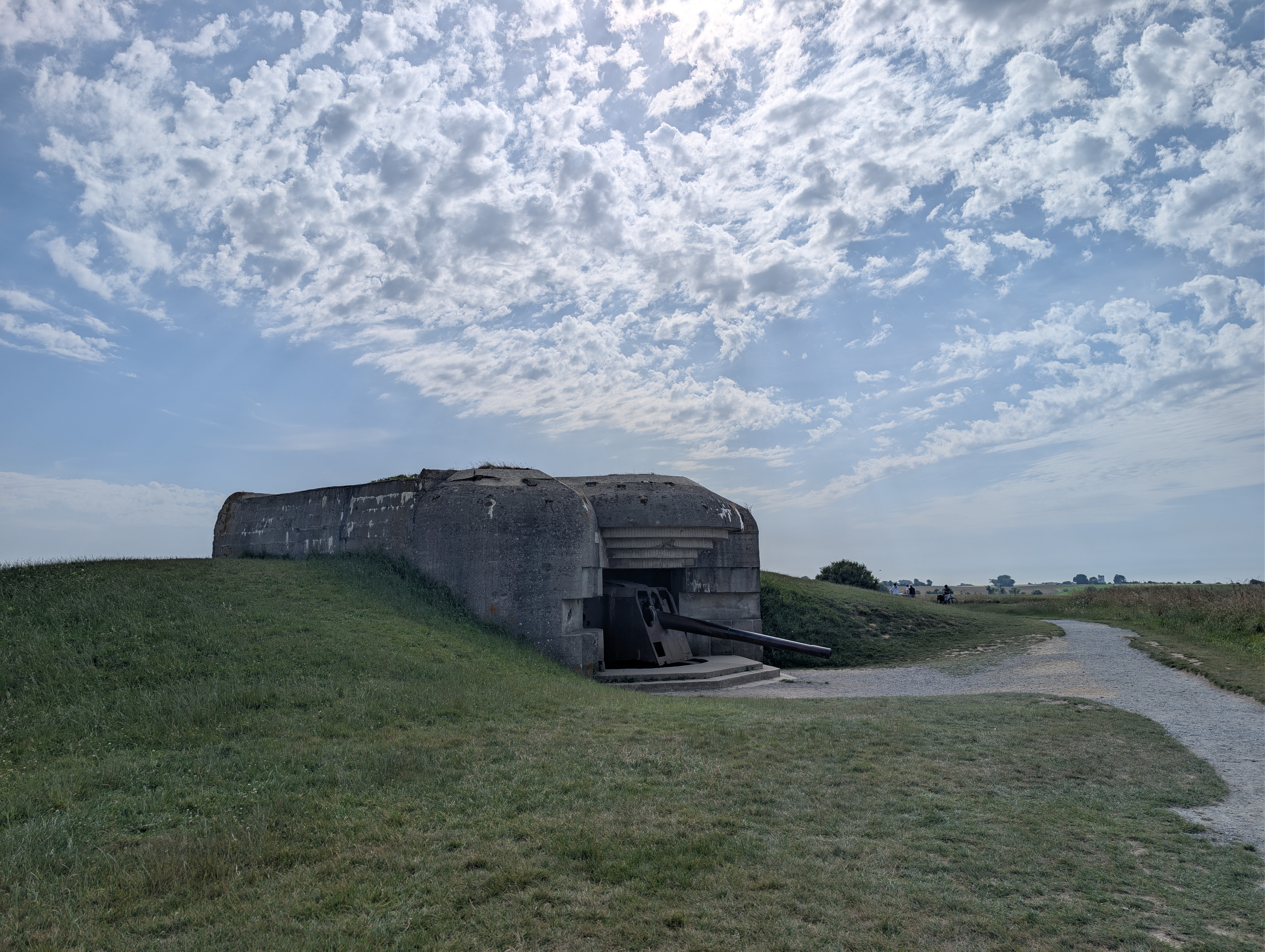
After full days of exploring, we returned to our hotel each evening where we enjoyed dinner at the on-site restaurant, accompanied with a bottle of wine, making the most of the long summer evenings, the sky remaining light well past 10pm.
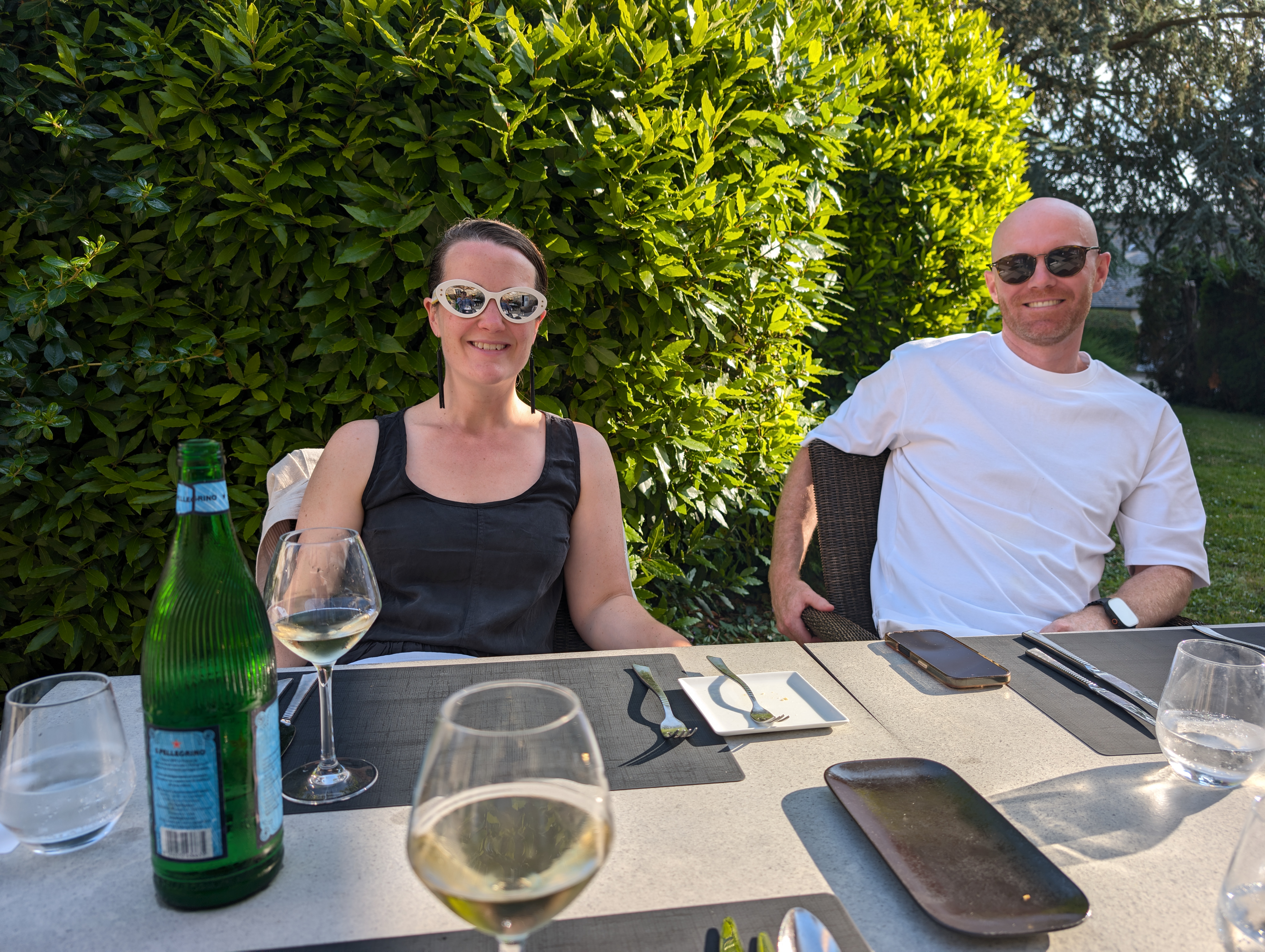
Dinner in the courtyard at Ferme de la Rançonnière
On our planned drive back to Paris we stopped at the postcard perfect town of Beuvron-en-Auge where we had the best lunch of our trip at Café Forges.
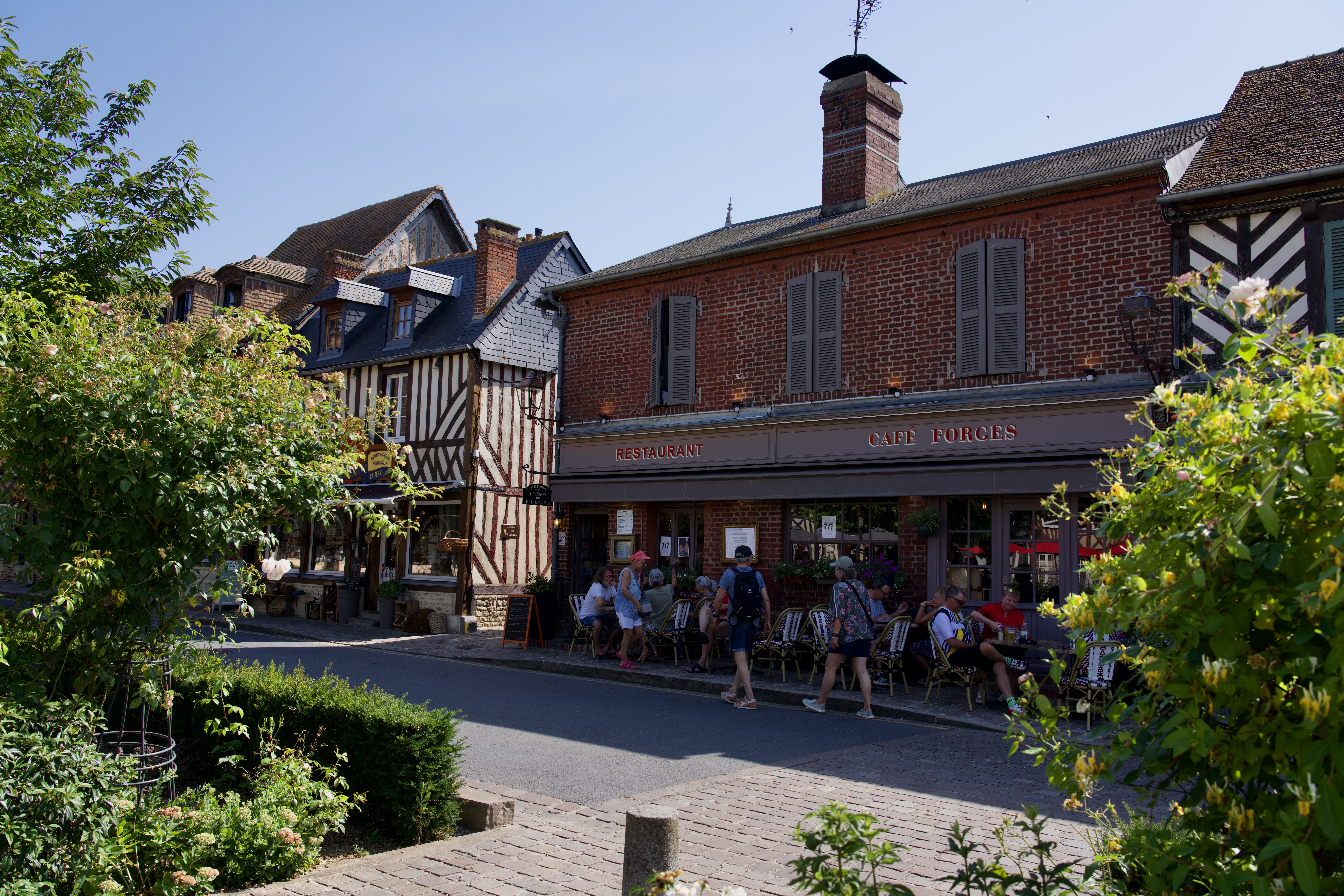
In Beuvron-en-Auge
We were meant to head back to Paris, but sitting there, further inland in the oppressive heat, we just couldn’t face being stuck in the city through the hottest temperatures ever recorded in Paris without access to functioning air-conditioning or any sort of reprieve from the heat.
So we booked a last minute night at a hotel in St Malo. Dylan and I already had a trip booked to St Malo for a few weeks later, and so we picked the same hotel and did a U-turn for the Brittany coast. And what a great decision it was.