We went to Tours for the weekend with not much of a plan other than to taste some wine and visit just a few of the many castles of the Central Loire Valley. Tours is a traditional gateway for exploring the chateaux of the Loire Valley region.
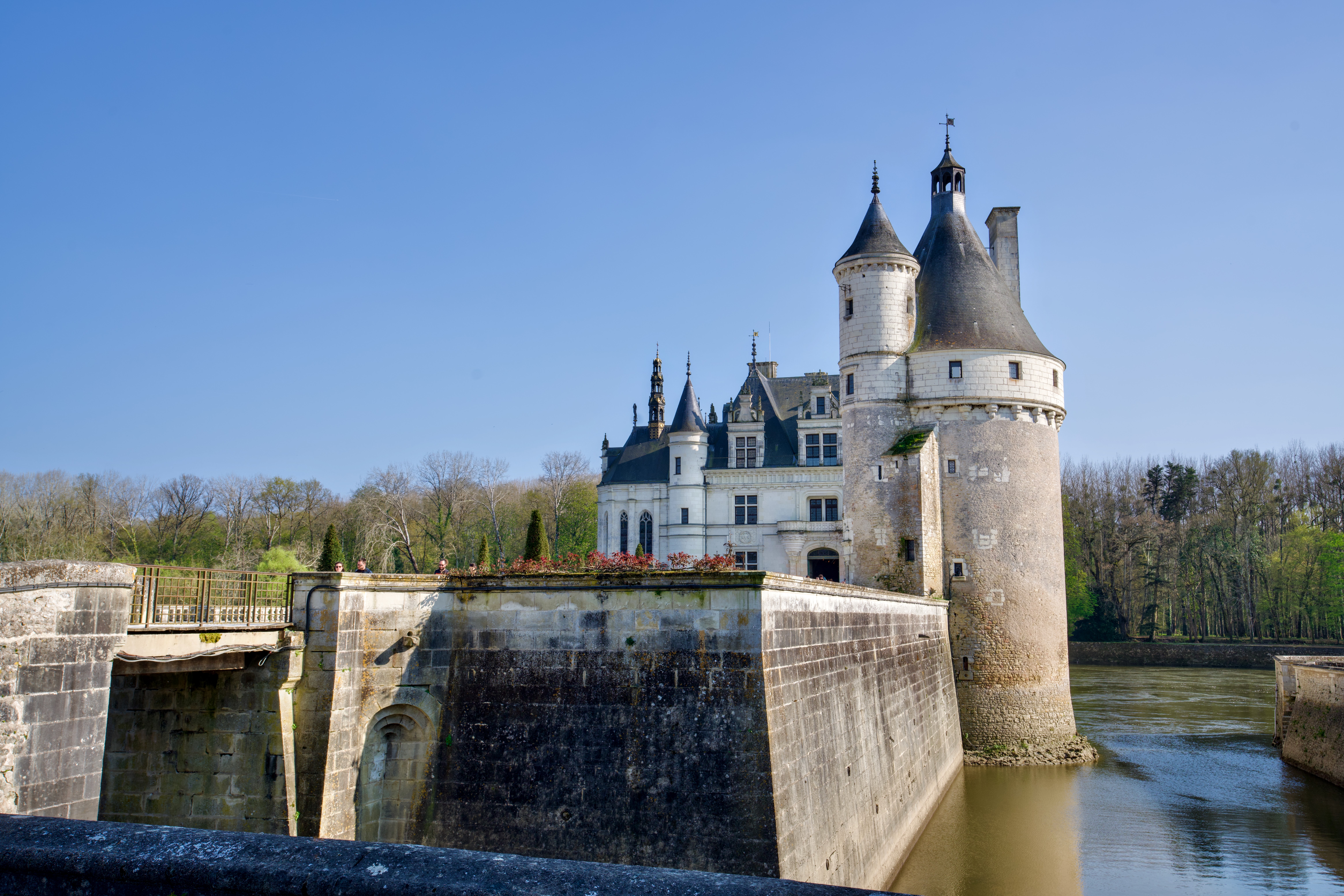
The Château Chenonceau, just outside of the town of Tours
We took a train from Paris late Friday afternoon and arrived at Tours station, after a delay in Paris, at around 6.30pm. We quickly checked into our hotel and then walked into the middle of the old town for our dinner reservation at Case. restaurant.
The old town has the features of a typical European old town, but nonetheless quaint and visually appealing with its narrow cobblestone streets, ancient buildings that are somehow still standing despite their precarious lean, and a spattering of crumbled ruins from an era long past. We enjoyed our meal and the beginnings of our discovery of chenin blanc.
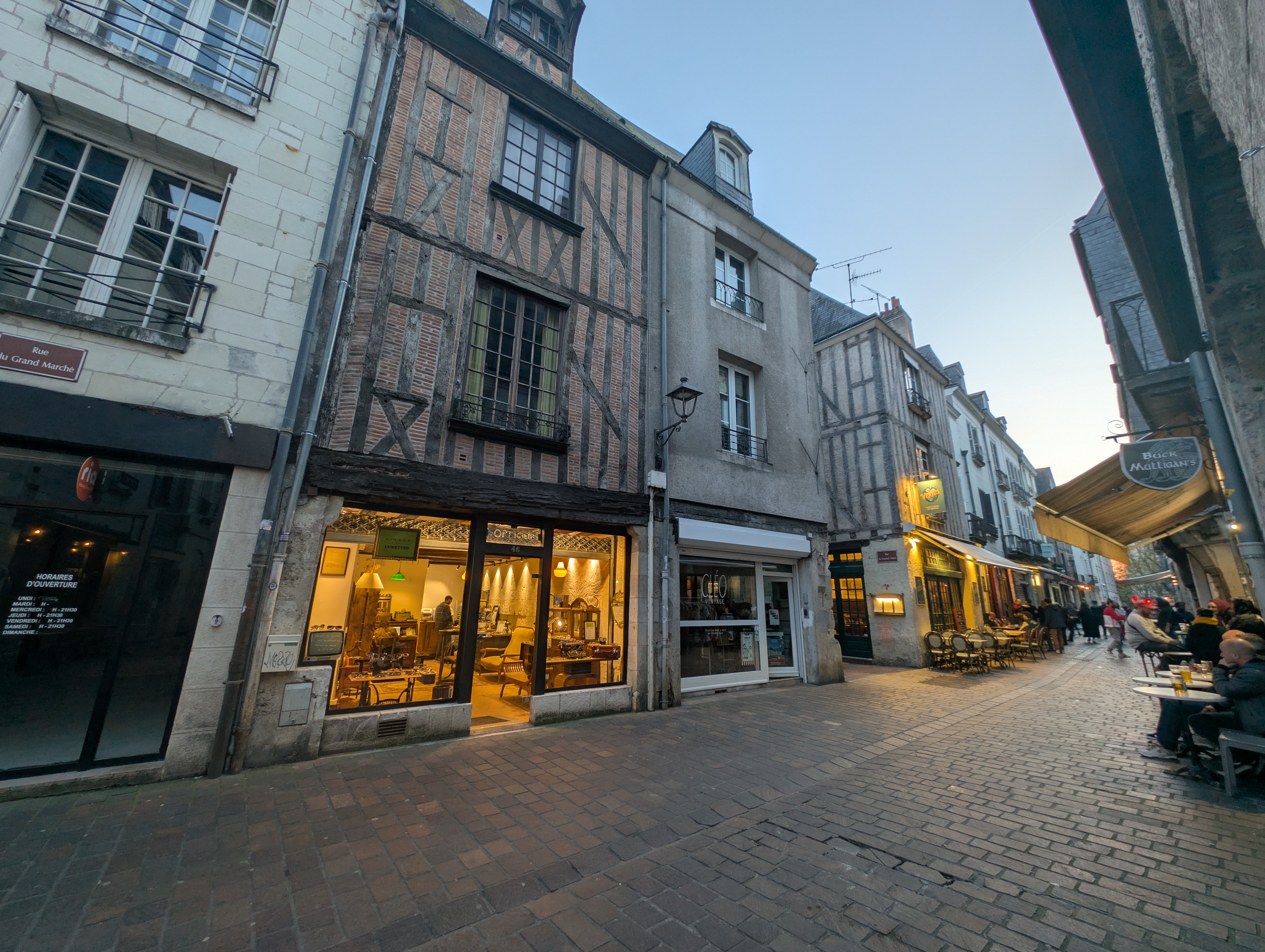
In the old town of Tours
The following morning we picked up a hire car and then ventured towards Vouvray; a small town in the Loire Valley known for its production of white wine, and particularly, chenin blanc. After an initial bout of nervousness, and a missed turn off the motorway, I eventually found my rhythm driving on the other side of the road and we were glad that we would have the flexibility to explore the region by car.
In the town of Rochecorbon
We had no bookings for wine tastings and so we turned up at one winery which noted it accepted visitors. When we arrived at Domaine Le Capitaine, the son of the current wine maker greeted us and warmly invited us into the cave for a tasting. We proceeded with our tasting in a combination of French and English - him using English where he could, and me translating into English for Dylan when he proceeded in French. I think he was surprised to find himself with two Australians that were genuinely interested in standing in a dark, damp, cold chamber dug into the side of a hill in the middle of a small town that produces only one type of wine.
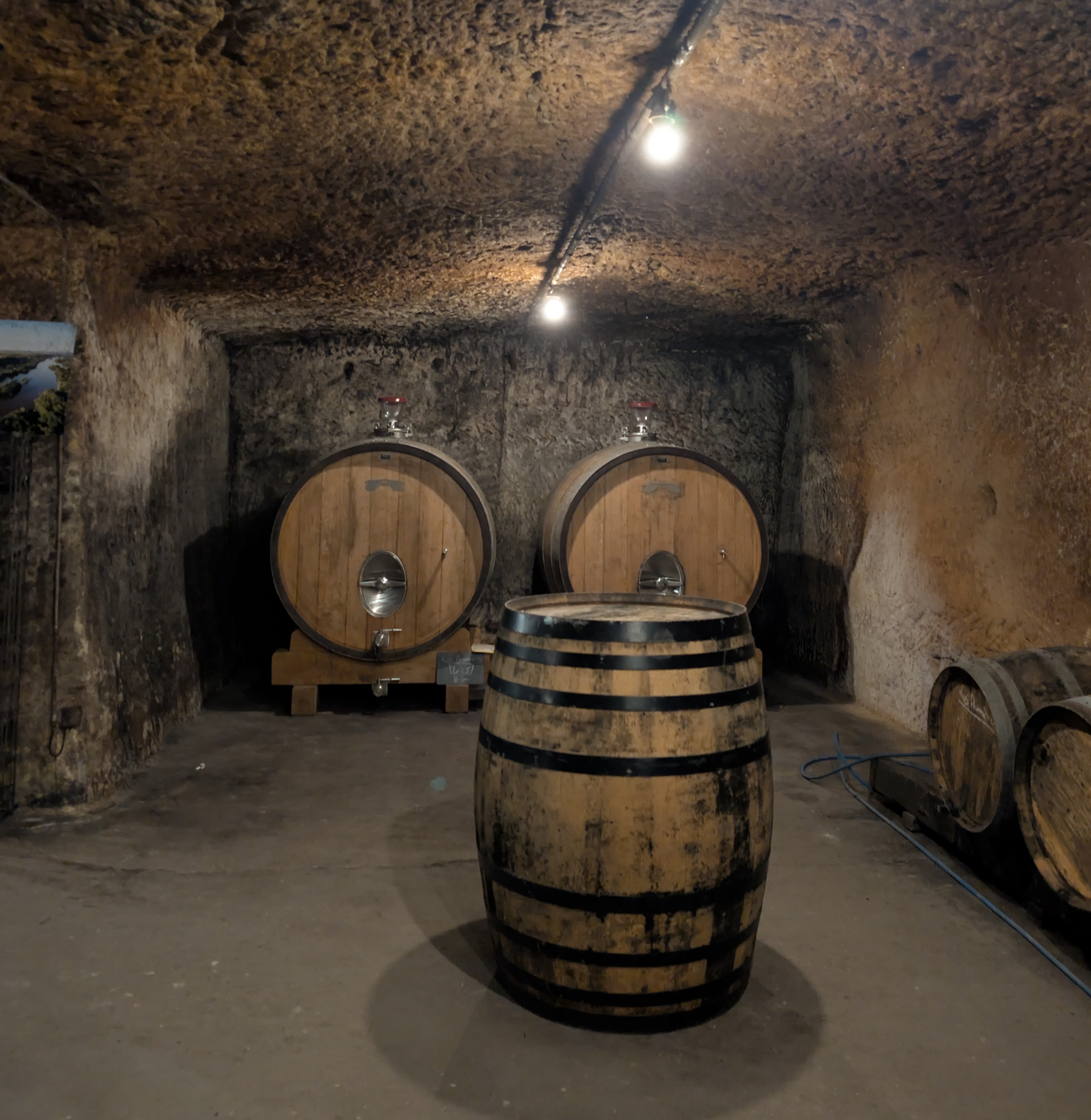
Inside the cave at Domaine Le Capitaine
But we were, and we really enjoyed our tasting of the tiny appellation’s only wine: chenin blanc. It is made as either sec (dry), demi-sec (semi-dry), doux (sweet), or effervescent (sparkling). We tasted his father’s wine as well as some that he was making himself and it was all excellent. The tasting was free, but we bought a bottle of sparkling at the end to take back to Paris with us.
Afterwards, we decided to try our luck again and so I rang a phone number for another winery that was tasting by phone appointment only. The winemaker, Pierre, answered and said he was free, and so after a short drive through some narrow, winding, country lanes we found ourselves at the home of Pierre de Gasnier Vins de Vouvray. Upon arrival, he asked if we knew the wines and when I said no, he was surprised, asking how we found him. I mumbled through a vague explanation - in French - about doing some research and liking the sound of his wine. He didn’t speak English, but it was perfect. He spoke slowly in French and what proceeded was nothing short of magical.
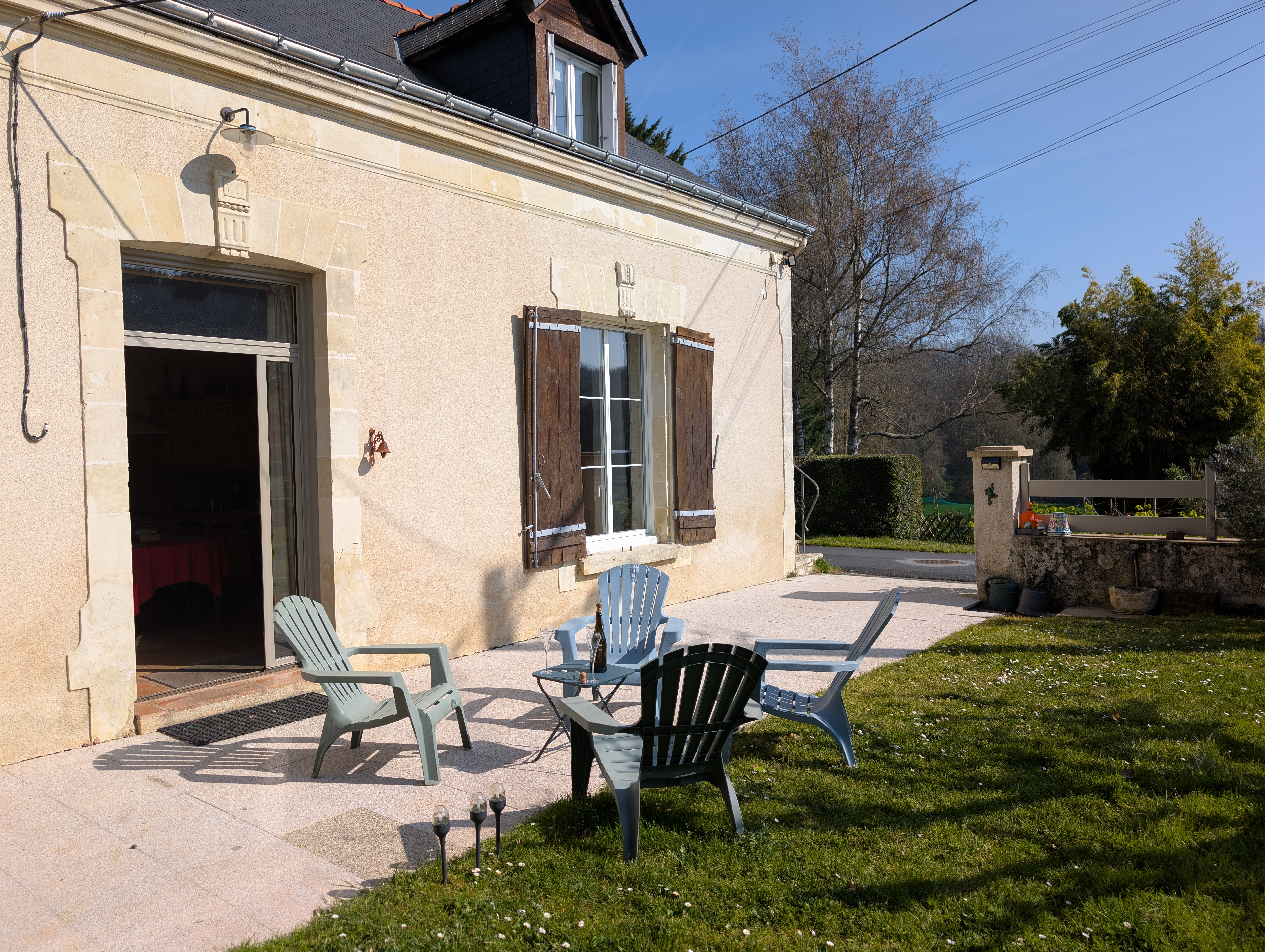
Wine tasting at Pierre's
We sat around a small table on Adirondack-style chairs, which were placed in his garden on the grass beside a flowering cherry blossom. He makes only two sparkling wines and he gave us a full glass of each to taste. As we sat, soaking up the warmth of the sun bathing us from above in the cloudless sky, the conversation flowed slowly, but effortlessly, as we discussed our move to Paris, his family’s history in wine making, his son, wine in Australia, and other topics. It was a wine tasting like no other; simply enjoying a glass in the privacy of this man’s home, completely without pretence. We bought a bottle (for merely €10) and went on our way, hardly believing what had just unfolded.
Afterwards, we drove to the little commune of Rochecorbon and had lunch at Café Corbon, which had been recommended to us at Domaine Le Capitaine. Once more making the most of the fine spring weather, we were seated in the courtyard, enjoying the sunshine and a delicious meal, surrounded by locals. We had some hummus with bread and a little toasted cheese sandwich to start and then shared a main course of roasted duck, which we agreed was probably the best duck we’ve ever eaten.
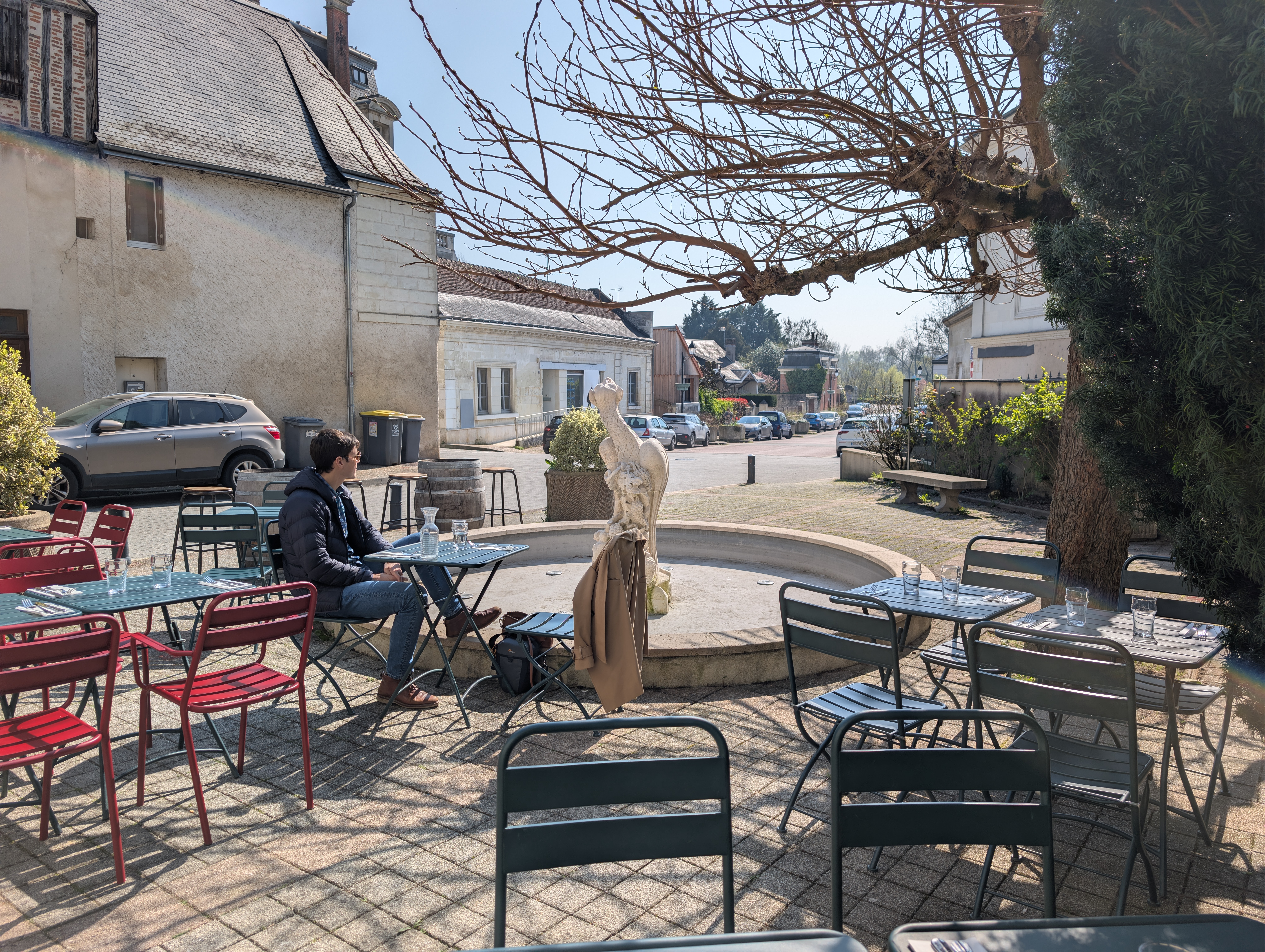
Lunch at Café Corbon in Rochecorbon
After lunch, we drove a little further away to Chenonceau. First, we did another tasting at Caves du Père Auguste, where we heard from a 5th generation wine maker, and then we went and visited Château de Chenonceau.
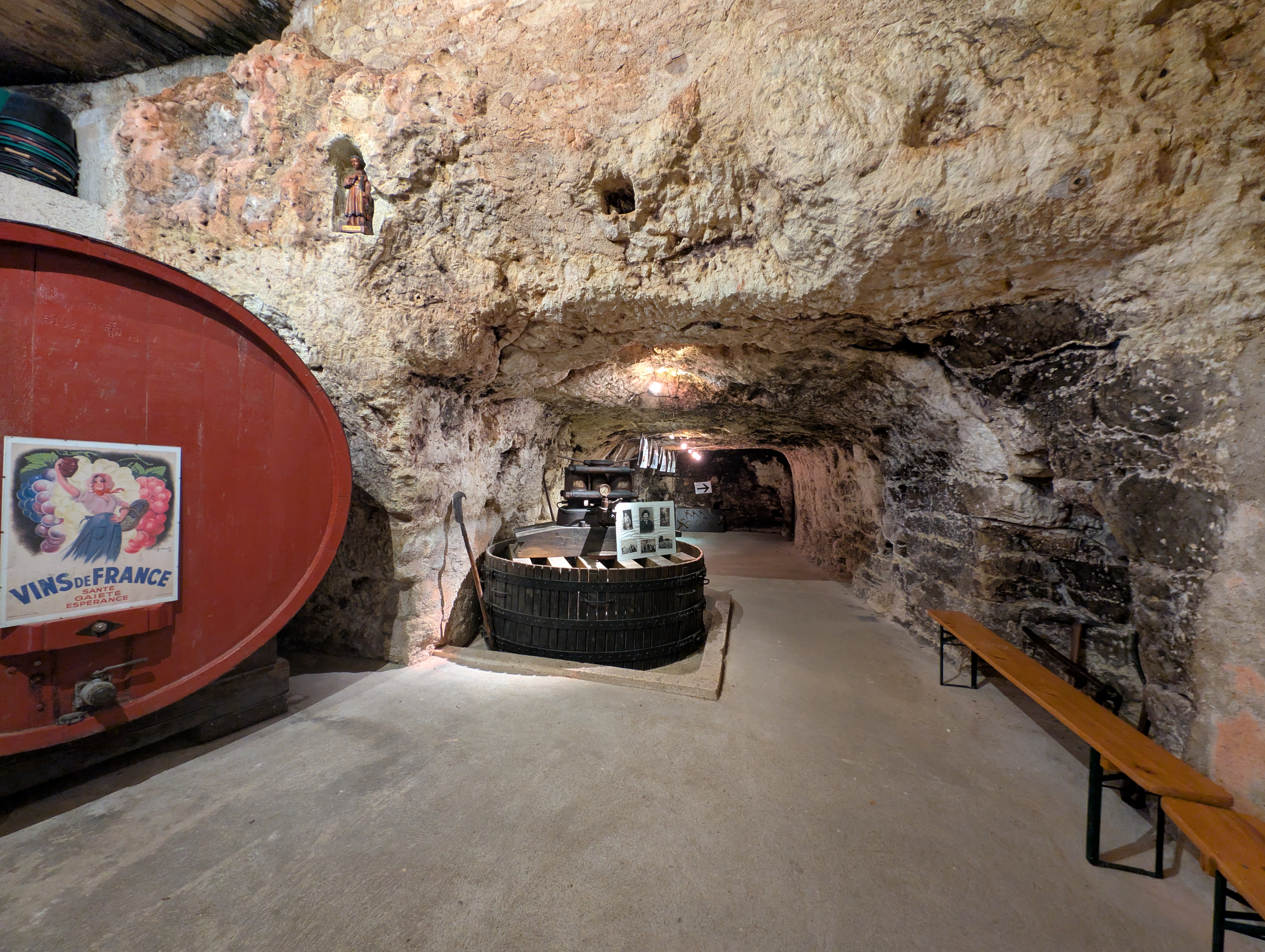
The cave at Père Auguste
Apparently, after Versailles, Château de Chenonceau is the most visited castle in France.
Visiting Château de Chenonceau
The current château was built in 1514–1522 on the foundations of an old mill and was later extended to span the river, but the site had held a château for at least 100 years prior to that as well. In 1560, Catherine de’ Medici came to own the castle and, during her lifetime, spent a fortune on the château, its gardens, and on spectacular night-time parties. In 1560, the first ever fireworks display seen in France was held there. In 1913, the château was acquired by the Menier family, famous for their chocolates, and the family owns it to this day.
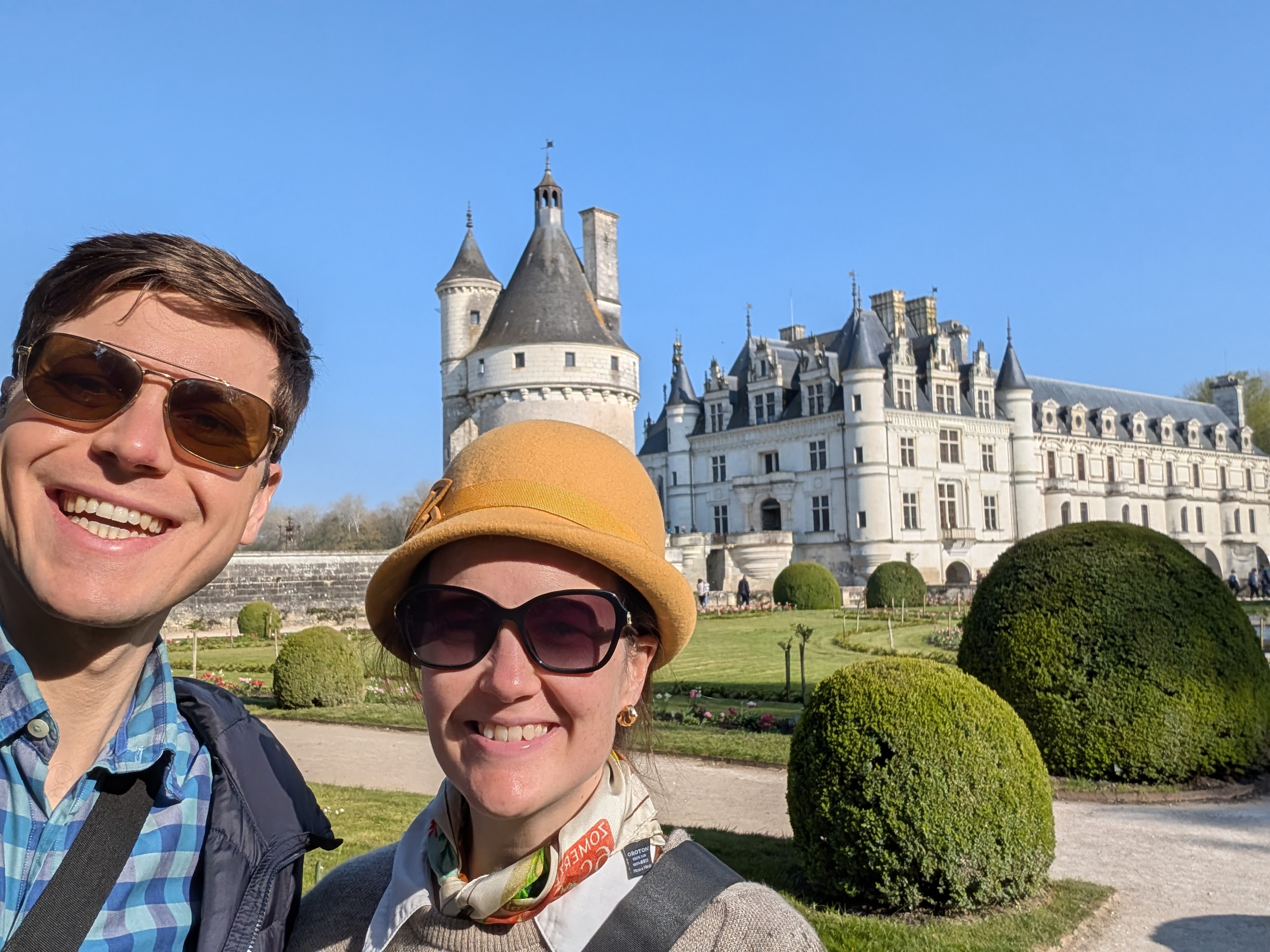
Visiting Château de Chenonceau
Given its relative distance from Paris, compared with Versailles, there were far fewer people, which meant it was a much more enjoyable visit than our visit to Versailles had been the weekend prior.
Visiting Château de Chenonceau
We were there on the cusp of Spring and so the gardens were filled with tulips and daffodils and, inside, each room was decorated with elaborate vases of fresh flowers.
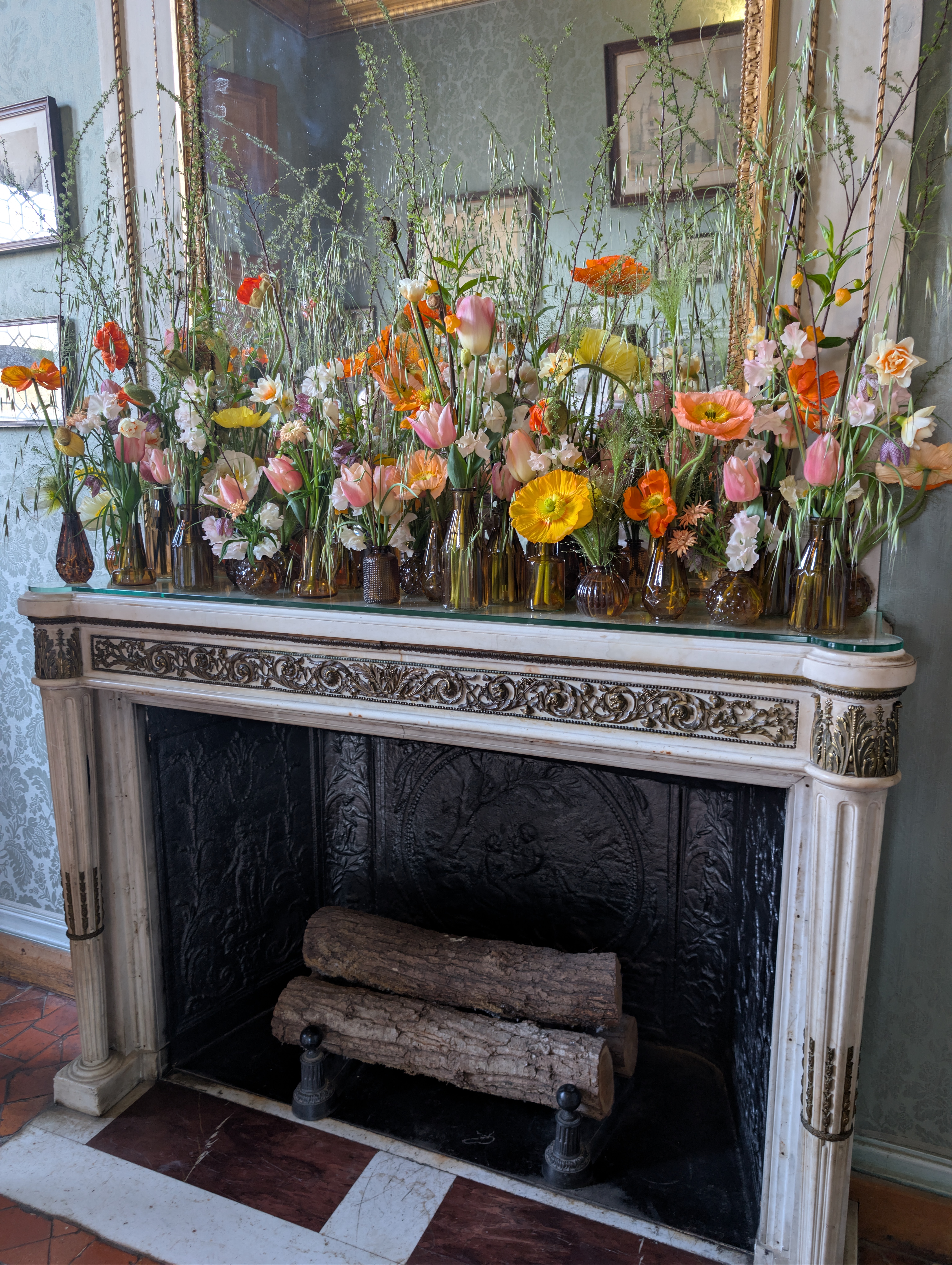
Just one of the beautiful displays of fresh flowers inside the castle
We wandered through the various rooms at a leisurely pace, without the throngs of tourists, and explored the gardens with few people around.
The entrance to Château de Chenonceau
As early evening approached, we headed back to Tours for our dinner reservation. We once more found ourselves in the charming old town, but this time we had time for a beer before dinner. We sat outside in the cobbled alleyway at one of the many pubs filled with locals enjoying the temperate afternoon and a cigarette. (It still amazes me how prolific smoking remains in France.)
Our dinner at Dahlia was the highlight of the weekend and one of the most memorable dining experiences of my life. The food was excellent, the wine delicious, the decor beautiful, the atmosphere pleasant, the seating comfortable, the music on point, and the service outstanding. Everything was very, very good, but it’s always hard to put into words the specificity that turns a wonderful dining experience into a transcendent one. A large part of it was definitely (and always is) the service. The co-owner, and our waiter, had an enviable flair for hospitality and service that you rarely find anywhere in the world. He also somehow managed to playfully blend English and French to deliver warm yet insightful explanations throughout the evening.
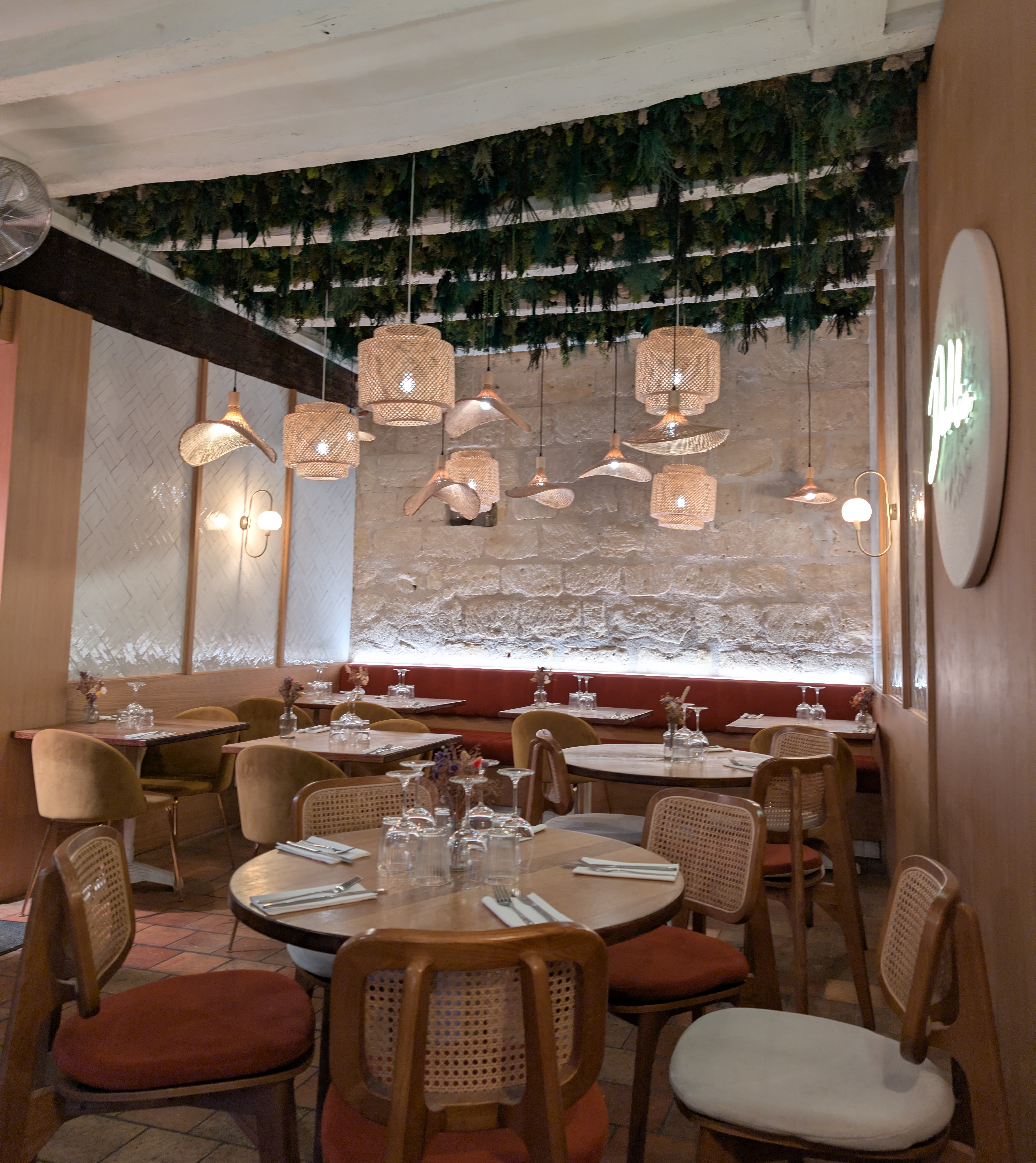
The restaurant Dahlia
The food was delicious and generous, more like home-cooking than fine dining, but executed with the precision and quality of a Michelin restaurant. He chose a very affordable bottle of organic, local wine for us and when I ordered three desserts they knew we meant it when we said we loved it.
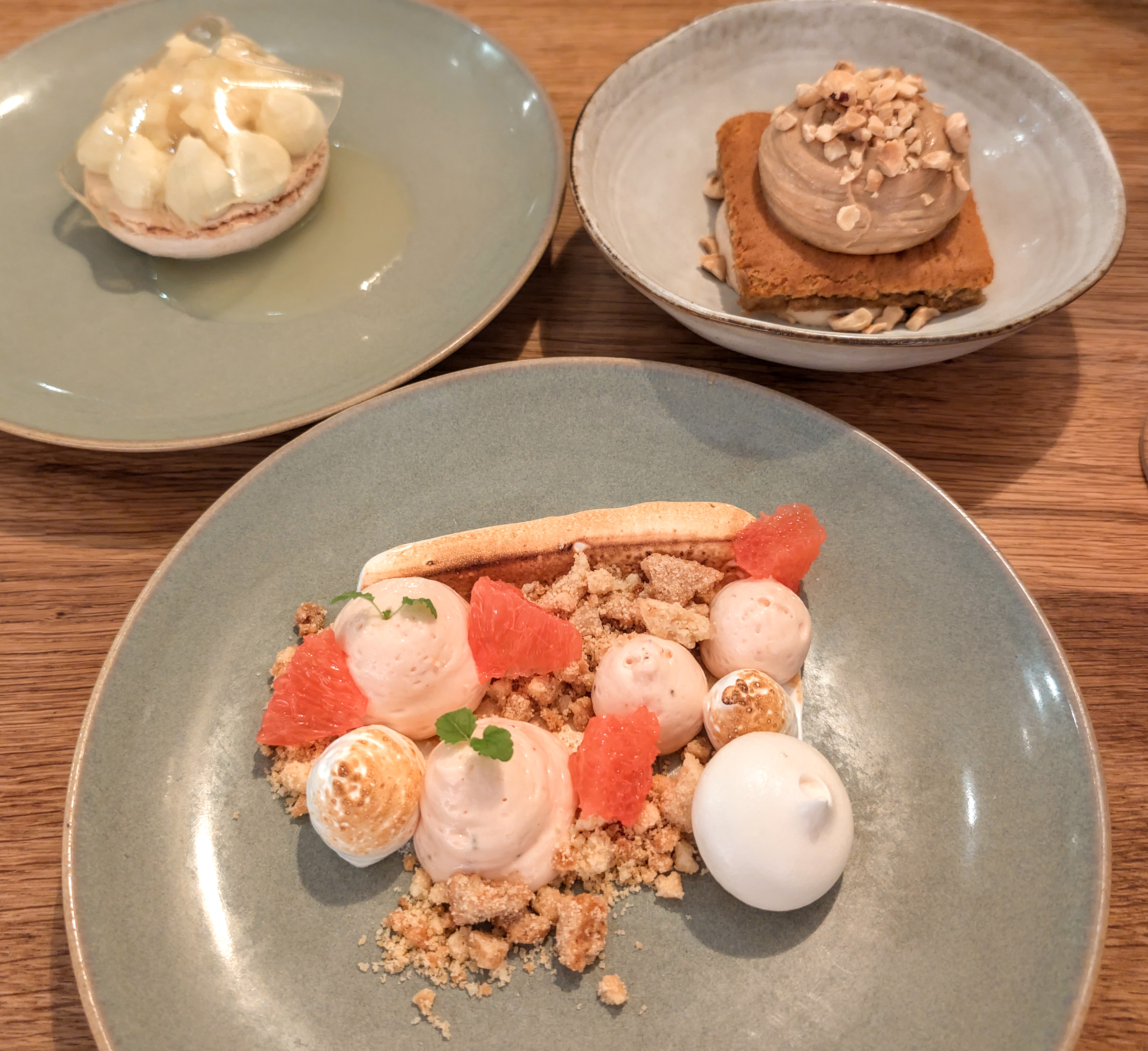
Three desserts at restaurant Dahlia
While many of the best experiences are the ones that are unexpected, this was more than that. They truly deserve the perfect rating they currently have and I only wish I could find a restaurant in Paris that delivered a dinner as perfect as that one.
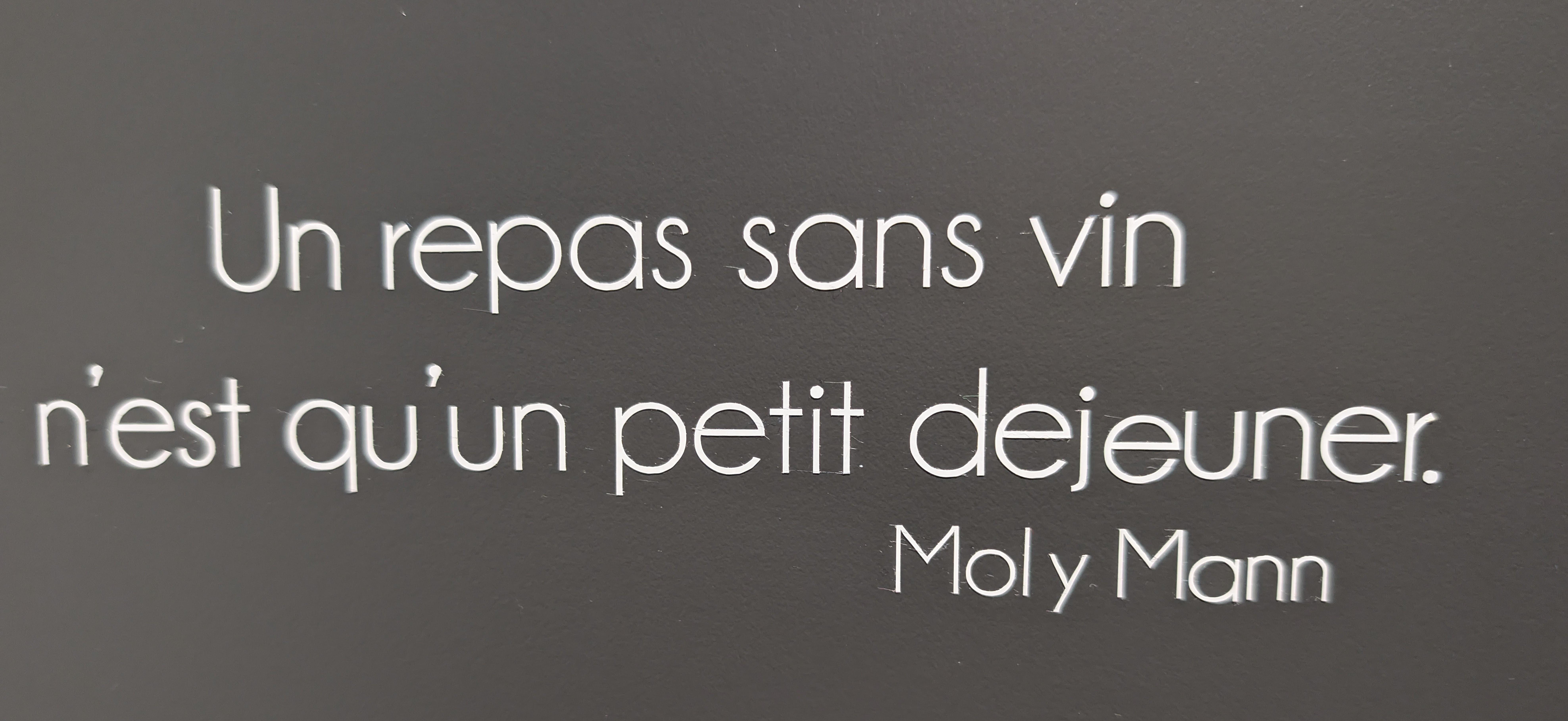
A meal without wine is only breakfast
The following day we went to Château de Villandry, which I am in love with.
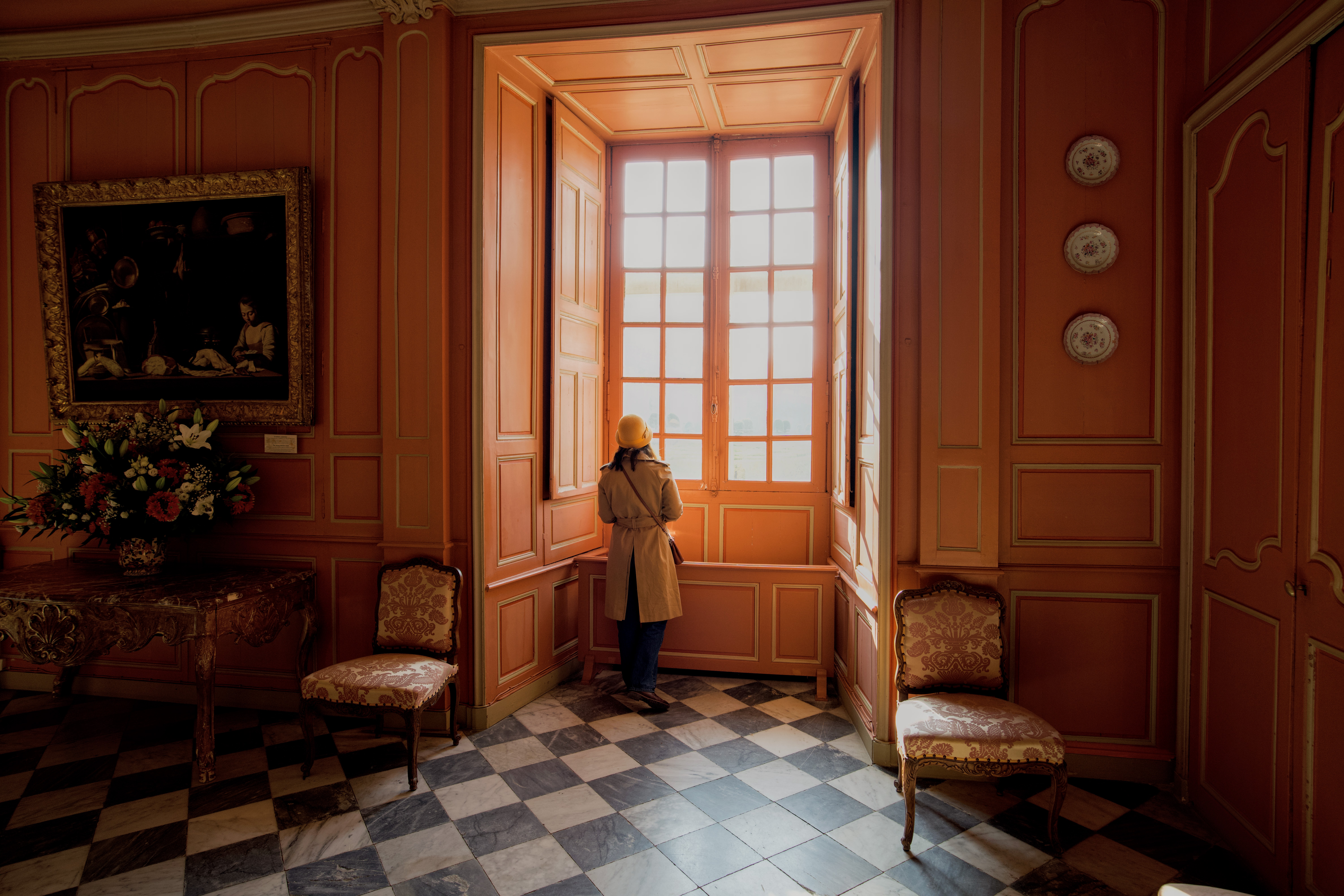
Inside Château de Villandry
This castle, and its surrounding gardens, were exquisite. Like all the other châteaux in the Loire Valley, it is a World Heritage Site, but this one is particularly known for its gardens.
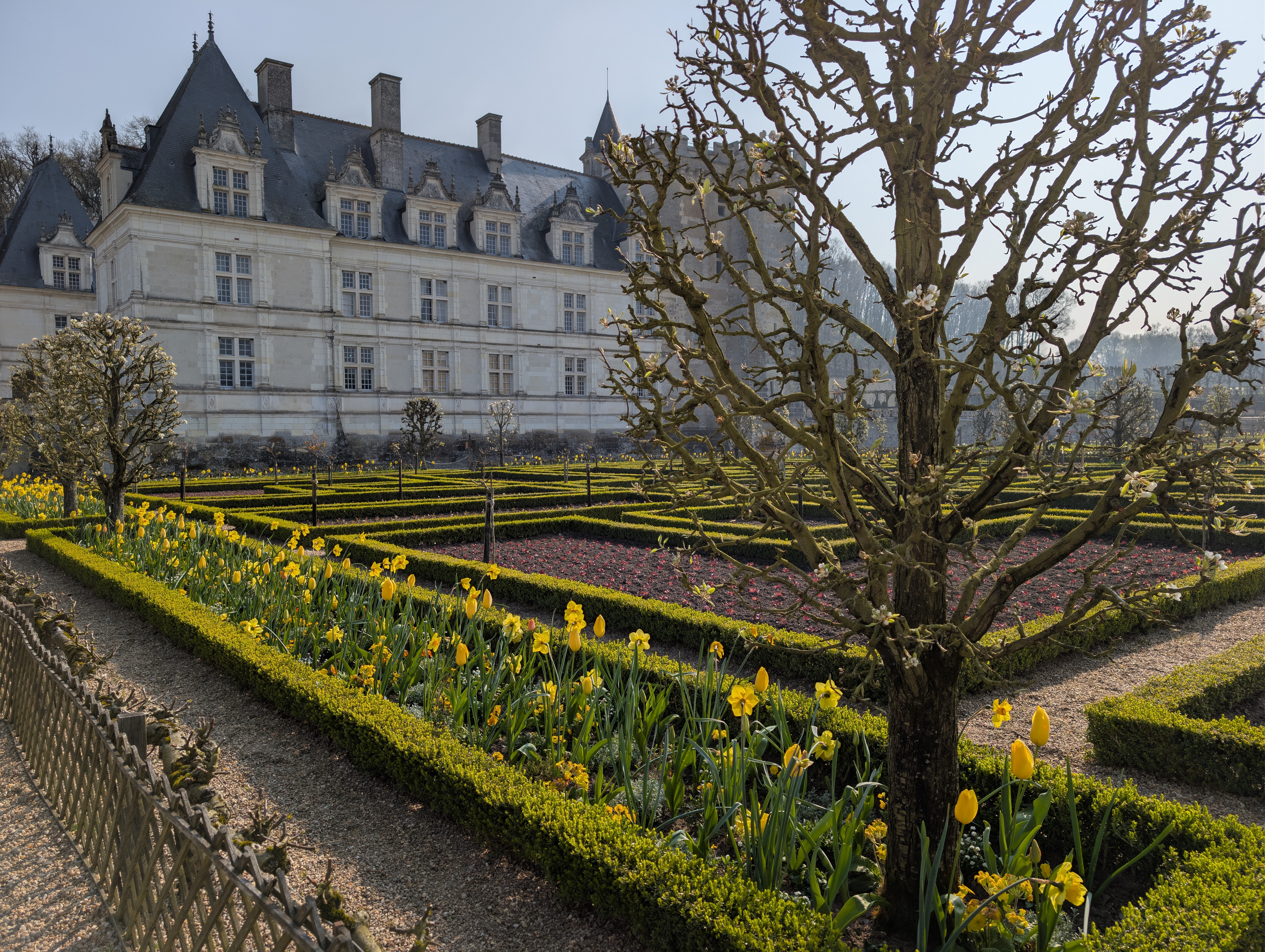
Visiting Château de Villandry
They are a typical jardin à la française (‘garden in the French manner’), which is a style of formal landscape garden based on symmetry and the principle of imposing order on nature.
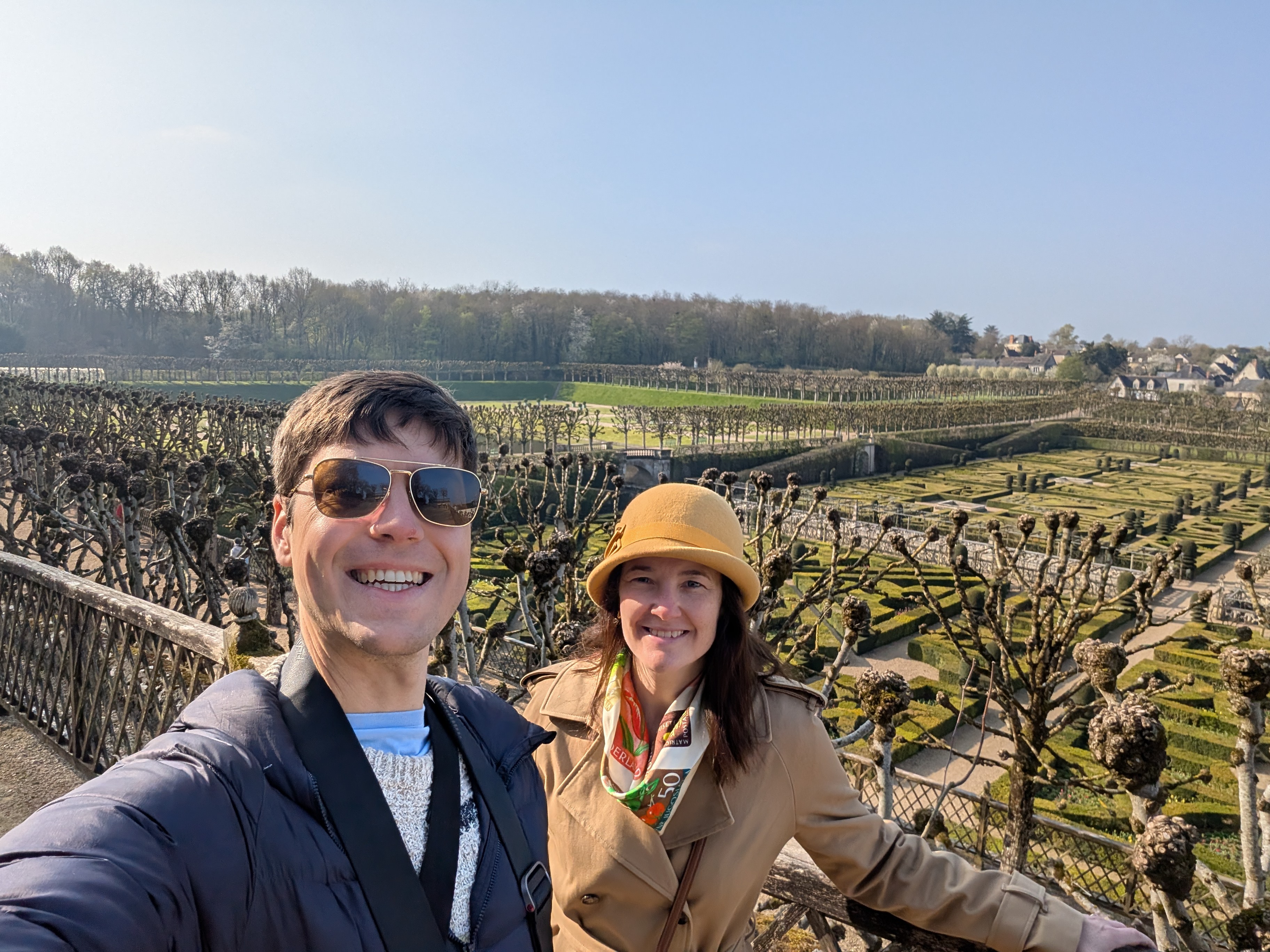
Symmetry at Château de Villandry
The gardens at Villandry are laid out on three terraces and feature a water garden, an ornamental vegetable garden, as well as a maze and a forest. Nine gardeners work full-time on the 1,200 linden trees, nine hectares of gardens, and 52km of hedges.
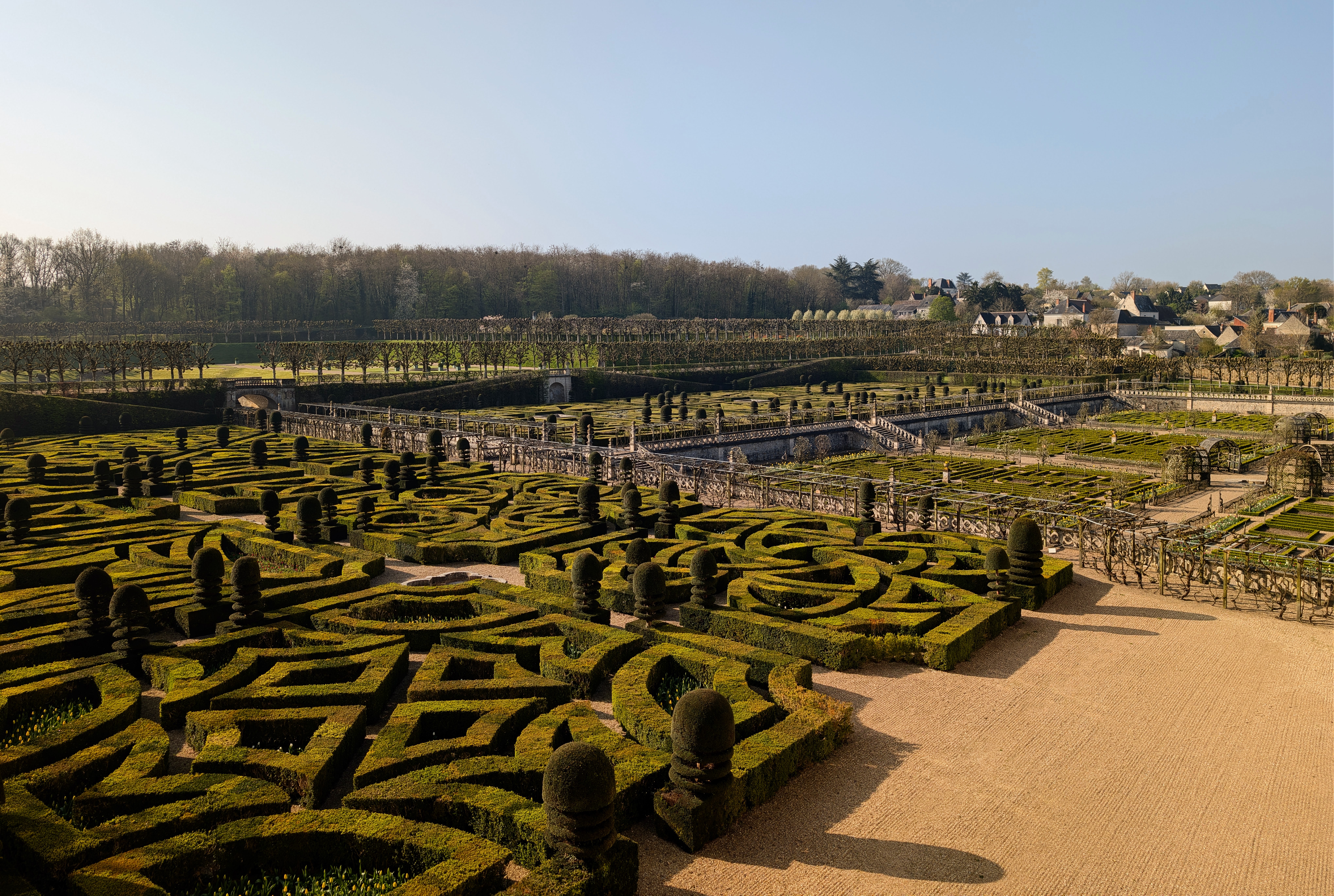
The symmetry of the hedging is incredible
The best view is, of course, from above, where from that vantage point, one can appreciate the symmetrical patterns repeating throughout the hedge design.
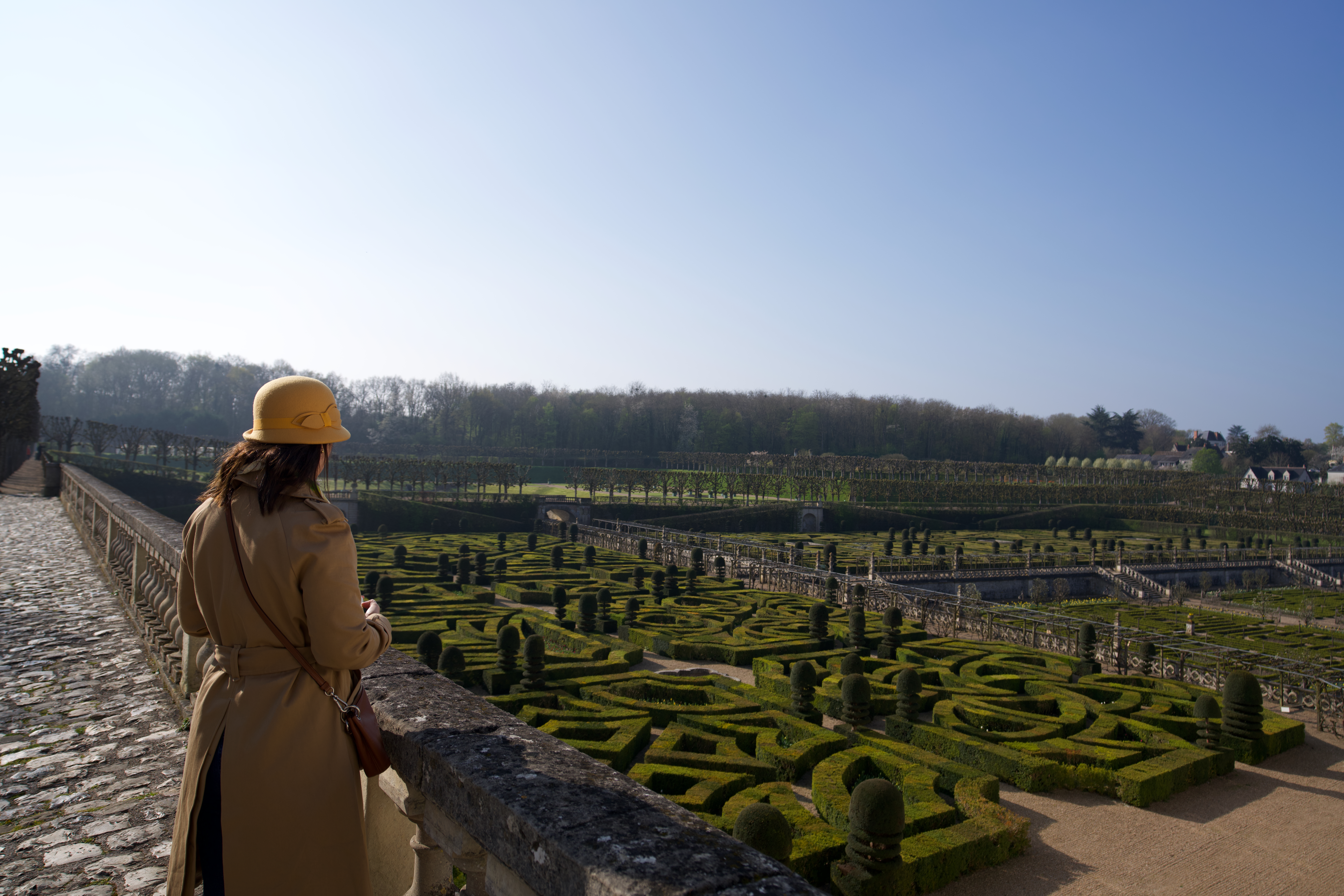
Viewing the symmetry from above
We arrived early in the morning and were lucky to wander around the castle and gardens with only a few others around. The early Spring blossoms were already in bloom, but I would love to return to see the full display of flowers and greenery in summer.
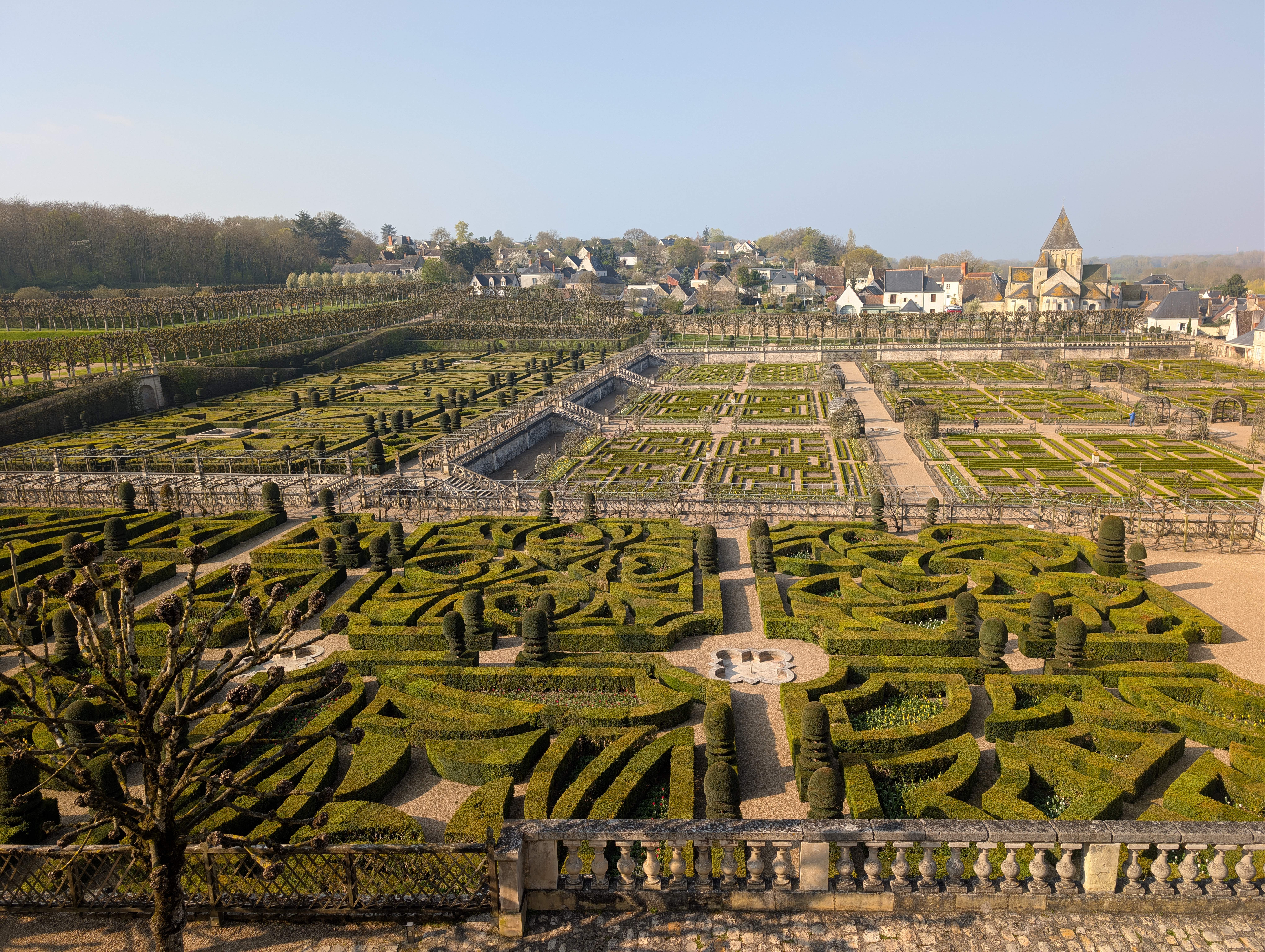
Viewing the symmetry from above
After our visit, we had hot chocolates and treats at a nearby café. It had a poor rating, but as we’ve come to discover in France, the Google maps ratings can be deceiving. My croissant was perfect and Dylan hasn’t stopped wishing to have that cookie again.
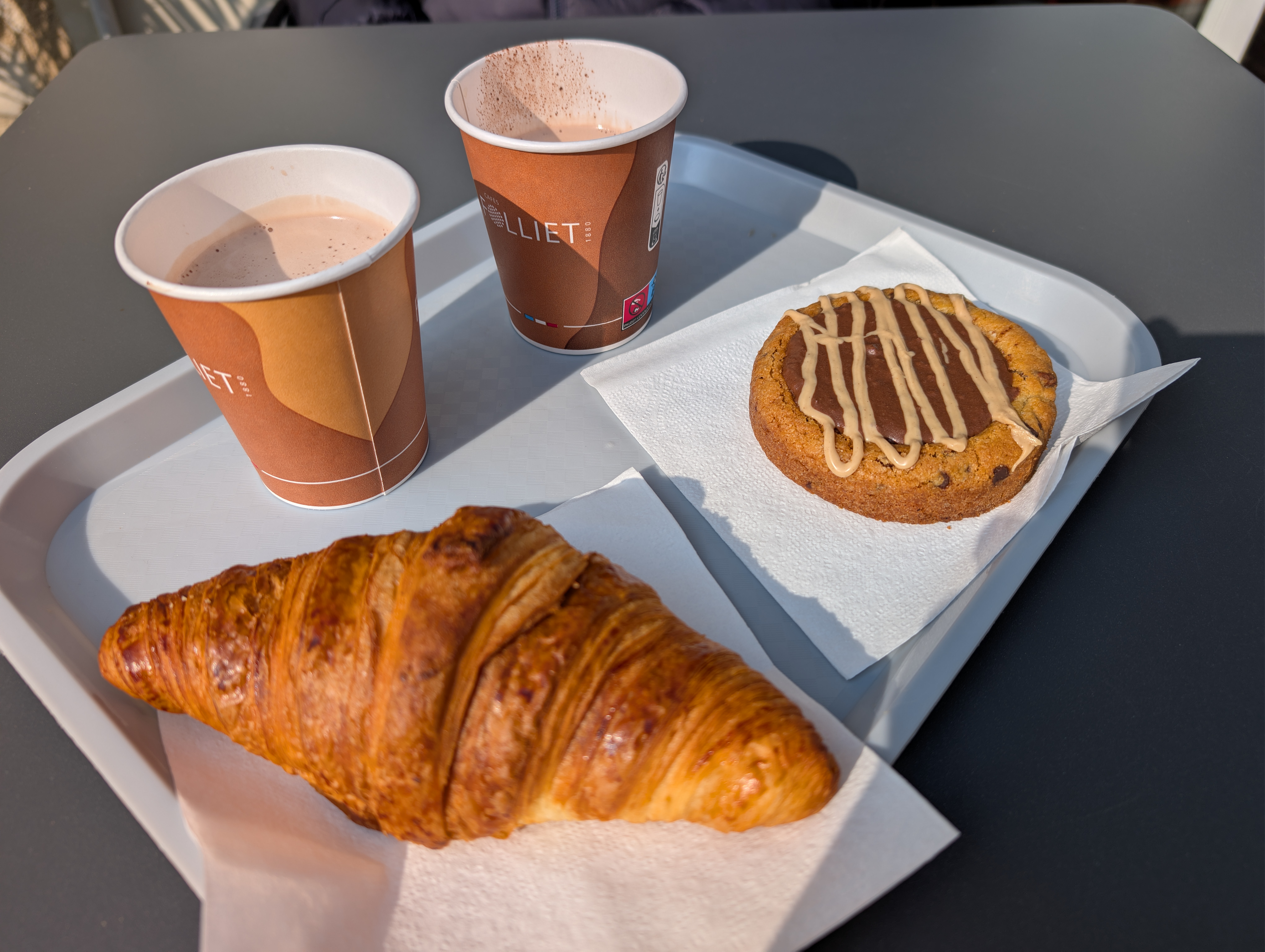
Hot chocolate and treats
Warmed up and full of treats, we then drove to the small town of Langeais where we wandered the old town, which surrounded yet another medieval castle. It was a quaint little town. We took some time to sit in the cobbled square beneath the church, soaking up the sunshine and listening to the chime of the church bells before returning to Tours.
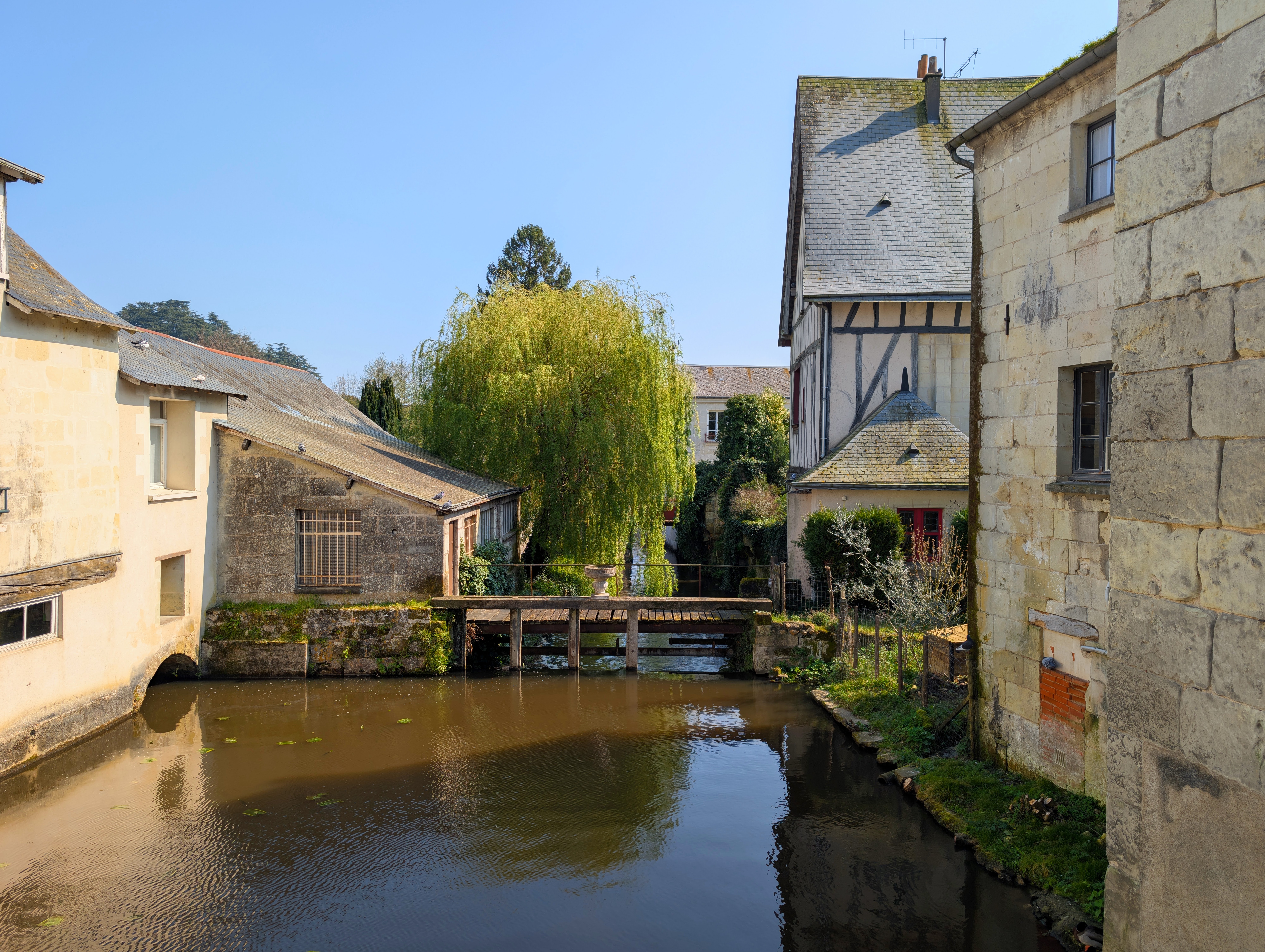
In the town of Langeais
We drove back to Tours for a late lunch - at the iconic Brasserie de l’Univers - and then boarded our late afternoon train back to Paris.
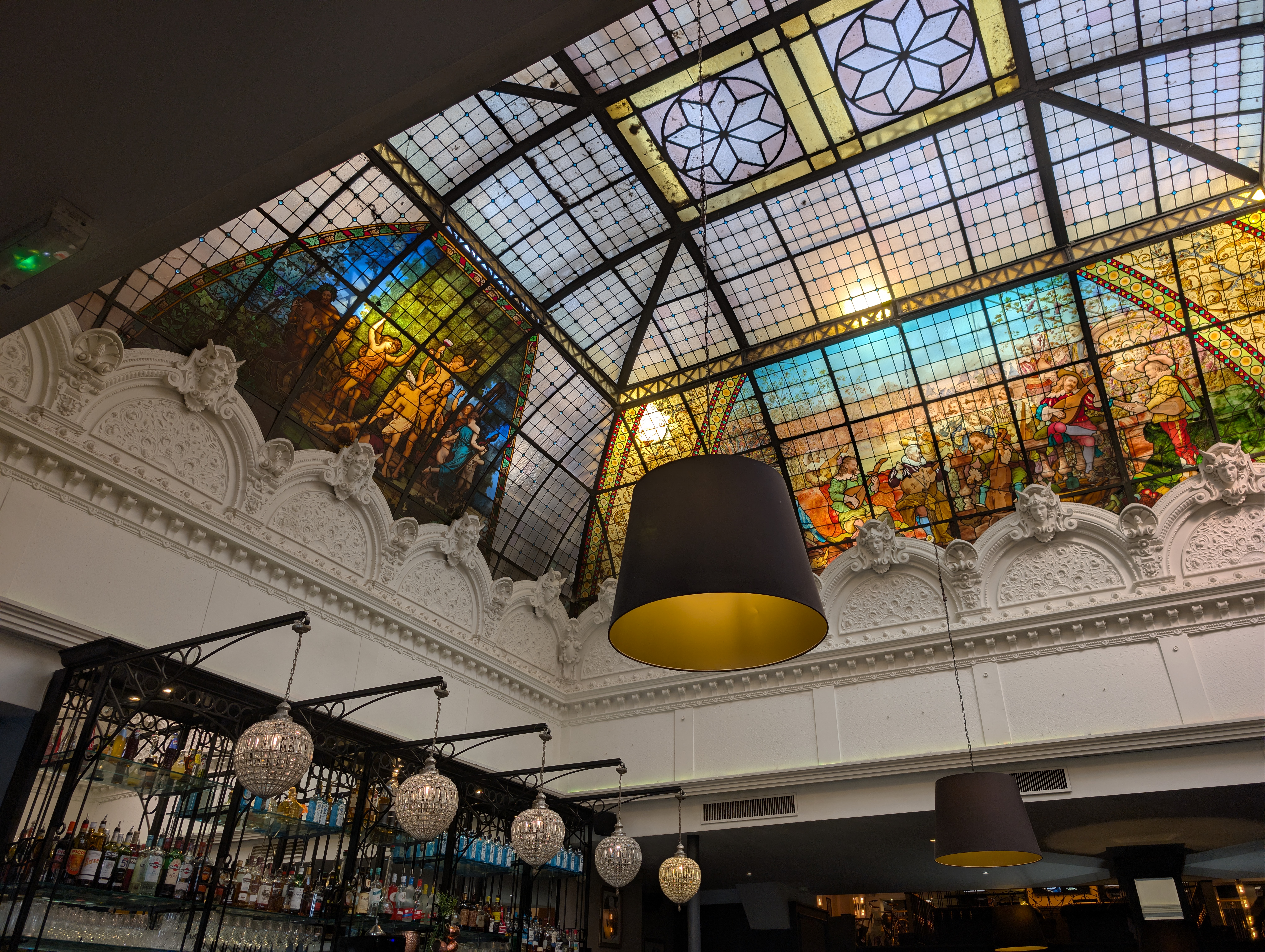
The ceiling inside the dining room at Brasserie de l'Univers
We’re already looking forward to returning to Tours, to eat at Dahlia and to explore more of the Loire Valley’s castles and wineries.