We had been saving a trip to Bordeaux and the Gironde wine region for cooler weather, so when summer turned into autumn, we booked. A visit to this part of France would also add another region of France to our list: Nouvelle-Aquitaine.
We chose to go the weekend before a public holiday so we could faire le pont and have a longer break. We arrived at the train station in Bordeaux and sorted out a ticket to take the 30-odd minute tram ride to our hotel. However, after only a few stops, we had to alight as the streets were closed for protests.
At this time, we were well into the fifth consecutive week of manifestations in France so we were not at all surprised, but rather, so used to the idea that we hadn’t even thought about any potential consequences for our trip.
Inside Bordeaux train station
We eventually connected with an Uber and our driver took us as close to the hotel as she could, telling us in no uncertain terms to avoid going out into the streets. However, we were only in Bordeaux for one night so we ignored the warnings and went out to explore anyway.
We didn’t see a single procession and instead, spent the day admiring the pretty old town while trying to find the best cannalé. In the evening, we ate at a traditional bordelaise brasserie and then enjoyed some local red at a cute wine bar where the lovely bartender stroked my ego by telling me how excellent my French was and gave us free shots.
In the old town of Bordeaux
The next morning we picked up our hire car and drove into our first Gironde sub-region: Saint-Émilion. The eponymous town is an historic UNESCO World Heritage site nestled among the surrounding vineyards, which are known for producing plush Merlot blends.
Ruins among the vineyards outside Saint-Émilion
We wandered the narrow winding streets of the stonewashed old town and ate a lovely lunch at a cosy restaurant before heading to the surrounding wineries for some wine tasting.
A view over the town of Saint-Émilion
We stayed the night at the beautiful Château Hôtel Grand Barrail located a short five minute drive from Saint-Émilion, where we had an incredible dinner at their stunning on-site restaurant whose plush interiors and stained-glass windows whispered tales of a bygone era.
A view from our hotel room at Château Hôtel Grand Barrail
The following day we enjoyed a slow morning at the hotel spa, making the most of the sauna and heated indoor pool. Feeling utterly relaxed, we hopped in the car and spent a leisurely hour winding through the country lanes enveloped by vines displaying a patchwork of seasonal hues.
We reached our second sub-region: Sauternes. Here, we spent the day having a fancy lunch and a very special wine tasting.
We arrived for our lunch at two starred Michelin restaurant Lalique.
The location of restaurant Lalique
Over the following three hours of our four course set menu, we were presented with what was possibly the most beautiful food we have ever eaten in our lives. It was delicate, but substantial. Refined, but delicious. And all exquisitely presented with flawless, warm service. The tableware was on another level, with each course featuring pieces from the eponymous French luxury house founded in 1888 and renowned for its glass and tableware.
The fish course at restaurant Lalique
Following our lunch, we drove the short distance to Château d’Yquem for a private tour and tasting of their 2016 Sauternes. Château d’Yquem is famous for producing one of the world’s most prestigious sweet white wines, and is the only estate to have been awarded the status of Premier Cru Supérieur in the 1855 Classification of Sauternes. It is a deeply concentrated wine with complex flavours that go far beyond sweetness.
Château d'Yquem
We were guided around the estate under a light misty rain, learning about the history of the region, the Château and the process for making Sauternes.
Château d'Yquem including the original turret (right) built in the mid-1500s
Sauternes wine is distinctive, with the essential influence of noble rot (Botrytis cinerea), a fungus that naturally develops on the grape in the perfect conditions. Morning mists followed by sunny, breezy autumns encourage noble rot on the sémillon and sauvignon blanc grapes. The fungus dehydrates the grapes, concentrating sugars, acidity, and complex flavours.
Unwanted grapes left on the vine after picking season
The creation of each bottle is laborious. Unlike the process for other wines where there is a single picking period, the grape pickers of Sauternes pass through the vineyard multiple times over the picking season - often six or more - selecting only individual grapes at peak botrytis ripeness. The yields are tiny, averaging roughly one glass of wine per vine. This labour and precision is reflected in the cost of each bottle (which is definitely outside of our budget). However, the high sugar levels balanced by brisk acidity allow vintages to age for decades, and indeed, there are bottles over a century old.
Underground in the barrel room
The château is immaculately preserved and the gardens were exquisite at their peak of flourishing autumnal tones. So, even on a moody afternoon in November, there was beauty in every image.
Wandering through the gardens at Château d'Yquem
We learnt that a unique variety of rose was developed especially for the Château, aptly named “sauternes”, with its red-flecked yellow petals symbolising the rich tones found in each aged bottle of Sauternes.
A sauternes rose in the gardens at Château d'Yquem
At the conclusion of our visit, we headed north to our third sub-region, Graves, where we would spend two nights staying at Les Sources de Caudalie.
On the first morning after our arrival we took a stroll in the parklands surrounding the accommodation, ankle-deep in fallen foliage, falling in love with the forests of autumnal France.
We found picture-perfect mushrooms. We discovered bridges crossing little creeks. The leaf littered pathways had adorable names like Allée des cygnes and the sun was breaking through the late morning mist.
We were immersed in a playground of ochre and crimson, which in a few short weeks, would give way to a naked winter canopy.
Living in Paris can be claustrophobic; you become habituated to the sight of omnipresent limestone wall and a missing horizon, until open space returns, and you release the breath you never knew you’d been holding.
So we spent a playful morning outdoors, in the open space, where trees and grass and wide open sky felt like a small miracle.
Following our morning frolic, we drove over to a nearby winery Château Smith Haut Lafitte where we had lunch at the wine bar before our afternoon tour and tasting.
The cobblestoned entrance to Château Smith Haut Lafitte
We were on the French-speaking tour and our host was quite possibly the mumbliest, quickest speaking guide I’ve ever had the misfortune of being guided by. I managed to understand about 50% of what he said, but what we lost in comprehension was more than made up for in the beauty of the estate.
At Château Smith Haut Lafitte
I did, however, manage to understand that they have their own on-site cooperage, which is rare for a winery, even in Bordeaux. It’s a difficult, labour-intensive trade that even in a country with centuries of wine-making tradition is hard to find.
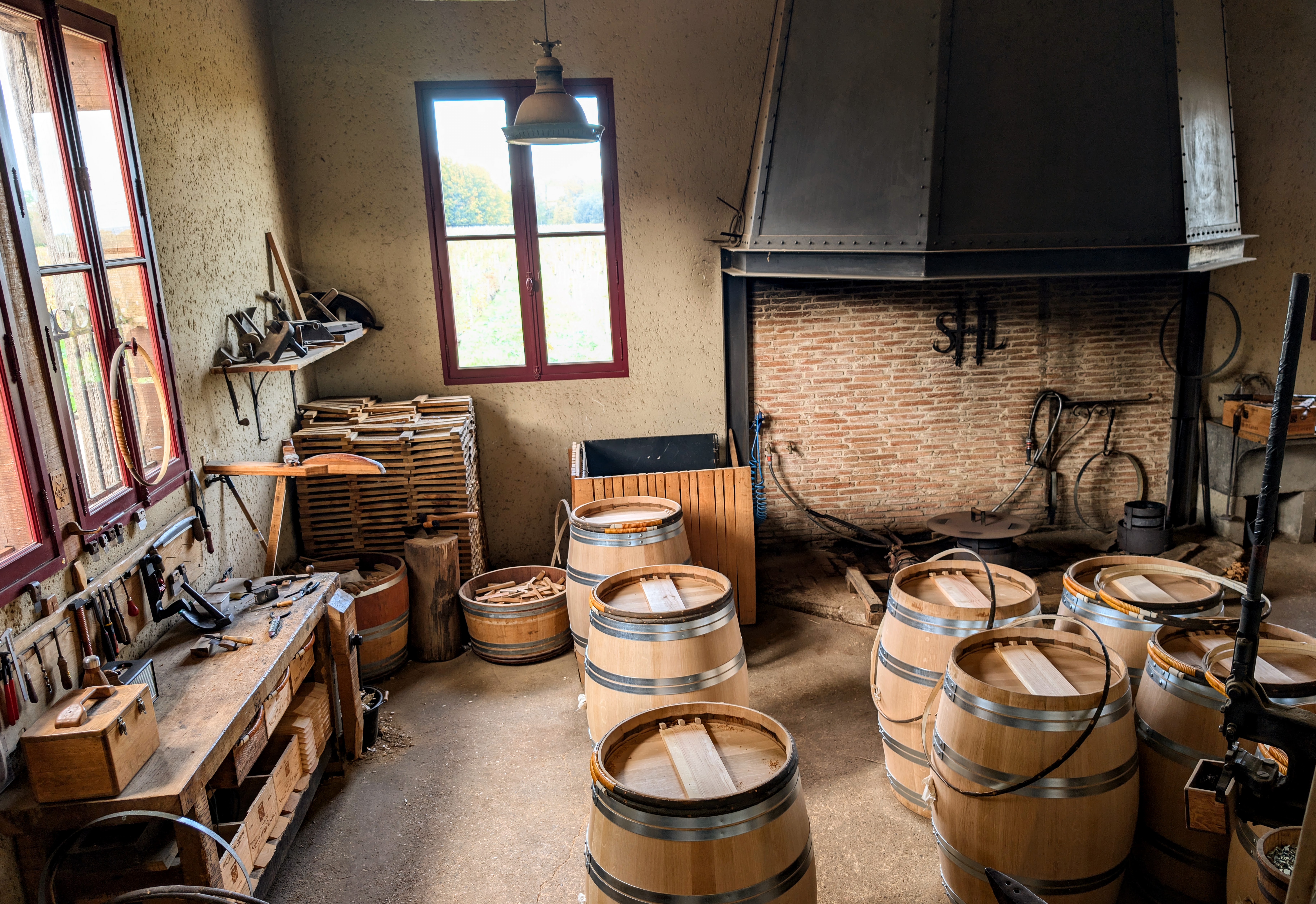
Inside the cooperage at Château Smith Haut Lafitte
At the conclusion of the estate tour, we tasted our wines. The wines of the Graves region on Bordeaux’s left bank are medium- to full-bodied blends of Merlot, Cabernet Sauvignon and sometimes Cabernet Franc. One of the wines we tasted was heavenly, but at over €200 a bottle, none came back to Paris with us.
Looking out over the vines at Château Smith Haut Lafitte
After the tour, we once more immersed ourselves in nature, this time along a nature trail called La forêt des sens (Forest of the Senses), which was showcasing art installations in the regenerated forest surrounding the winery.
The 3km loop meandered through the canopied undergrowth with opportunities to stop every 100m or so to view an artwork. Some were incorporated within the flora of the forest - like the wizard’s chair carved into the trunk of an ancient oak - and others were modern installations, tethered to the forest, but not imposing, like the giant wooden wind chimes strung between trees on a small island in the middle of a swamp accessible only by a questionable rickety wooden bridge.
Exploring the art trail at Château Smith Haut Lafitte
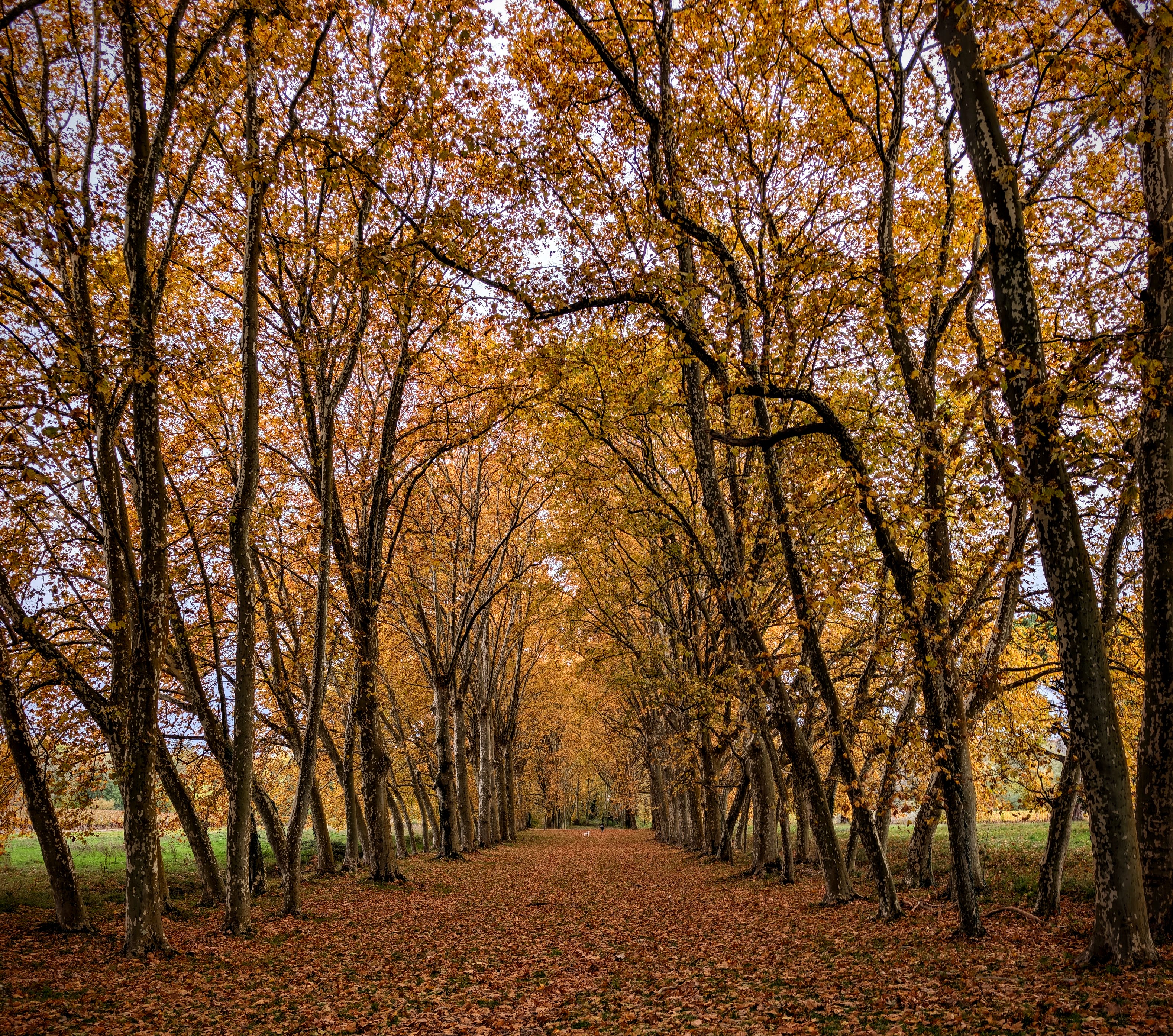
Ready for more wine, we visited Château La Louvière for a tasting, and afterwards, were once more drawn into the gardens. We ambled across the sprawling lawns beneath towering plane trees whose leaves fell through the breeze like slow-moving golden confetti. It was calm and quiet, with no one around except the local who could be seen in the far distance, trailing their dog who was chasing the late afternoon shadows.
In the gardens at Château La Louvière
The following day, we decided on an impromptu drive to the coast to visit the small town of Arcachon and catch a glimpse of the North Atlantic Ocean.
At the town of Arcachon
After a pleasant walk along the beach and a location appropriate lunch of tuna tartare and scallops, we reluctantly hopped back in the car to drive back to Bordeaux for the return train trip to Paris.
The beach in Arcachon
With another wine region uncovered, and a another region of France visited, we are deep into our exploration of France. And as we mark ten months of life in France, it feels like time is slipping by rather too quickly.